By Editorial Staff
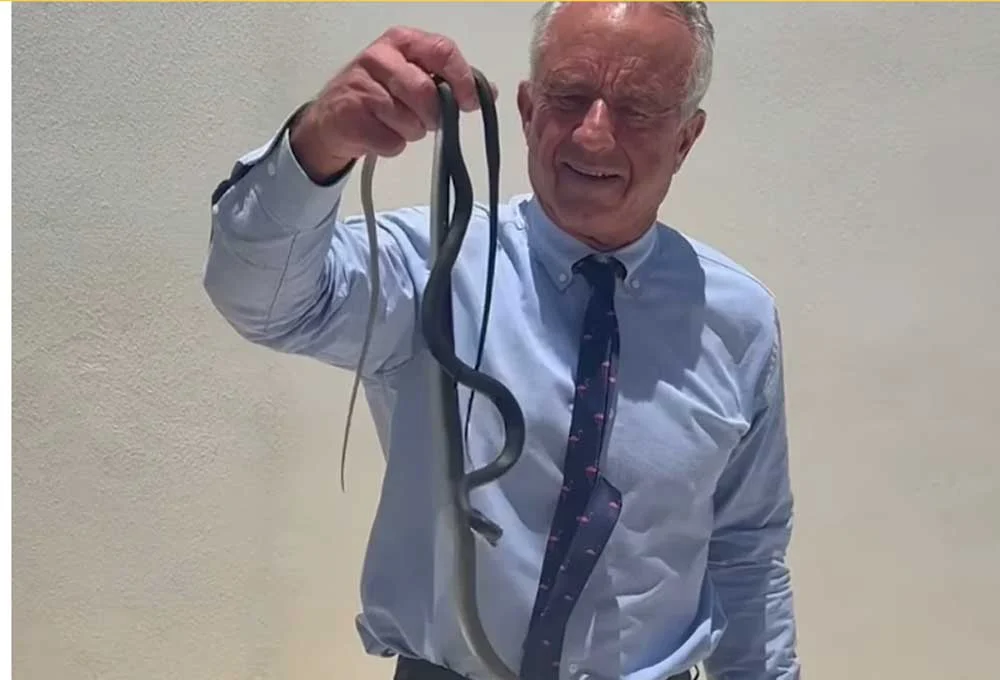
Over the recent Memorial Day weekend, a rather unconventional scene unfolded at the Florida residence of television personality and physician Dr. Mehmet Oz. Robert F. Kennedy Jr., the current United States Secretary of Health and Human Services, found himself transitioning from high-level policy discussions to hands-on wildlife management. Captured in a viral social media post, Kennedy was recorded removing a pair of black racer snakes (Coluber constrictor) from the physician’s patio, an act that has sparked renewed public interest in his long-documented history of wildlife intervention.
The encounter, which occurred in a private outdoor space, saw Kennedy manually handling the reptiles—a task he appeared to approach with the seasoned confidence of a lifelong outdoorsman. As the snakes squirmed, the Secretary was seen sustaining multiple bites, a common occurrence when handling nonvenomous but defensive racers.
A Chronicle of Wildlife Intervention
The incident at Dr. Oz’s estate is far from an isolated occurrence in the life of Robert F. Kennedy Jr. Throughout his career, he has consistently positioned himself as an advocate for, and active participant in, the rescue and management of local wildlife. His approach to these interactions is often characterized by a "hands-on" philosophy that prioritizes immediate intervention over professional wildlife relocation services.
The 2024 Gopher Snake Incident
During the height of his 2024 presidential campaign, Kennedy was filmed in a similarly delicate situation. While visiting the home of his daughter’s friend, he discovered a gopher snake (Pituophis catenifer) trapped in plastic netting. Displaying a calm demeanor, Kennedy meticulously untangled the reptile, eventually releasing it back into the wild. This event served as a prelude to the current public fascination with his ability to handle serpents with relative ease.
The 2013 Leatherback Sea Turtle Controversy
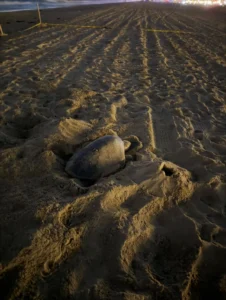
Perhaps the most significant—and legally contentious—instance of Kennedy’s wildlife involvement occurred in 2013. Kennedy, alongside his brother Max, discovered a leatherback sea turtle entangled in a buoy line off the coast of Nantucket Sound. While the brothers successfully freed the endangered creature, the act led to an investigation by the National Marine Fisheries Service.
The investigation highlighted a critical intersection between good intentions and legal compliance: the brothers lacked the federal permits required to interact with an endangered species. The incident underscored the strict regulations surrounding the handling of protected marine life and served as a reminder that even acts of mercy can carry significant regulatory weight.
Anatomy and Behavior of the Black Racer
The snakes involved in the Memorial Day incident, the Black Racer (Coluber constrictor), are among the most common and recognizable reptiles in the Eastern United States. Their presence on a residential patio in Florida is a testament to the species’ adaptability to suburban encroachment.
Scientific Profile
The Coluber constrictor is a nonvenomous colubrid species that boasts an extensive geographic range, stretching from southern Canada down through the United States and into Central American nations like Guatemala and Belize. With 11 recognized subspecies, the racer is highly variable in its appearance, though the version found in Florida is typically characterized by its sleek, matte-black scales and, occasionally, a white chin patch.
These snakes can reach lengths of up to five feet. Despite their name, they do not "constrict" their prey; rather, they use their powerful bodies to pin their food against the ground before consuming it. Their diet is diverse, reflecting their role as opportunistic predators. Adult racers consume a wide array of small mammals, including rodents, as well as lizards, frogs, toads, and smaller snakes. They are also known to consume bird eggs and even other birds. Juveniles, by contrast, focus their predatory efforts on soft-bodied insects and invertebrates.
Behavioral Dynamics: Mating vs. Dominance
Observers of the viral video noted the snakes’ erratic and aggressive movements. Herpetologists suggest that such behavior in black racers is typically attributed to one of two primary biological drivers: courtship or territorial dispute.
- Mating Behavior: During the spring, male racers actively seek out females. If the encounter at Dr. Oz’s was a mating pair, the "squirming" observed by witnesses was likely part of the complex courtship dance required for successful copulation.
- Combat for Dominance: Alternatively, the interaction may have been a "combat dance" between two rival males. Male racers are known to engage in ritualized wrestling matches to establish dominance in a territory. This involves intertwining their bodies and attempting to pin the opponent’s head to the ground—a behavior that often looks indistinguishable from mating to the untrained eye.
The Role of the Human-Wildlife Interface
The incident at Dr. Oz’s residence highlights the increasingly frequent interactions between humans and native wildlife in the United States. As urban development expands into previously undeveloped corridors, species like the black racer are forced into closer proximity with residential infrastructure.
Professional vs. Amateur Intervention
While Kennedy’s intervention was successful in removing the snakes from the immediate patio area, wildlife experts often emphasize the risks associated with amateur handling. Even nonvenomous snakes possess sharp, recurved teeth designed to hold onto prey, as evidenced by the multiple bites Kennedy sustained. Furthermore, the handling of wildlife can cause significant stress to the animal, which may result in long-term health issues or altered behavior.
For the average homeowner, the recommended course of action remains contacting licensed wildlife removal professionals. These individuals possess the equipment, training, and knowledge of state-specific laws to relocate animals humanely and safely, minimizing the risk to both the homeowner and the reptile.
Implications and Public Perception
The intersection of high-profile political figures and wildlife encounters often invites a polarized public response. Supporters of Kennedy view these actions as a testament to his authentic, rugged, and compassionate nature. They argue that his willingness to engage with the natural world demonstrates a tangible commitment to animal welfare that transcends political rhetoric.
Conversely, critics often point to the 2013 sea turtle incident to argue that such interventions, while well-intentioned, may reflect a disregard for established environmental protocols. The debate centers on the tension between the individual’s instinct to assist a creature in distress and the institutional necessity of maintaining professional oversight for endangered or protected species.
Legal and Ethical Considerations
In Florida, the removal of non-protected species is generally permitted, provided it does not constitute animal cruelty. However, the legal landscape shifts significantly when dealing with species under state or federal protection. Kennedy’s history suggests a pattern of interventionist ethics that prioritizes the immediate welfare of the animal. Whether this approach aligns with modern environmental policy remains a subject of ongoing discussion among conservationists.
Conclusion
The video of Robert F. Kennedy Jr. managing a pair of black racers on Dr. Oz’s patio serves as a modern snapshot of the complex, often unpredictable relationship between human residents and the native fauna of the United States. While the event was relatively minor in the scope of national governance, it provided a moment of clarity regarding the Secretary’s personal values and his lifelong habit of interacting with the natural world.
As suburban expansion continues to bring humans and reptiles into closer contact, such encounters will likely become more frequent. Whether handled by political figures or professional wildlife management services, these moments serve as a reminder of the biodiversity that persists within our own backyards and the inherent challenges of coexisting with the wild.
For those interested in the welfare of local reptiles, the takeaway remains clear: while the black racer is a beneficial species that keeps rodent populations in check, it is best appreciated from a distance—or handled only by those who are fully prepared for the defensive maneuvers inherent to the species.
References & Further Reading:
- Reptiles Magazine: Guidelines for Coexisting with Native Colubrids.
- National Marine Fisheries Service: Understanding Endangered Species Act Permits.
- Florida Fish and Wildlife Conservation Commission: Snake Identification and Removal Resources.
- The Journal of Herpetology: Reproductive and Territorial Behaviors in Coluber constrictor.