
LOS ANGELES — In a milestone achievement for American herpetology and endangered species conservation, the Los Angeles Zoo has announced the successful breeding of the New Mexico ridge-nosed rattlesnake (Crotalus willardi obscurus). The birth of six neonates—a litter of five on August 18, followed by a single newborn on August 28—marks the first successful reproduction under the umbrella of "Project Obscurus," a collaborative, multi-institutional recovery initiative launched in 2024.
This breakthrough represents more than just a momentary zoo success; it provides a tangible, science-backed lifeline for a heavily protected, highly localized pit viper whose populations have experienced dramatic declines across the southwestern United States. As conservationists race against habitat fragmentation, climate shifts, and historical pressures, these tiny newborns carry the heavy burden of hope for an entire subspecies.
Main Facts: Understanding the Rare New Mexico Ridge-Nosed Rattlesnake
To fully appreciate the magnitude of the Los Angeles Zoo’s achievement, one must understand the exceptional biology and precarious status of the New Mexico ridge-nosed rattlesnake.
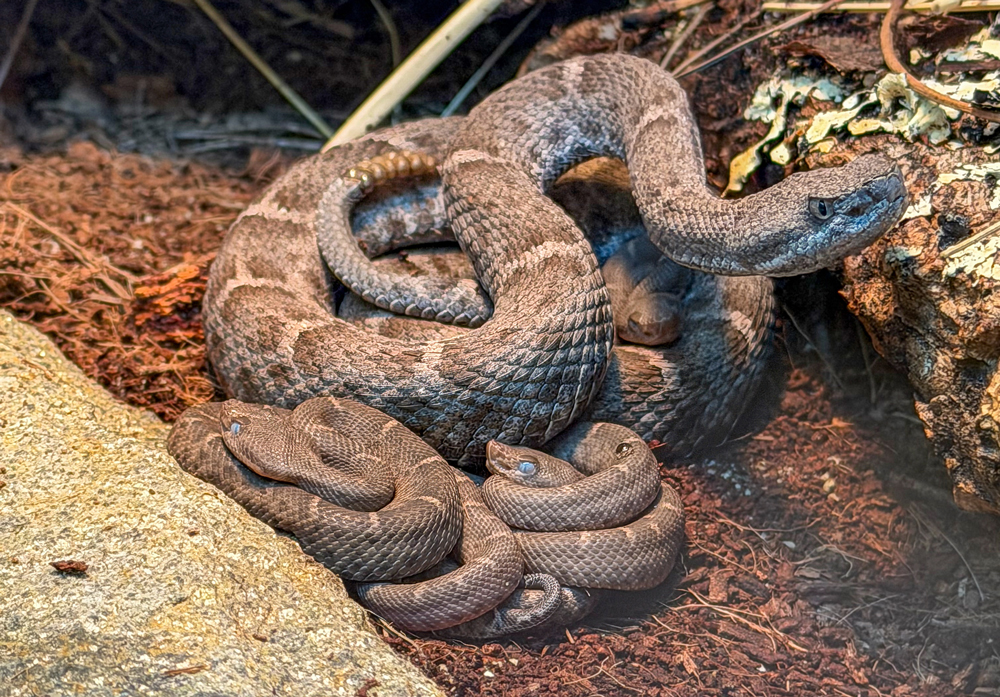
Recognized as the rarest rattlesnake species in the United States, Crotalus willardi obscurus is a federally listed Threatened species under the U.S. Endangered Species Act and is managed under strict state and federal protections. Physically, it is a relatively small and retiring pit viper, typically reaching maximum lengths of around 26 inches. Its coloration ranges from pale gray to gray-brown, providing camouflage against the rocky, leaf-strewn soils of its montane habitat. The snake derives its common name from its most distinctive morphological feature: a unique, upturned snout characterized by raised scales that form a distinct "ridge" along the nose.
Ecologically, the New Mexico ridge-nosed rattlesnake is classified as a "sky island" specialist. Sky islands are isolated mountain ranges separated by expanses of vastly different lowland deserts. These snakes are strictly endemic to high-elevation, montane habitats ranging between 5,000 and 8,000 feet (1,500 to 2,500 meters) in elevation. Within these high-altitude refuges, they inhabit humid pine-oak woodlands, canyon bottoms, and grassy mountain slopes.
The species is an opportunistic ambush predator, feeding primarily on small mammals, lizards, birds, and large invertebrates such as scorpions and centipedes. Unlike many egg-laying reptiles, ridge-nosed rattlesnakes are viviparous (livebearers), producing small litters ranging from one to nine young at a time.
Finding these animals in the wild is notoriously difficult. According to reports from the U.S. Fish and Wildlife Service (USFWS), field biologists in certain known localities can spend upwards of 800 exhaustive hours searching the rugged terrain without encountering a single specimen. This extreme elusiveness, combined with their restricted geographical range—limited primarily to the Animas Mountains of southwestern New Mexico, the Peloncillo Mountains of southeastern Arizona, and the Sierra San Luis in northern Mexico—makes captive-breeding initiatives exceptionally challenging and critically important.
Chronology: The Path to Project Obscurus and the Historic Births
The arrival of the six neonates at the Los Angeles Zoo did not happen overnight; it is the culmination of decades of incremental research, field study, and institutional coordination.
- The Foundation (1990s–2023): For over thirty years, dedicated herpetologists, academic researchers, and wildlife agencies in Arizona and New Mexico accumulated vital baseline data on the natural history, behavior, and physiological requirements of the New Mexico ridge-nosed rattlesnake. These decades of fieldwork laid the groundwork for understanding how the species interacts with its delicate environment and what parameters are required to maintain its health in human care.
- Early 2024: Recognizing the urgent need for a unified, proactive conservation strategy rather than fragmented regional efforts, conservation leaders formally established Project Obscurus. The initiative was designed to pool institutional resources, standardize husbandry protocols, and build a sustainable, genetically diverse ark population across multiple professional facilities.
- August 18, 2026: Following careful pairings and meticulous environmental management by the Los Angeles Zoo’s ectotherm care team, the first major milestone of Project Obscurus was achieved. A healthy litter of five neonates was successfully born.
- August 28, 2026: Ten days after the first birth, a second reproductive event yielded a single neonate, bringing the total number of surviving newborns to six.
- September 2026: The Los Angeles Zoo publicly announced the successful births, drawing widespread media attention to the plight of the sky island pit viper and celebrating the collaborative nature of Project Obscurus.
Supporting Data: A Collaborative Network of Conservation Partners
Project Obscurus is not a solo endeavor; its strength lies in the diverse coalition of experts and institutions dedicated to pulling the species back from the brink. The project unites a robust network of zoos, conservation organizations, academic researchers, and state and federal wildlife agencies across the American Southwest.
Key founding members and partners of Project Obscurus include:
- The Los Angeles Zoo: Serving as a primary breeding hub and leveraging decades of expertise in managing delicate montane reptiles.
- The Rattlesnake Conservancy: Providing specialized conservation science, field expertise, and public education initiatives focused on venomous snake preservation.
- Arizona-Sonora Desert Museum: Contributing decades of regional desert ecology knowledge and captive management experience.
- San Antonio Zoo: Offering institutional infrastructure and veterinary support to bolster the program’s genetic management strategies.
- State and Federal Wildlife Agencies: Including departments of game and fish in both Arizona and New Mexico, alongside the U.S. Fish and Wildlife Service, which coordinate regulatory frameworks, permitting, and eventual reintroduction site selections.
This collaborative framework ensures that animal husbandry data, veterinary breakthroughs, and genetic tracking are shared transparently among partners. By avoiding the pitfalls of isolated breeding programs, Project Obscurus maintains a genetically healthy, demographically stable population capable of supporting future wild supplementation.
Official Responses: Voices from the Front Lines of Conservation
The announcement of the successful litters elicited immense pride and optimism from the leaders spearheading the initiative.
Byron Wusstig, Curator of Ectotherms at the Los Angeles Zoo, highlighted the technical precision required to achieve this milestone in a statement released to the media:
"This incredible breeding success is a testament to our animal care team’s deep expertise in managing delicate montane pit vipers. Being the first of the program partners to welcome these litters of New Mexico ridge-nosed rattlesnakes proves that our collaborative, science-based approach is working well. These two litters represent a tangible lifeline for a species whose numbers have drastically declined in the U.S."
Wusstig’s sentiments were echoed by representatives across the conservation coalition. Herpetologists within Project Obscurus emphasized that replicating the cool, high-humidity microclimates of southwestern sky islands within a controlled zoological environment requires meticulous engineering and daily oversight. Temperature fluctuations, humidity cycles, and brumation (hibernation-like) periods must be carefully simulated to trigger natural reproductive behaviors without compromising the health of the adult snakes.
Implications: The Future of Reintroduction and Species Recovery
While the birth of six neonates at the Los Angeles Zoo is a cause for celebration, it marks only the first phase of a long-term conservation strategy.
According to zoo officials, the six neonates—along with any future offspring produced by the breeding pairs—will remain under the specialized care of zoo staff during their vulnerable early months. As the young snakes mature and reach specific developmental and weight benchmarks, wildlife managers will prepare them for the ultimate goal of the program: reintroduction into their native habitats in Arizona and New Mexico.
Reintroducing captive-born venomous reptiles into the wild is a complex and delicate process. Conservation biologists must ensure that the young snakes retain appropriate anti-predator behaviors, natural feeding responses, and the hardiness required to survive harsh mountain winters. Furthermore, release sites must be carefully selected to avoid areas facing acute anthropogenic threats, such as illegal poaching, habitat degradation from livestock grazing, catastrophic wildfires fueled by climate change, and residential encroachment.
The success of Project Obscurus holds profound implications beyond a single subspecies of rattlesnake. It serves as a blueprint for how modern zoological institutions can partner with grassroots conservation groups and government agencies to rescue high-altitude, climate-vulnerable species. As global temperatures rise and sky island ecosystems face mounting pressures from environmental change, proactive captive-breeding programs like Project Obscurus may well determine whether unique biological treasures like the New Mexico ridge-nosed rattlesnake survive into the 22nd century.