
When a cat begins to eliminate outside of the litter box, the frustration felt by the owner is immediate and understandable. It is common for pet parents to interpret these incidents as acts of spite, stubbornness, or even behavioral rebellion. However, feline behavior experts, including renowned author and cat behaviorist Pam Johnson-Bennett, caution that viewing these incidents through a lens of human emotion is not only inaccurate but can actively hinder the resolution process.
For a cat, every behavior serves a purpose. When a cat avoids the litter box, they are not attempting to punish their owners; they are responding to a specific stimulus, physical limitation, or environmental stressor. Understanding this fundamental truth—that the cat is communicating a need rather than acting out of malice—is the most critical step toward restoring household harmony.
The Core Reality: Viewing the World Through Feline Eyes
To address elimination issues effectively, owners must shift their perspective. Cats are creatures of habit who rely on their environment for security and comfort. When a cat chooses to urinate or defecate on a rug, a bed, or in a hidden corner, they are performing a form of problem-solving.
In the wild, a cat’s survival depends on their ability to manage their scent. By covering their waste, they minimize the risk of attracting predators or alerting potential prey. When a domestic cat deviates from their litter box, they are often attempting to find a location they perceive as safer or more hygienic than the one provided. By identifying the underlying "why" behind the behavior, owners can transition from reactive frustration to proactive solutions.
Physical and Medical Challenges: The First Point of Inquiry
Before assuming the issue is behavioral, it is an absolute necessity to rule out medical pathology. A cat’s reluctance to use the box is frequently a physical symptom of an underlying condition.
The Role of Veterinary Diagnostics
If your cat has a sudden change in litter box habits, a trip to the veterinarian should be the immediate priority. Conditions such as feline lower urinary tract disease (FLUTD), bladder stones, kidney disease, or diabetes can cause increased urgency or pain, making it difficult for the cat to reach the box in time.
Mobility and Aging
As cats age, they often develop arthritis or chronic joint pain. A standard litter box with high sides may become a physical obstacle that is painful to navigate. Similarly, if the litter box is located in a basement or on a different floor of the home, an aging or mobility-impaired cat may simply be unable to make the journey in time.
Practical Adjustments for Mobility Issues:

- Low-Entry Boxes: Utilize boxes with lowered sides to allow easy access for cats with limited range of motion.
- Strategic Placement: Ensure boxes are located on every level of the home where the cat spends time.
- Absorbent Protection: Use puppy pads or waterproof mats around the box to manage any accidents, and maintain a compassionate, patient attitude toward these physical limitations.
The Standard of Cleanliness: Why Frequency Matters
One of the most frequent catalysts for litter box avoidance is a failure to meet the cat’s stringent standards for hygiene. While an owner might feel that scooping once a day is sufficient, a cat’s sense of smell is significantly more acute than a human’s.
Survival Instincts and Scent Management
A dirty litter box represents a potential security breach. If the box is saturated with the scent of previous eliminations, the cat may feel that using it again leaves them vulnerable to detection by other animals. If the box is not cleaned to their satisfaction, the cat will seek out a cleaner, "safer" location—often a piece of furniture or a quiet corner of the house.
The "Deep Clean" Protocol
Routine maintenance involves more than just daily scooping. Even if you use high-quality, clumping litter, the surface of the plastic box itself can become porous and hold odors over time.
- Scooping Frequency: Aim to scoop at least twice daily. If you have multiple boxes in remote areas, ensure they are not overlooked during your cleaning rotation.
- Sanitization: On a regular basis, empty the entire box, wash it with a mild, unscented dish soap, and replace it with entirely fresh litter.
- Material Integrity: If the litter box is scratched or heavily worn, it may be time to replace it, as these microscopic grooves can harbor bacteria and persistent odors that no amount of scrubbing can remove.
Stress, Fear, and Inter-Cat Dynamics
In households with multiple cats, the litter box can become a flashpoint for social tension. Conflict, whether overt or subtle, is a primary driver of elimination problems.

The Ambush Factor
Cats are most vulnerable when they are in the litter box. If a dominant or aggressive cat in the household has a history of "ambushing" the other cat while they are in the box, the victim will quickly learn to associate that box with danger. This is particularly common with covered litter boxes, which offer limited visibility and only one point of egress.
Designing a Secure Environment
To mitigate stress and conflict, follow these guidelines:
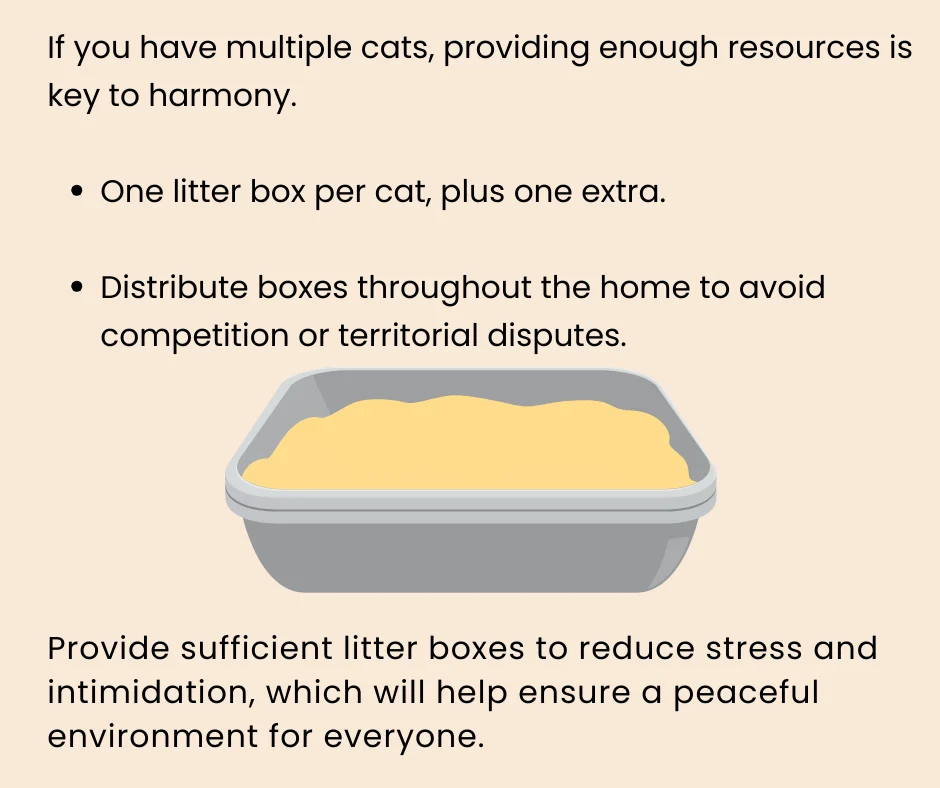
- The "N+1" Rule: Provide one litter box for every cat in the home, plus one extra.
- Uncovered Options: While some cats prefer the privacy of a covered box, many feel trapped by them. Always provide at least one, if not all, open-style boxes.
- Strategic Placement: Avoid placing boxes in "dead ends" or narrow corridors where a cat can be cornered. Choose locations that allow the cat to see their surroundings and provide multiple escape routes.
- Territorial Respect: In multi-cat homes, observe the social dynamics. If one cat guards a specific area of the house, ensure that litter boxes are placed in the "safe" zones of each cat so that no one has to cross a hostile territory to relieve themselves.
Environmental Stability for the Single-Cat Household
It is a misconception that litter box issues only occur in multi-cat environments. Single cats can be deeply affected by household stress, including chaotic schedules, loud noises, or frequent changes in the home environment.
Cats thrive on predictability. If your household has undergone recent changes—such as a move, a new family member, or a shift in your work schedule—your cat may be experiencing anxiety that manifests as litter box avoidance. Providing a consistent routine and ensuring the cat has a "quiet zone" can significantly reduce the pressure on them, allowing their behavior to normalize.

The Path Forward: A Synthesis of Solutions
Resolving litter box problems is rarely about "training" the cat; it is about creating an environment that respects their biological and psychological needs.
Summary of Best Practices
- Rule out medical issues: Always start with a veterinary exam.
- Assess the environment: Look at the location of the boxes. Are they in high-traffic areas? Are they accessible?
- Evaluate the equipment: Is the box the right size? Is it clean enough for a sensitive nose?
- Observe the social dynamic: If you have multiple cats, identify if one is being intimidated or if there is resource guarding occurring.
By shifting the narrative from "bad behavior" to "problem-solving," you empower yourself to become a detective for your cat’s needs. Whether it requires adding an extra box, changing the type of litter, or addressing a medical concern, the solutions are almost always within reach.
As Pam Johnson-Bennett emphasizes in her body of work, the litter box is the primary communication tool a cat has to tell you that something in their world is out of balance. By listening to that signal and responding with empathy and clinical precision, you can resolve these issues, improve your cat’s quality of life, and restore the peaceful environment your home deserves.
Disclaimer: This article is intended for educational purposes and is not a substitute for professional veterinary medical advice, diagnosis, or treatment. Always seek the advice of your veterinarian with any questions you may have regarding your pet’s health or behavioral changes.