

For many pet owners, the domestic cat remains an enigma—a creature of elegance, independence, and occasionally, inscrutable mood swings. While humans often view their feline companions through the lens of domestic affection, behaviorists emphasize that cats operate under a unique biological and psychological framework. Though cats are notoriously tolerant of human error, the accumulation of daily stressors can fundamentally damage the human-animal bond. Understanding the feline perspective is not merely a hobby for pet enthusiasts; it is a clinical necessity for ensuring the emotional and physical well-being of our pets.
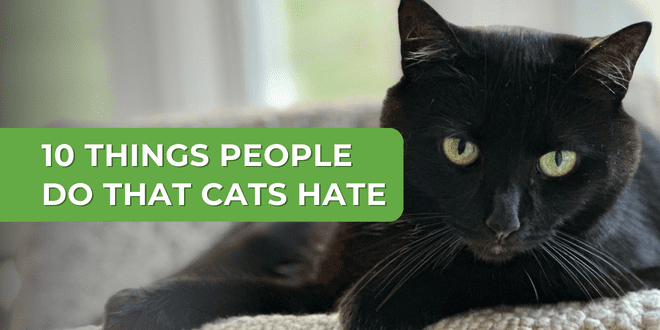
This report explores the top ten human behaviors that cats find inherently distressing, drawing on behavioral research to help owners foster a more harmonious, low-stress environment.
The Biological Foundation of Feline Stress
Cats are "creatures of habit" by evolutionary design. As both predators and prey in the wild, their survival depends on environmental stability and predictability. When humans impose their erratic lifestyles onto a cat’s world, the resulting cognitive dissonance often manifests as behavioral issues, including house soiling, aggression, or withdrawal.
1. The Disruption of Routine (Abrupt Change)
The most common catalyst for feline anxiety is sudden, unmanaged change. Whether it is the introduction of a new pet, a sudden move to a new home, a change in diet, or simply rearranging the living room furniture, these shifts can trigger a stress response.
Chronology of Adaptation: When a change occurs, a cat does not simply "get used to it." They first enter a state of hyper-vigilance. If the stressor persists without an exit strategy, they may progress to learned helplessness or chronic anxiety. Experts recommend a "gradual integration" model: introduce new furniture one piece at a time, or blend new food with old over the course of a week to allow the cat’s internal clock to adjust to the new reality.
2. The Sanitation Standard (The Dirty Litter Box)
It is a common misconception that cats are "low maintenance" regarding their bathroom habits. In reality, a cat’s olfactory system is thousands of times more sensitive than a human’s. A dirty litter box is not just an inconvenience to a cat; it is a profound stressor that signals an unsafe, unhygienic environment.
Data on Hygiene: Veterinary behaviorists note that cats with access to poorly maintained litter boxes are at a significantly higher risk for urinary tract infections and stress-induced cystitis. The professional recommendation is to scoop at least twice daily and perform a full deep-clean of the basin regularly. The use of scented additives or heavy perfumes is strongly discouraged, as these artificial odors can be as offensive to a cat as a clogged drain is to a human.
The Physicality of Human-Cat Interactions
Many of the conflicts between humans and cats arise from a fundamental misunderstanding of "consent" in animal body language.
3. The Vulnerability Paradox: Touching the Tummy
Human instinct often leads us to rub a cat’s belly, viewing it as a sign of affection. However, behaviorists argue that an exposed belly is actually a tactical display of trust, not an invitation for physical contact. For a cat, the abdomen is the most vulnerable area, housing vital organs. Touching it is often interpreted as a violation of safety. Unless a specific cat has demonstrated a clear preference for belly rubs, owners are advised to stick to the cheeks and chin, where cats possess scent glands that provide positive, non-threatening stimulation.
4. Over-Handling and Forced Hugging
Hugging is a primate behavior; it is not a feline one. When a human hugs a cat, they are effectively restricting the cat’s ability to flee or defend itself. Even for cats that enjoy human contact, being "cradled" can feel like a trap.

Implications for Children: This is particularly critical in households with children. Children often lack the nuance to read a cat’s "warning" signs—such as a twitching tail or flattened ears—leading to accidental scratches or bites. Parents should teach children to let the cat approach them, keeping their hands to themselves until the cat initiates contact.
Environmental and Sensory Overload
A cat’s world is dominated by sensory input. When that input becomes erratic or overwhelming, the cat’s ability to regulate its own emotions collapses.
5. Acoustic Stress: The Impact of Loud Noises
With hearing sensitivity that reaches into the ultrasonic range, cats live in a world of high-definition sound. A vacuum cleaner is not just a cleaning tool; to a cat, it is a roaring, unpredictable predator.
Mitigation Strategies: Owners should identify "quiet zones" within the home—areas free from high-decibel appliances, loud music, or shouting. Furthermore, vital resources such as food bowls and litter boxes should never be placed near noisy appliances. If you suspect your home is too loud, professional behaviorists suggest using a decibel meter app to ensure ambient noise levels remain within a range that won’t cause your cat long-term auditory discomfort.
6. The Necessity of Choice: Forced Interaction
The concept of "personal space" is a human social construct, but it is a biological necessity for the cat. Forcing a cat to be held or petted when it wishes to retreat—especially when guests are present—is a primary cause of behavioral regression.

The "Choice-Based" Approach: Always allow the cat the freedom to exit a social situation. If a guest wants to meet the cat, advise them to sit quietly and let the cat come to them. When the cat feels they have control over their environment, they are statistically more likely to seek out human interaction voluntarily.
Psychological Well-being and Training
The evolution of pet ownership has seen a shift from punitive discipline to reward-based training. Yet, some owners still resort to archaic methods that fundamentally damage the human-cat relationship.
7. The Futility of Punishment
Punishment (such as spraying water or shouting) is entirely ineffective for feline learning. Because cats do not possess the capacity to associate a past action with a future consequence in the way humans do, they simply learn to fear the human.
The Professional Perspective: Instead of punishing a "bad" behavior, identify the function of the behavior. Is the cat scratching the sofa? They likely need a better scratching post. Is the cat jumping on the counter? They likely need more vertical space. Reward the desired behavior with high-value treats or play to reinforce the bond rather than break it.
8. Misinterpreting Body Language
Communication between species is fraught with error. A tail flick, a slow blink, or a dilated pupil are all data points that a cat provides to communicate its current emotional state. Ignoring these signals is equivalent to ignoring someone shouting, "Stop, I’m uncomfortable!"

9. Sensory Pollution: Strong Scents
Beyond litter boxes, the home environment is often saturated with synthetic fragrances that can be physically irritating to a cat. Essential oil diffusers, harsh chemical cleaners, and heavy colognes can lead to respiratory irritation and extreme stress.
10. The Need for Predictability
A cat’s day should be a rhythm, not a sequence of random events. Regular feeding times, scheduled play sessions, and consistent resting periods provide a "predictable structure" that allows a cat to relax. When life becomes chaotic, the cat’s anxiety levels rise in tandem.
Implications for the Future of Feline Care
The implications of these findings are clear: the key to a long-lasting, loving relationship with a cat is not just providing food and shelter, but actively curating an environment that respects the cat’s natural instincts.
Summary of Behavioral Recommendations:
- Gradualism: Manage changes to the home environment slowly.
- Respect: Acknowledge the cat’s right to refuse touch.
- Sanitation: Maintain a pristine, fragrance-free bathroom space.
- Training: Pivot from punishment to positive reinforcement.
As we continue to learn more about feline cognition, the role of the owner is shifting from "master" to "steward." By recognizing that our pets are individuals with specific needs, we move away from the frustration of "unwanted behaviors" and toward a more profound, mutual understanding.
For those seeking to dive deeper into the science of feline behavior, the works of experts such as Pam Johnson-Bennett provide a comprehensive roadmap. Through the application of these behavioral insights, we ensure that our homes remain not just a house, but a sanctuary for our feline companions.