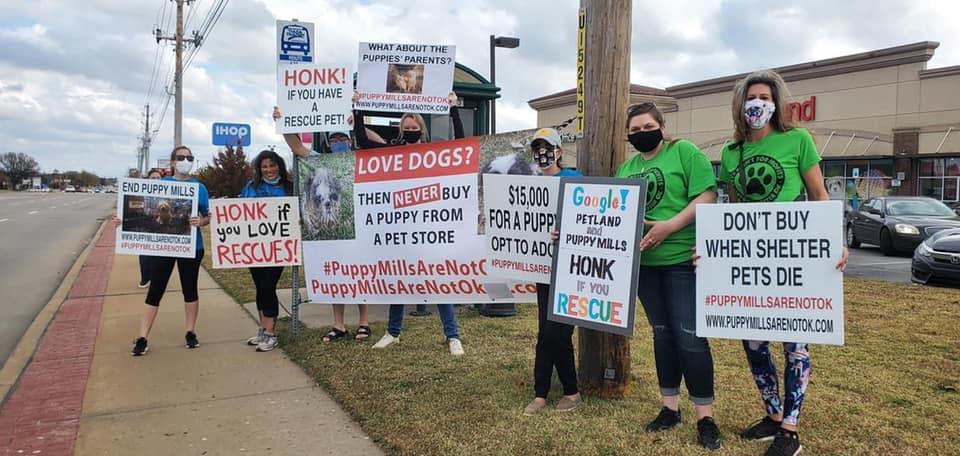
CHICAGO, IL — A coalition of Chicago-area animal welfare organizations is intensifying pressure on commercial pet retailer Petland, demanding an immediate end to the sale of live rabbits. Local rescue leaders point to a compounding cycle of impulse retail purchases, mis-sexed pairs, accidental litters, and high-profile hoarding cases that have pushed the region’s shelter system to a breaking point.
The campaign, amplified by organizations such as the House Rabbit Society of Chicago (HRS Chicago), Red Door Animal Shelter, and It’s All About The Paws (IAATP), highlights what advocates describe as the devastating downstream consequences of commercial rabbit retail. As rescue waitlists grow and emergency medical funds dwindle, animal advocates are turning to public mobilization, launching petitions, and demanding humane retail reform.
The Core Conflict: Commercial Retail Meets Rescue Realities
At the heart of the campaign is a fundamental disagreement over the ethics and practical consequences of selling live companion animals in a retail environment. While major national pet supply chains like Petco and PetSmart transitioned away from selling live rabbits and dogs years ago in favor of adoption partnerships, companies like Petland continue to offer live animals.
Local advocates argue that the retail model inherently promotes impulse buying. Unlike specialized rabbit rescues—which enforce strict screening processes, educate adopters on the complex dietary and behavioral needs of lagomorphs, and require spaying or neutering prior to adoption—retail stores often sell rabbits to customers who are entirely unprepared for a 10-to-12-year commitment.
Compounding the problem, retail employees frequently fail to properly identify the sex of young rabbits. Customers who purchase what they are told are two males or two females often discover too late that they have acquired an intact breeding pair. Because rabbits reach sexual maturity as early as three to four months of age and have a gestation period of just around 31 days, a single mis-sexed pair can rapidly multiply into dozens of animals. This predictable sequence of events has directly fueled large-scale animal hoarding scenarios across the greater Chicago area.
Chronology of Crisis: Two Schaumburg Hoarding Cases
The human and financial toll of retail-originated rabbit populations is underscored by two major intervention cases in Schaumburg, Illinois, both of which trace their origins back to the same commercial storefront.
Case 1: The May 2021 Extended-Stay Hotel Intake
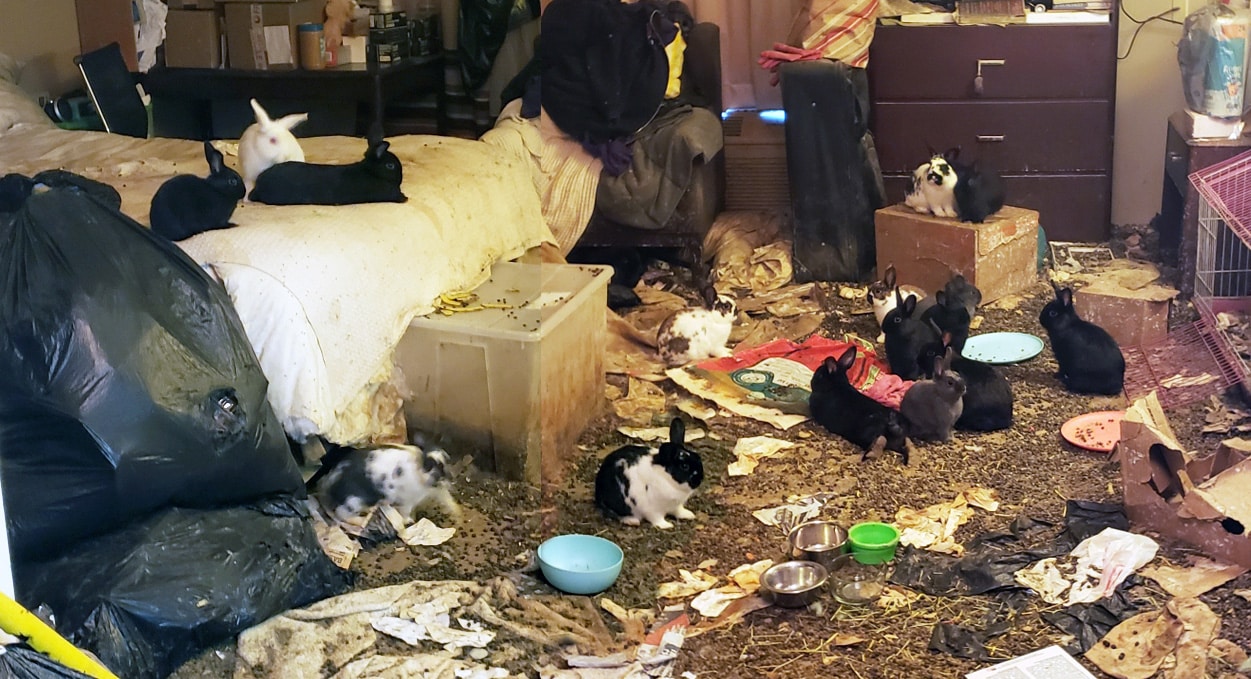
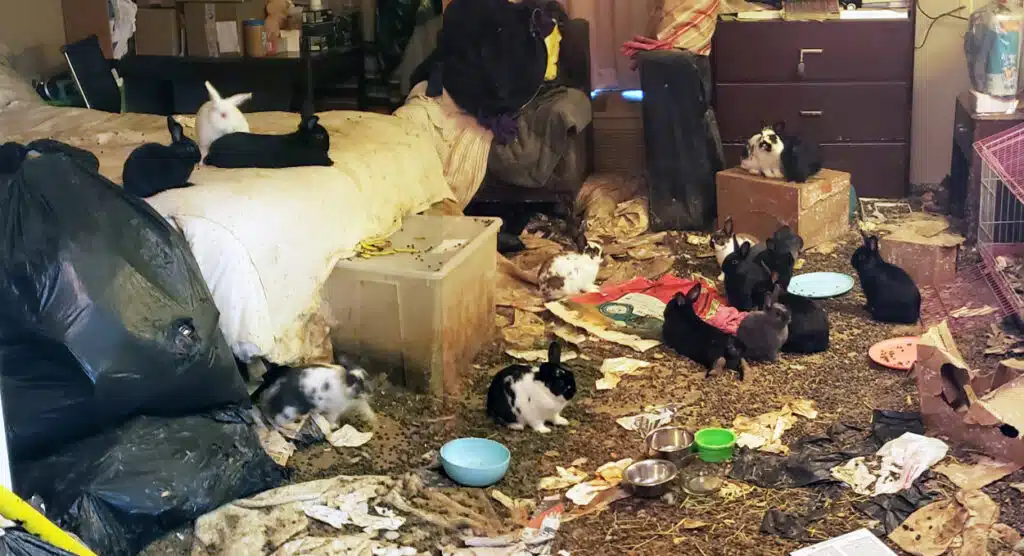
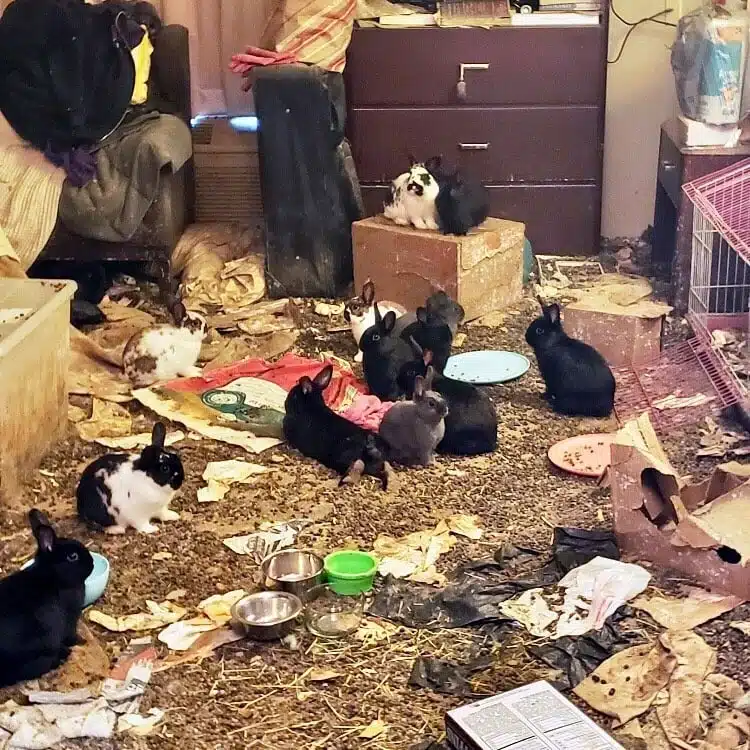
In May 2021, local authorities and animal welfare workers executed a rescue operation at a long-stay hotel room in Schaumburg. Responders entering the debris-filled room—garbed in protective masks and gloves—discovered an alarming scene: 47 rabbits crowded into a confined space without adequate sanitation, food, or water.
Of the 47 animals removed from the room, an astounding 15 were pregnant. The emergency intake was divided between local facilities: Red Door Animal Shelter took in 22 rabbits, while DuPage County Animal Services received 25. The immediate medical and housing costs for Red Door alone exceeded $7,000.
According to documentation and statements from Red Door Animal Shelter, the individual maintaining the room reported to investigators that the entire crisis began with just two rabbits originally purchased from Petland Hoffman Estates.
Case 2: The July 2023 Single-Family Home Intake
Just over two years later, animal rescuers faced a distressingly similar scenario. In July 2023, IAATP responded to a single-family home in Schaumburg where dozens of rabbits were living in unsanitary conditions.
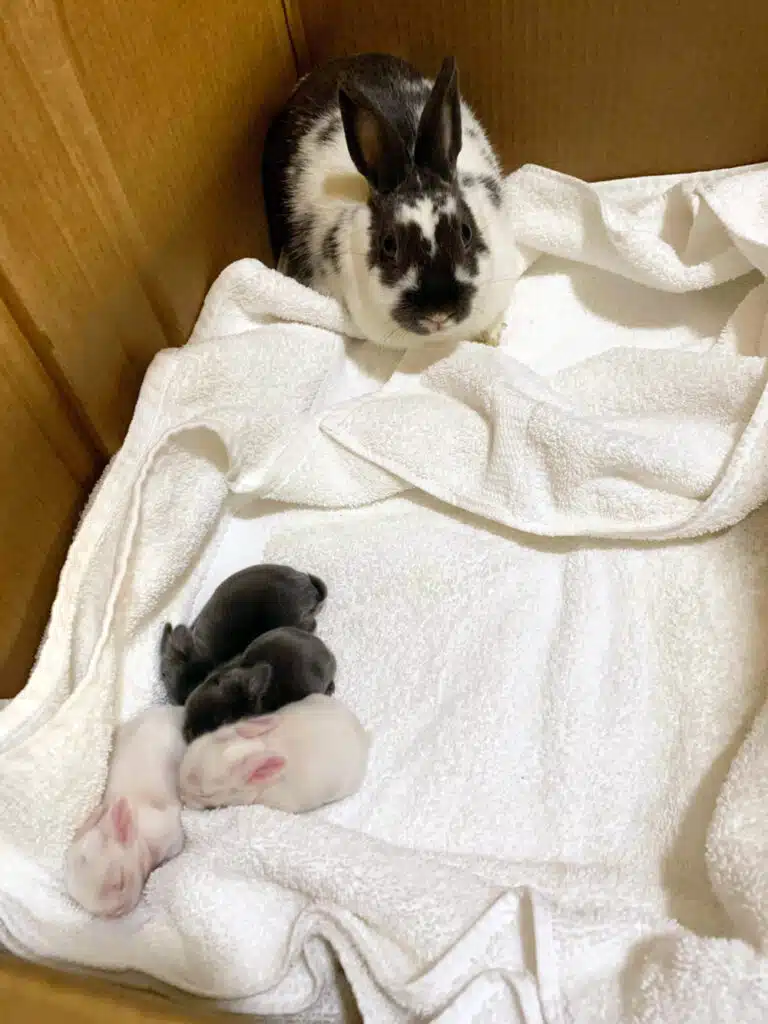
Working in coordination with local animal control, IAATP personnel removed 29 rabbits—including newborn kits—within a frantic 24-hour window, though the home ultimately housed more than 40 animals in total.
According to IAATP founder Erika Seibert, the homeowners disclosed to investigators that they had purchased the original breeding pair from the Petland location in Hoffman Estates. Managing the fallout required a regional coalition of rescue resources, with IAATP coordinating emergency placements alongside HRS Wisconsin, Hoopy Haven Rabbit Rescue, and Lost Woods Animal Sanctuary.
Supporting Data and the Burden on Rescues
The structural impact of these mass intakes goes far beyond a single bad weekend for shelter volunteers. Rabbit rescues operate on razor-thin margins, depending heavily on foster networks, private donations, and volunteer labor.
When a single retail-driven hoarding case dumps dozens of unspayed, unneutered, and often medically compromised rabbits into the system, the ripple effects are felt across the entire Midwestern animal welfare network:
Strained Medical Budgets: Intact rabbits require immediate veterinary assessment, quarantine protocols, and eventual spay/neuter surgeries. In cases involving pregnant females or unsanitary conditions, treatment for respiratory infections, parasites, and injuries from territorial fighting drives veterinary bills into the thousands of dollars per incident.
Foster Care Deficits: Most municipal shelters are unequipped to house rabbits long-term, meaning private rescues must absorb the population surge. When dozens of rabbits suddenly enter the system, foster homes reach maximum capacity instantly, forcing rescues to turn away individual owner-surrenders from the public.
Extended Waitlists: Families seeking to surrender rabbits responsibly—due to lifestyle changes, allergies, or unforeseen hardships—are met with months-long waiting lists because rescue space is perpetually occupied by victims of retail-fueled population booms.
Voices from the Front Lines
Animal welfare leaders in Illinois have expressed profound frustration with corporate policies that prioritize retail profit margins over animal welfare and community safety.
"Petland is a major source of rabbits who later end up abandoned or in crisis… We regularly see mis-sexed pairs adopted from stores that lead to repeated litters. While Petland profits, rabbits suffer."
— Rachael Sanders, Director, HRS Chicago
The sentiment is echoed by executive leadership at shelters tasked with cleaning up the mess left in the wake of commercial sales.
"We managed back-to-back mass-intake crises in Schaumburg—each beginning with owner-reported Petland-origin pairs—stretching volunteers, foster space, and medical budgets to the breaking point."
— Toni Greetis, Vice President, Red Door Animal Shelter
Advocates argue that voluntary corporate responsibility is long overdue. Through coalitions organized by the Rabbit.org Foundation and local Chicago rescues, activists are demanding that Petland follow the ethical precedent set by other major pet supply companies by ending the sale of live rabbits entirely.
Broader Implications and Call to Action
The campaign against Petland is part of a broader national movement to reclassify how companion animals are treated in commercial retail settings. Activists maintain that live animals should not be treated as impulse-buy merchandise or holiday novelty gifts—a particularly acute issue during the Easter season, when young rabbits are frequently purchased on a whim and subsequently abandoned.
How the Public Can Help
Local rescues emphasize that public engagement is vital to shifting corporate policy. Animal advocates have mobilized an active petition hosted on Change.org titled "Stop Rabbit Sales at Petland," urging community members to add their voices to the call for humane retail reform.
Furthermore, rescues are urging community members facing difficulties with pet ownership to utilize municipal resources rather than resorting to abandonment.
If you are overwhelmed: Contact a recognized local rabbit rescue or humane society to discuss owner-surrender options. Never abandon a domestic rabbit outdoors, where they lack the survival instincts of wild cottontails and face starvation, disease, and predators.
Emergency and Stray Situations: Local animal control or municipal shelters should be contacted immediately for safe, regulated intake guidance.
As the pressure mounts on Petland stores in Illinois and beyond, Chicago’s animal rescue community remains steadfast in its mission: holding retailers accountable for the lives they sell, and picking up the pieces when the corporate bottom line collides with animal welfare.