For millions of pet owners, the daily ritual of filling a food bowl is an act of love and responsibility. Yet, beneath the colorful packaging and promises of "premium" nutrition lies a complex, often opaque regulatory landscape that frequently leaves consumers in the dark. As pet parents increasingly scrutinize the quality of what their companions consume, a deeper look into the industry reveals a disconnect between legal protections, regulatory enforcement, and the reality of the ingredients found in kibble and canned goods.
Understanding the Regulatory Architecture
To understand the pet food industry, one must first dismantle the misconception that there is a single "watchdog" agency overseeing the safety of every bag sold. In the United States, pet food regulation is a bifurcated process. On the federal level, the Food and Drug Administration (FDA) holds primary jurisdiction. Simultaneously, individual State Departments of Agriculture manage enforcement within their borders.
A common point of confusion for consumers is the role of the Association of American Feed Control Officials (AAFCO). Contrary to popular belief, AAFCO is not a regulatory agency. It holds no legal authority to pass laws or enforce standards. Instead, it acts as a voluntary membership association that develops model regulations and nutritional profiles that states may choose to adopt. Similarly, while the United States Department of Agriculture (USDA) was once associated with a "Certified Pet Food" program—which mandated that all ingredients meet human-edible standards—that program is no longer active in the way many consumers assume.
The Ingredient Landscape: What’s Actually in the Bag?
Industry reports provide a startling look at the sheer volume of specific ingredients moving through the pet food supply chain. Perhaps most notably, corn remains the dominant ingredient by a significant margin. According to recent industry data, almost one million tons more corn is utilized in pet food production than any other singular ingredient.
The naming conventions on these products are equally nuanced. When a manufacturer includes the word "with" in a product name—such as "Dog Food with Beef"—AAFCO regulations require that the named ingredient constitutes a minimum of 3% of the product’s weight, excluding added water. When labels utilize terms like "Recipe," "Formula," or "Dinner," the bar is set slightly higher, requiring the named ingredient to account for at least 10% of the product weight (again, excluding water).

Nutritional Baselines: Proteins and Life Stages
Nutritional requirements are dictated by AAFCO’s nutrient profiles, which are split into two primary categories: "Adult Maintenance" and "All Life Stages."
- For Cats: Adult maintenance profiles require a minimum of 26% protein, while "All Life Stages" (which includes kittens) requires a minimum of 30%.
- For Dogs: Adult maintenance requires a minimum of 18% protein, while "All Life Stages" (which includes puppies) requires a minimum of 22.5%.
A critical note for owners of large-breed puppies: these formulations differ slightly from standard puppy food, specifically regarding calcium content, which must be strictly managed to support healthy skeletal development.
The "Feeding Trial" Myth
One of the most persistent marketing claims on pet food packaging is that the food has been "proven" via feeding trials. While AAFCO establishes the rigorous protocols for what constitutes a valid feeding trial, the agency does not actually certify or verify the results. There is no independent regulatory body tasked with auditing or validating these trials. Consequently, when a company claims a product is "trial-validated," they are largely relying on self-reported data that lacks third-party oversight.
A Controversial Loophole: Diseased and Non-Slaughtered Animals
Perhaps the most contentious issue in the pet food industry concerns the inclusion of animals that have died other than by slaughter, or those that were diseased. Federal law generally prohibits such ingredients in food products. However, the FDA has carved out a unique position regarding pet food.
In public statements, the FDA has explicitly noted: "We do not believe that the use of diseased animals or animals that died otherwise than by slaughter to make animal food poses a safety concern and we intend to continue to exercise enforcement discretion."

This "enforcement discretion" essentially allows manufacturers to bypass the spirit of federal law. Advocates, such as Susan Thixton and the Association for Truth in Pet Food, have repeatedly petitioned the FDA to either ban these ingredients or, at the very minimum, mandate clear disclosure on labels so consumers can make informed choices. To date, these petitions have been rejected, leaving a gap where illegal-by-standard ingredients remain a silent component of the pet food supply chain.
The Illusion of Transparency: Labeling and Marketing
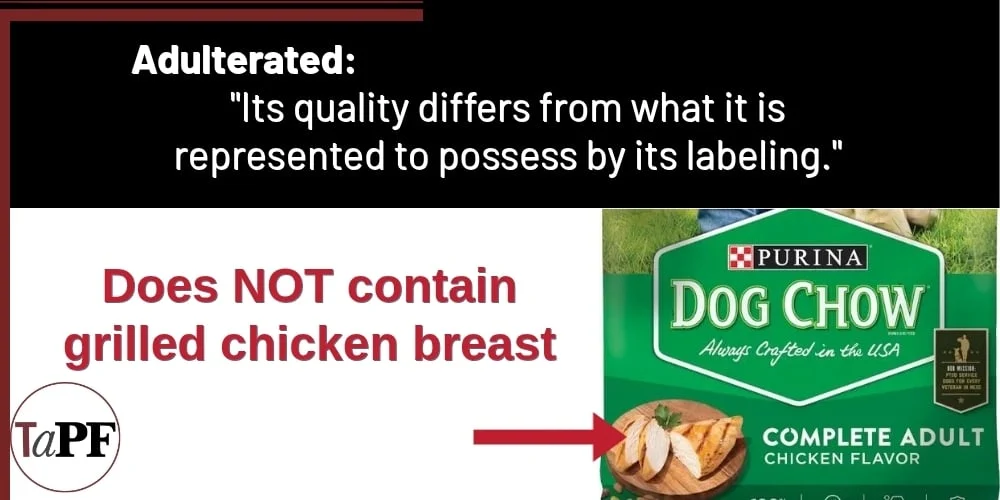
The regulations governing pet food labels state that any graphic, vignette, or pictorial representation "shall not misrepresent the contents of the package." Despite this clear mandate, the reality on the retail shelf is vastly different. Many labels feature high-quality images of fresh meats and vegetables that are not present in significant quantities, if at all, within the product.
Current regulatory authorities have shown little interest in enforcing these "truth in advertising" standards. This lack of oversight allows manufacturers to use imagery that implies a level of freshness and quality that the actual chemical composition of the food does not support.
Defining "Human Grade"
For consumers seeking the highest quality, the term "Human Grade" is often the gold standard. However, this is not merely a marketing term; it is a legal designation. For a pet food to be legally marketed as "Human Grade," every single ingredient—and the resulting finished product—must be stored, handled, processed, and transported in strict compliance with the current Good Manufacturing Practices (cGMPs) for human-edible foods, as specified in 21 CFR Part 117. Anything less than this full-chain compliance precludes a manufacturer from using this claim.
Implications and the Path Forward
The systemic issues facing pet food regulation—from the lack of validation for feeding trials to the FDA’s enforcement discretion regarding non-slaughtered animals—suggest that the current system prioritizes industry flexibility over consumer transparency.
For the average pet owner, the implication is clear: you cannot rely solely on the front of the bag. The marketing claims, glossy photos, and "recommended by" badges are often secondary to the fine print.
Recommendations for the Conscious Consumer:
- Prioritize Transparency: Look for manufacturers that provide clear, third-party testing results and full disclosure of sourcing.
- Understand the "Human Grade" Label: If you are seeking higher standards, verify that the company adheres to 21 CFR Part 117.
- Support Advocacy: Organizations like the Association for Truth in Pet Food provide a necessary voice for consumers at regulatory meetings, pushing for the disclosure and safety standards that are currently missing from the market.
- Educate Yourself on Sourcing: Familiarize yourself with the "List" of trusted manufacturers, which are curated based on deeper audits of manufacturing practices rather than just marketing promises.
Conclusion
The pet food industry is a multi-billion dollar sector that remains largely self-regulated under the guise of state and federal oversight. While many manufacturers strive for excellence, the lack of rigorous, enforceable standards for ingredient quality and label accuracy leaves the burden of investigation on the pet owner. By understanding the loopholes in the system—specifically regarding the FDA’s discretionary policies—consumers can begin to advocate for a market that treats pet health with the same urgency as human health.
As we look toward the future of pet nutrition, the demand for "Truth in Pet Food" is not just a consumer preference; it is a necessary evolution of an industry that currently prioritizes regulatory convenience over the safety and well-being of the animals we consider family.
For more information on navigating the pet food market, verifying ingredient quality, or joining the fight for better regulatory standards, visit TruthaboutPetFood.com.