By Paige K Parsons
Edited by Our Think Tank
Introduction: The Changing Landscape of Companion Animals
For decades, the American household has been synonymous with the classic duo of dogs and cats. However, a quiet revolution has been unfolding across living rooms, suburban apartments, and urban high-rises throughout the United States. Non-traditional companion animals—exotics, pocket pets, and particularly rabbits—have carved out a permanent, cherished place in American domestic life.
As pet ownership data becomes increasingly sophisticated, animal welfare advocates, veterinary epidemiologists, and pet industry analysts have sought to answer a fundamental question: Exactly how many rabbits call the United States home?
Recent data released by the American Veterinary Medical Association (AVMA) and the American Pet Products Association (APPA) offers a fascinating window into the current state of rabbit ownership. While bunny populations fluctuate alongside shifting economic conditions, cultural attitudes, and generational preferences, one trend remains clear: rabbits are no longer just backyard livestock or classroom animals; they are fully integrated family members.
Main Facts: The State of Rabbit Ownership in 2025
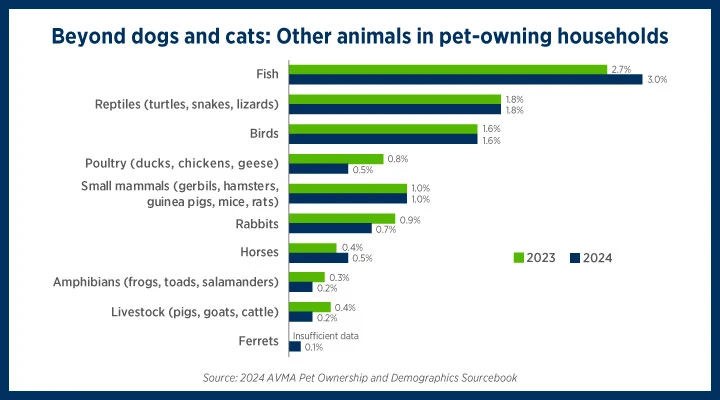
The most recent data paints an evolving picture of the American rabbit population. According to public statistics released by the AVMA in May 2025—drawing from its comprehensive 2024 Pet Ownership & Demographics dataset—roughly one million U.S. households, or approximately 0.7% of the nation, currently provide a home to at least one pet rabbit.
This latest figure represents a slight numerical contraction compared to peak historical numbers, yet it underscores a dedicated core of bunny owners nationwide. To contextualize these numbers, it is helpful to look at immediate historical milestones:
- The 2022 AVMA Benchmark: The AVMA’s 2022 U.S. Pet Ownership & Demographics Sourcebook reported that 1.2% of American households (roughly 1.5 million homes) owned rabbits, amounting to an estimated total population of 2.2 million pet rabbits.
- The Small Animal Sector: According to the 2022 APPA Pet Owners Survey, rabbits continue to dominate the "Small Animal" category. Across the United States, approximately 6.7 million households keep small animals, with rabbits reigning supreme as the most popular species in this classification.
- Generational Shifts: Market research highlighted by Forbes indicates that rabbits and other exotic pets have found a massive audience among younger demographics, specifically Millennials and Generation Z. These younger pet owners are increasingly drawn to species that fit into smaller living spaces, require lower carbon footprints, and offer rich, interactive companionship without demanding the yard space of a large dog.
Furthermore, how these animals enter homes has shifted dramatically. Data from the APPA underscores a major evolution in sourcing: historically, pet stores served as a primary commercial pipeline. However, progressive legislative changes, public education campaigns by organizations like the Rabbit Welfare Association and Fund, and the rise of specialized rescue networks have heavily decentralized this market. Between the early 2010s, when roughly 14% of rabbits were purchased from pet stores and 25% were adopted, the commercial sale of rabbits has seen sharp, sustained declines in favor of shelter adoptions and direct-from-breeder placements.
Chronology: A Quarter-Century of Rabbit Ownership Trends
To understand where rabbit ownership stands today, one must examine how the data has evolved over the last 25 years. Tracking statistics compiled by organizations like the AVMA, the APPA, the USDA, and research repositories like RabbitWiki reveals a wave-like pattern of growth, stabilization, and contraction.
The Turn of the Century (2000–2005)
At the dawn of the 21st century, rabbits were already establishing a firm foothold in American homes.
- 2000–2001: Surveys from this period estimated that roughly 1.6% to 1.9% of all U.S. households owned rabbits, translating to a total population hovering between 4.6 million and 5.3 million animals. Households often kept multiple rabbits, with average numbers reaching 2.6 to 3.2 rabbits per rabbit-owning home.
- 2002: A landmark report released by the United States Department of Agriculture (USDA) estimated that 5 million pet rabbits resided in 2.2 million households across the nation.
The Mid-2000s Peak (2006–2010)
This era marked a golden age for reported small animal numbers, driven largely by shifting suburban demographics and increased commercial availability.
- 2006: Gallup polls and AVMA datasets confirmed that while roughly 1% of households maintained rabbits, the sheer density of animals per household remained high.
- 2007: Both the AVMA and the APPA reported a dramatic surge, estimating a total pet rabbit population of 6.1 million to 6.3 million. During this period, industry analysts noted that rabbits officially surpassed hamsters to become the most popular small mammal pet in the United States, positioning themselves comfortably behind only dogs and cats in overall mammal popularity.
- 2009–2010: The APPA Pet Owners Survey noted that out of 15.9 million small animal pets in the U.S., a staggering 42% were rabbits. This pushed the total estimated rabbit population to an all-time recorded high of 6.6 million.
The Post-Recession Stabilization (2012–2022)
Following the economic shifts of the late 2000s, total rabbit populations experienced a downward correction, leveling off into a more sustainable domestic footprint.
- 2012: AVMA surveys recorded 1.2% of U.S. households (about 1.4 million homes) housing approximately 3.2 million rabbits.
- 2017: Data held steady, with 1.5 million households reporting rabbit ownership, maintaining a total population baseline of roughly 2.2 million animals.
- 2022: The AVMA Sourcebook reaffirmed the 1.5-million-household milestone (1.2% of the country), confirming a stable national population of 2.2 million companion rabbits.
The Post-Pandemic Reality (2024–2025)
As the pet acquisition boom seen during the global health crisis normalized, the AVMA’s May 2025 data update recorded a recalibration to roughly 1 million households (0.7%). While this reflects a numerical drop from the historical highs of the 2000s, veterinary professionals emphasize that modern rabbit owners tend to invest significantly more resources into specialized veterinary care, high-end housing, and premium nutrition than previous generations.
Supporting Data: Historical Summary Table
To provide a granular view of these demographic shifts, the following table consolidates decades of national survey data regarding U.S. rabbit ownership:
| Metric | 2022 | 2017 | 2012 | 2010 | 2007 | 2002 | 2001 | 2000 | 1996 | 1991 |
|---|---|---|---|---|---|---|---|---|---|---|
| Households Owning Rabbits | 1.5M | 1.5M | 1.4M | — | 1.9M | 2.2M | 1.8M | 2.2M | 1.9M | 1.4M |
| % Overall Households | 1.2% | 1.2% | 1.19% | — | 1.62% | — | 1.70% | 1.6% | 1.90% | 1.50% |
| Average Rabbits / Household | — | — | 2.28 | — | 3.3 | — | 2.7 | 2.4 | 2.63 | 3.22 |
| Total Rabbit Population | 2.2M | 2.2M | 3.2M | 6.6M | 6.1M | 5.0M | 4.8M | 5.3M | 4.9M | 4.6M |
(Note: Historical tracking compiled with assistance from historical archives and RabbitWiki references.)
Official Responses and Industry Perspectives
The structural shifts in rabbit ownership have not gone unnoticed by veterinary associations, retail institutions, and animal welfare organizations.
The Veterinary Perspective
The American Veterinary Medical Association has continually adapted its data-gathering methodologies to better account for exotic and non-traditional pets. In statements accompanying their demographic releases, AVMA representatives have noted that while dogs and cats still command the lion’s share of veterinary resources, the demand for specialized "exotic animal practitioners" has grown exponentially. Rabbits, due to their unique physiological needs—such as continuous tooth growth, sensitive gastrointestinal tracts, and specialized dietary requirements—require a level of clinical expertise that standard veterinary school curricula historically under-emphasized. Today, veterinary hospitals across the country are investing heavily in staff training tailored specifically to lagomorph medicine.
The Retail and Rescue Dynamic
The American Pet Products Association has highlighted a profound dichotomy in how rabbits are treated within the consumer market. While pet industry spending overall has broken records year after year, the commercial sale of rabbits has faced intense public scrutiny.
Animal welfare organizations, including the House Rabbit Society, have long campaigned against impulse purchases—particularly around Easter, when live rabbits are frequently bought as seasonal gifts without long-term consideration. The documented 42% decline in pet store rabbit sales between the early 2010 survey cycles points toward the success of these advocacy efforts. Consumers are increasingly turning away from commercial breeders and pet shops, opting instead for structured adoption processes through dedicated rabbit rescues that mandate spaying, neutering, and comprehensive owner education.

Implications: What the Numbers Mean for the Future
The evolving demographics of U.S. rabbit ownership carry profound implications for animal welfare, veterinary medicine, urban housing trends, and consumer education.
1. The Rise of Indoor, Free-Roam Rabbit Husbandry
Historically, rabbits were frequently viewed as outdoor animals meant to live in hutches. Modern demographic data, paired with cultural shifts among Millennial and Gen Z owners living in urban environments, confirms that rabbits are now overwhelmingly kept indoors. The "free-roam" rabbit movement—where bunnies live untethered in rabbit-proofed rooms or apartments much like indoor cats—has revolutionized housing supplies. Pet manufacturers now produce specialized indoor enclosures, tunnels, litter training equipment, and specialized flooring to accommodate indoor lagomorphs.
2. Specialized Veterinary Access and Cost of Care
As the total rabbit population stabilizes around the 1-to-2.2-million mark, the quality of care per animal has risen dramatically. Owners are no longer viewing rabbits as "disposable" or short-term pets. Instead, they demand advanced medical interventions, including digital radiography, specialized surgeries, and critical care hospitalization. However, this creates an access-to-care gap: finding a qualified "exotic vet" who understands rabbit medicine can be exceptionally difficult in rural or semi-urban areas, driving up the cost and logistical complexity of ownership.
3. Shelter Burdens and Post-Holiday Surrender Rates
Despite growing awareness, rabbit rescues across the United States continue to face capacity crises. Because rabbits have delicate digestive systems, require complex behavioral socialization, and can live upwards of 8 to 12 years, unprepared owners frequently surrender them to shelters. The drop in total rabbit numbers from the 6-million peaks of the late 2000s to today’s 1-to-2-million estimates may paradoxically reflect a more realistic, sober public assessment of what it takes to care for a rabbit—resulting in fewer impulse acquisitions, though shelters still struggle with abandonment cycles.
4. Legislative and Retail Policy Impacts
The data reflecting declining pet store sales validates the efficacy of municipal and statewide bans on the commercial sale of dogs, cats, and rabbits in pet stores. As more jurisdictions pass laws restricting retail rabbit sales to shelter-partnered adoptions, the commercial pipeline continues to shrink, placing greater institutional power in the hands of rescue networks and responsible breeders.
Conclusion
Rabbits occupy a uniquely beloved, albeit complex, space in American pet culture. From the high-water marks of 6.6 million animals in 2010 to the steady, urban-friendly population of recent years, the relationship between humans and lagomorphs has matured. As younger generations redefine what it means to be a pet parent in a compact, fast-paced world, the domestic rabbit has cemented its status not as an alternative novelty, but as a sophisticated, rewarding, and permanent fixture of the modern household.