DUBLIN, IRELAND — In the natural world, color is rarely just aesthetic. From the neon hues of poison dart frogs to the stark black-and-yellow bands of stinging wasps, vibrant colorations often act as nature’s ultimate hazard signs—a universal biological billboard broadcasting a clear, unambiguous message: Back off.
Now, a comprehensive new study published in the Journal of Animal Ecology has revealed that this evolutionary strategy, known as aposematism, applies just as powerfully to serpents. According to researchers at the University of Galway, the most brightly colored and distinctively patterned snakes are significantly more likely to be venomous than their duller, camouflaged counterparts.
However, the team discovered that these striking displays are far more complex than simple warning labels. A snake’s palette is the result of an intricate evolutionary balancing act shaped by its habitat, its daily schedule, its prey, and the specific composition of its venom.
Main Facts: Decoding the Serpent’s Palette
At the core of the new research is a fundamental question in evolutionary biology: Why do some snakes evolve dazzling, high-visibility colors while others rely on near-perfect camouflage?
Led by Amy Duclaux, Dr. Michel Dugon, and Dr. Kevin Healy from the Zoology Department within the School of Natural Sciences at the University of Galway, the research team set out to investigate the ecological drivers behind snake coloration.
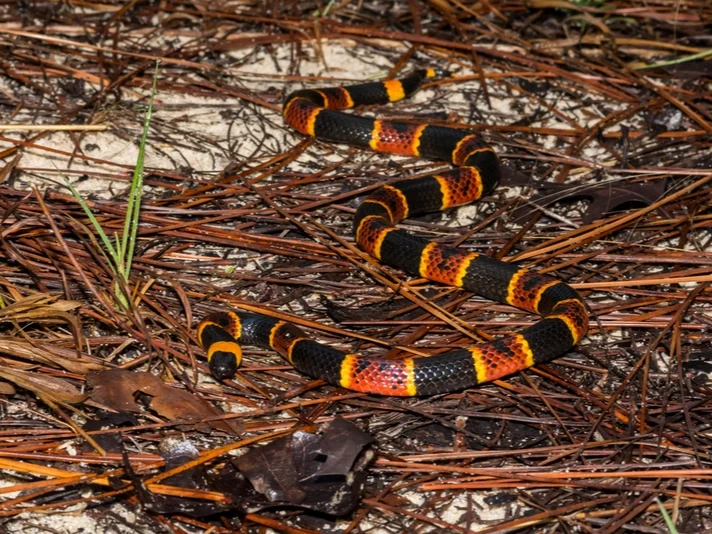
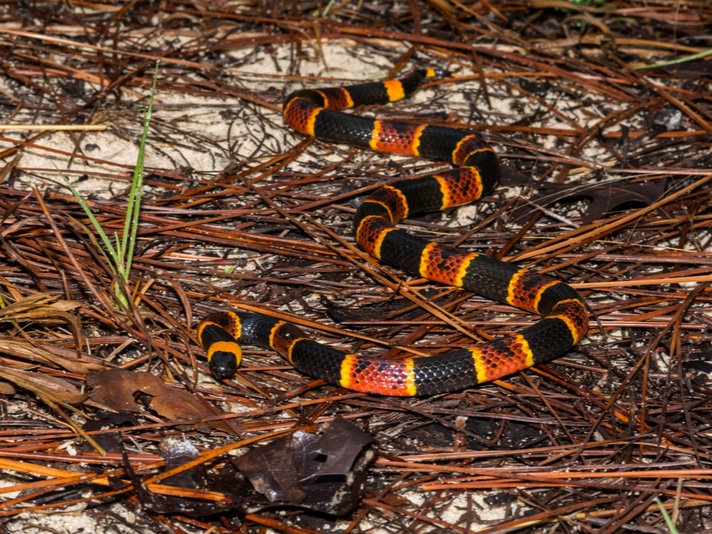
The findings indicate that vibrant hues—such as the brilliant reds, yellows, and blacks of coral snakes—are strongly correlated with venom toxicity. Much like poisonous amphibians, venomous snakes utilize these high-contrast patterns to advertise their defensive capabilities to visually oriented predators, primarily birds and mammals.
Yet, the study emphasizes that a snake’s appearance cannot be viewed in isolation. A complex web of environmental factors dictates whether a species will evolve to stand out or blend in:
- The Venom-Color Trade-off: The researchers discovered intriguing links between the potency of a snake’s venom, its pain-inducing properties, and its visual conspicuousness.
- Habitat Specificity: Whether a snake lives in the forest canopy, burrows underground, or swims in aquatic environments dramatically alters how predators perceive it, influencing the evolution of its skin patterns.
- Circadian Rhythms: Diurnal (day-active) snakes face entirely different predatory pressures compared to nocturnal (night-active) species that operate under the cover of darkness.
- The Predator-Prey Dilemma: While bright colors deter predators, they can simultaneously alert potential prey. Snakes must navigate this delicate ecological trade-off based on their diet and the visual capabilities of the animals they hunt.
Chronology: How the Study Came to Life
The realization that color and toxicity are deeply intertwined in serpents is the result of years of meticulous observation, massive data aggregation, and modern ecological research methodologies.
Phase One: Recognizing the Knowledge Gap
Historically, scientists focused heavily on classic examples of aposematism in insects and amphibians. While herpetologists long recognized that certain iconic species—like the Eastern coral snake (Micrurus fulvius)—utilized bright banding to deter enemies, a comprehensive, macro-evolutionary analysis across the broader snake phylogeny had not been successfully completed. Duclaux, Dugon, and Healy identified this gap in the literature, noting that snakes present a unique model group because they exhibit the entire spectrum of visual strategies, from the striking geometry of pit vipers to the brilliant warning rings of elapids.
Phase Two: Harnessing Citizen Science and Big Data
To analyze coloration on a global scale, the research team required an unprecedented volume of visual data. Direct field photography of every known snake species was impossible. Instead, the researchers turned to massive, verified citizen-science biodiversity databases, most notably iNaturalist.
By mining thousands of photographs of accurately identified snakes captured in their natural habitats, the team could evaluate how different species actually appeared to predators in the wild, rather than relying on preserved museum specimens that often lose their vibrant hues over time.
Phase Three: Cross-Referencing Traits and Ecologies
With a vast library of natural-photography data established, the researchers cross-referenced the visual profiles of various snake species with an extensive database of biological traits. They categorized snakes based on:
- Presence and absence of venom.
- Venom potency and biochemical profiles (specifically components known to cause intense pain).
- Micro-habitats (arboreal, terrestrial, fossorial, or aquatic).
- Activity patterns (diurnal versus nocturnal).
- Dietary preferences.
Phase Four: Publication and Peer Review
Following rigorous statistical modeling and ecological analysis, the team finalized their findings under the title "Contextually conspicuous species are more likely to be venomous: Habitat-dependent aposematic colouration found throughout snakes." The paper was accepted and published in the Journal of Animal Ecology, opening new avenues for research into reptile evolution and defensive strategies.
Supporting Data: The Mechanics of Aposematism
To understand the weight of the University of Galway study, it helps to examine the specific physiological and ecological mechanisms at play within the reptilian world.
The Spectrum of Defense: Coral Snakes vs. Pit Vipers
In the study, researchers utilized the vast diversity of snakes to test their hypotheses. On one end of the spectrum are species like the Eastern coral snake. Their vivid, contrasting rings of red, yellow, and black make them instantly noticeable against forest floors. This high visibility maximizes the chance that a visually hunting predator—such as a hawk or a mammalian carnivore—will spot the snake, recognize the pattern, and remember to avoid it.
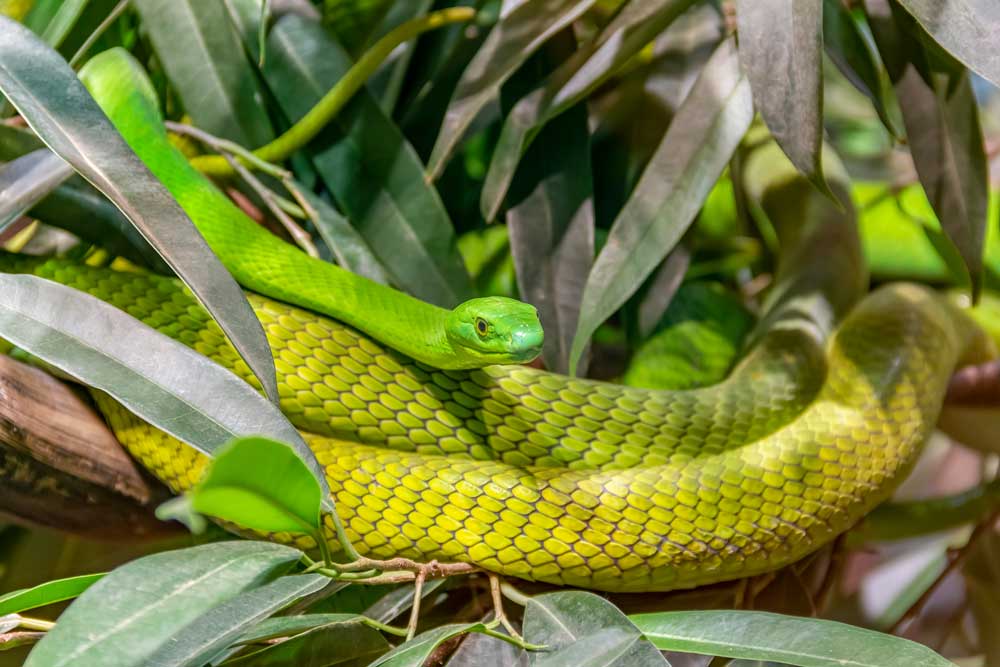
On the other end of the spectrum are camouflaged species, such as many pit vipers (family Viperidae). These ambush predators rely on disruptive coloration or mottled greens and browns to blend seamlessly into foliage or leaf litter, allowing them to remain hidden from both predators and unsuspecting prey.
The Venom-Conspicuousness Equation
One of the most compelling insights generated by the Galway team revolves around the energetic and evolutionary costs of venom production. Producing complex, highly toxic venom requires significant metabolic resources.
The study suggests a fascinating inverse relationship in some contexts: snakes with extremely effective, highly conspicuous warning coloration may not always need the most lethal venom possible, because the deterrent effect of their appearance stops attacks before a strike occurs. Conversely, predators that have experienced the agonizing pain caused by certain venomous species learn quickly to associate specific patterns with painful consequences, reinforcing the protective power of the coloration.
The Role of Micro-Habitat and Lighting
Environmental physics plays a massive role in how a snake’s colors are interpreted. The study analyzed how light filters through different habitats:
- Arboreal Snakes: Living in trees means exposure to dappled sunlight and complex shadows. Species here often evolve green or yellow-green hues that break up their outline, though some leverage bold patterns to signal toxicity against a leafy backdrop.
- Terrestrial and Fossorial Snakes: Ground-dwelling and burrowing species deal with directional light from above or near-total darkness, shifting the evolutionary pressures placed on their skin pigments.
- Diurnal vs. Nocturnal Pressures: Snakes that hunt or bask during the day are under intense selective pressure to manage how predators perceive them. Nocturnal species, operating when visual predators are largely inactive, experience different evolutionary trajectories regarding color expression.
Official Responses and Expert Insights
The publication of the study has generated considerable excitement within the global herpetological and evolutionary biology communities.
Dr. Kevin Healy, one of the study’s co-authors from the University of Galway’s School of Natural Sciences, emphasized the importance of looking at animals within the context of their entire ecosystem rather than examining traits in isolation.
"When we look at animals like poison frogs, the link between bright colors and toxicity is well-established," researchers note in the broader framework of the study. "Our work demonstrates that snakes follow a similar ecological playbook, but with an added layer of complexity. A snake’s color is not just a warning sign; it is a finely tuned evolutionary compromise between avoiding predators, capturing prey, and managing the physiological costs of venom."
Co-authors Amy Duclaux and Dr. Michel Dugon highlighted how modern tools have revolutionized ecological research. By utilizing crowdsourced photographic platforms like iNaturalist alongside traditional biological datasets, the team was able to test evolutionary theories on a scale that was previously impossible.
Independent herpetologists not involved in the study have praised the research for bridging gaps in understanding Batesian mimicry—a phenomenon where harmless species evolve to mimic the warning coloration of dangerous ones, such as non-venomous milk snakes mimicking venomous coral snakes. By firmly establishing the baseline rule that true warning colors correlate strongly with venom, the Galway study provides a solid foundation for future research into mimicry complexes.
Implications: What This Means for Science and Conservation
The findings of this study extend far beyond academic curiosity, offering significant implications for evolutionary biology, ecological conservation, and even human safety.
1. Advancing Evolutionary Theory
By proving that habitat-dependent aposematic coloration is widespread throughout snakes, this study shifts how biologists view reptile evolution. It proves that vertebrate color evolution is deeply tied to biochemical defenses (venom) and environmental niches in a predictable, quantifiable manner.
2. Informing Conservation Strategies
As global habitats face increasing fragmentation and climate pressure, understanding the delicate ecological balances between predators, prey, and venomous species becomes vital. Conservationists working in tropical and subtropical regions—where brightly colored venomous snakes are most prevalent—can better understand how ecosystem alterations might impact animal behavior and survival strategies.
3. Public Health and Safety in the Wild
For hikers, campers, and field researchers, the study reinforces a timeless rule of the outdoors: respect nature’s warning signs. While not every brightly colored animal is dangerous, the statistical reality highlighted by the University of Galway study confirms that when it comes to snakes, high visibility often signals high toxicity. Recognizing these patterns helps underscore the importance of maintaining a safe distance from striking, high-contrast reptiles encountered in the wild.
To read the complete research paper, titled "Contextually conspicuous species are more likely to be venomous: Habitat-dependent aposematic colouration found throughout snakes," visit the Journal of Animal Ecology website.