

The coordinated campaign, supported by major rescue groups including the House Rabbit Society of Chicago (HRS Chicago), Red Door Animal Shelter, and It’s All About The Paws (IAATP), highlights a direct line between impulse retail purchases and severe, resource-draining rescue interventions. As shelters face unprecedented capacity constraints, advocates are urging the public to sign change petitions and calling on corporate leadership to adopt humane retail policies similar to those implemented by other major pet supply chains.
The Core Crisis: Retail Sales Fueling Shelter Collapse
For years, Chicago-area animal advocates have warned that rabbits are among the most misunderstood and improperly cared-for companion animals in the United States. Frequently viewed as low-maintenance "starter pets" or impulse holiday gifts, rabbits possess complex behavioral, dietary, and social needs that frequently overwhelm unprepared buyers.
According to regional rescue directors, commercial retail operations like Petland contribute significantly to this vulnerability. By offering live rabbits for purchase without rigorous buyer vetting, adequate education, or mandatory spay/neuter requirements, these storefronts routinely set the stage for downstream neglect.
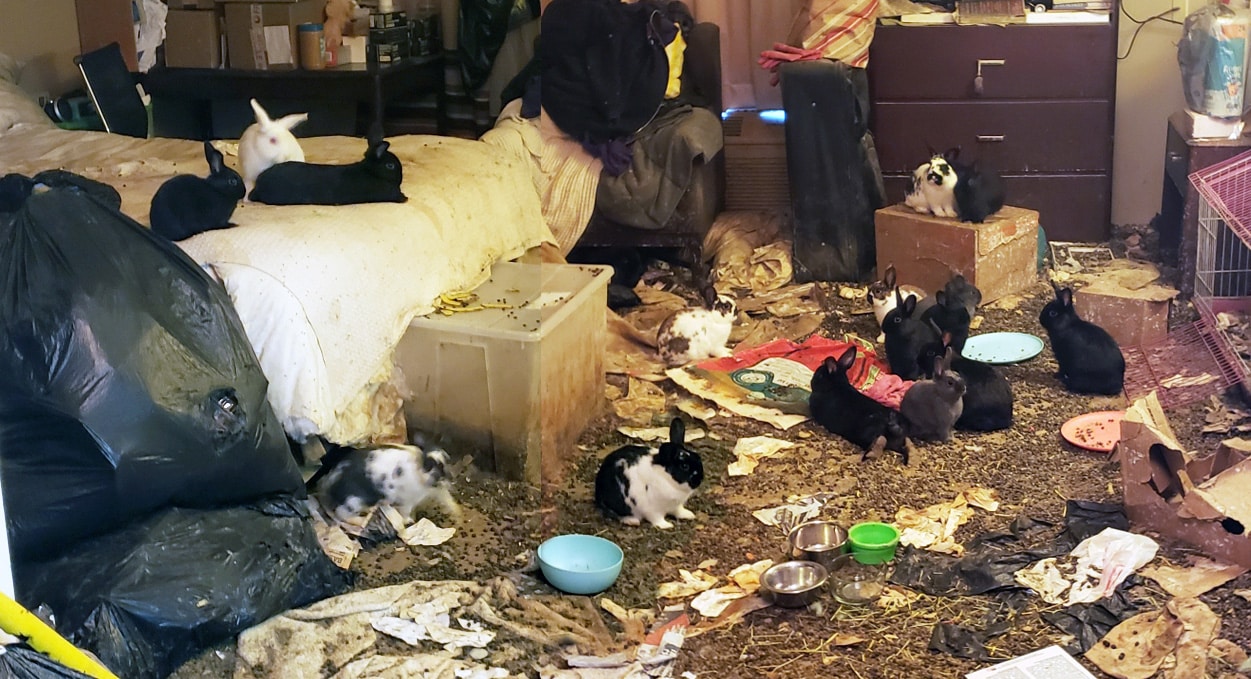
The consequences manifest swiftly: mis-sexed pairs sold to unsuspecting owners lead rapidly to accidental, exponential litters. Within months, a pair of rabbits can multiply into dozens, overwhelming household space, financial resources, and emotional capacity. This dynamic has transformed individual impulse purchases into large-scale hoarding crises that routinely force local, non-profit shelters to shoulder immense financial and operational burdens.
Chronology of Crisis: Two Schaumburg Hoarding Cases
The human and financial toll of retail-originated rabbit sales is starkly illustrated by two major hoarding interventions in Schaumburg, Illinois, both of which trace their origins back to a single commercial source: Petland Hoffman Estates.
Case 1: The May 2021 Hotel Room Rescue
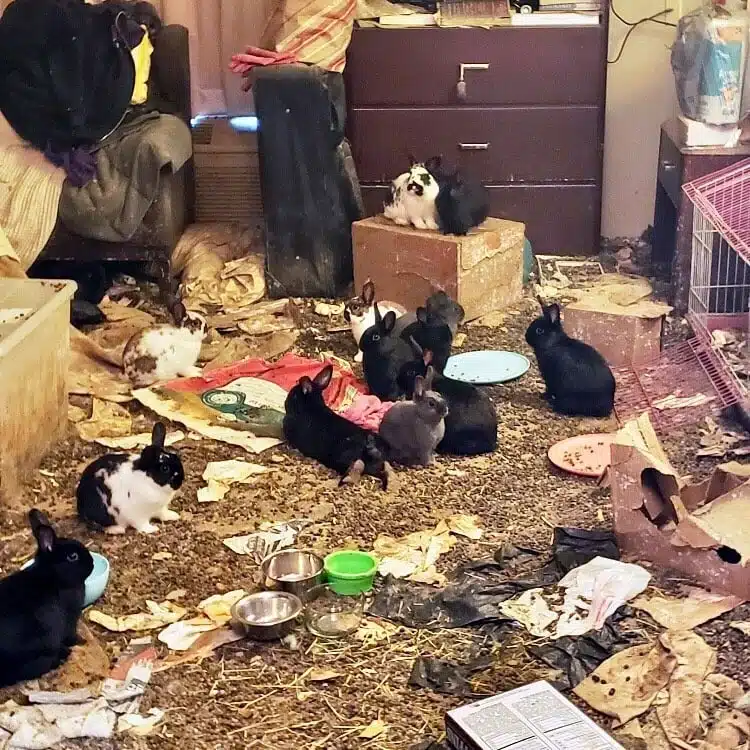
In May 2021, local responders confronted a harrowing scene inside a long-stay Schaumburg hotel room. Wearing masks and gloves to navigate a debris-filled space, rescue workers discovered an astonishing 47 rabbits crammed into the confined quarters. The animals—all unaltered—were fighting for resources in unsanitary conditions.
Of the 47 rabbits removed from the room, 15 were visibly pregnant. The massive intake was split between two organizations to prevent any single facility from collapsing under the weight: Red Door Animal Shelter took in 22 rabbits, while DuPage County Animal Services accepted the remaining 25.
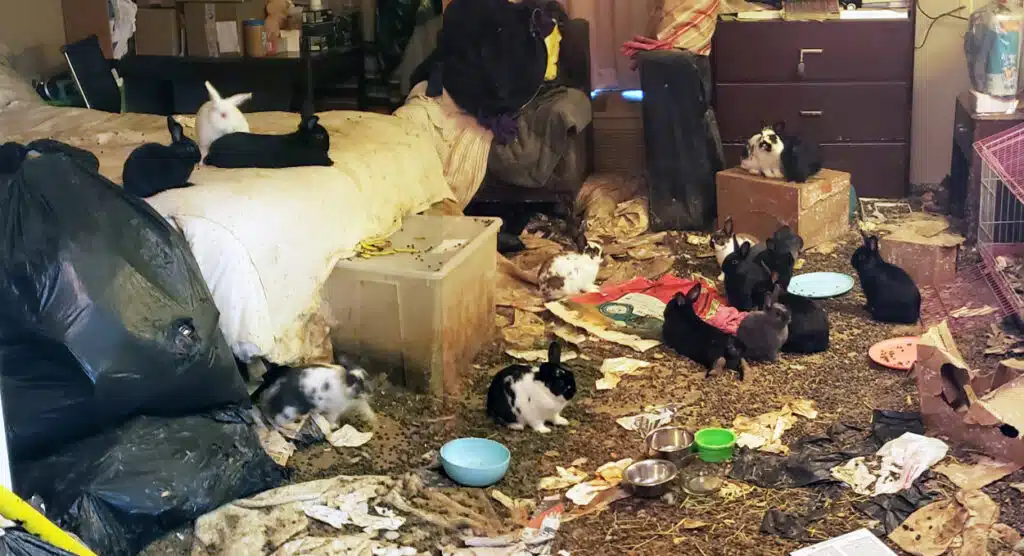
The intervention came at a staggering financial and logistical cost. Red Door reported that medical expenses alone for their subset of the rescued rabbits exceeded $7,000, not including ongoing food, housing, and rehabilitation costs. According to documentation and statements from Red Door, the caretaker of the hotel room disclosed to investigators that the entire crisis began with the purchase of the first two rabbits from Petland Hoffman Estates.
Case 2: The July 2023 Single-Family Home Intake
Just over two years later, history repeated itself in another Schaumburg residence. In July 2023, animal welfare organization It’s All About The Paws (IAATP) responded to reports of severe animal neglect at a single-family home.
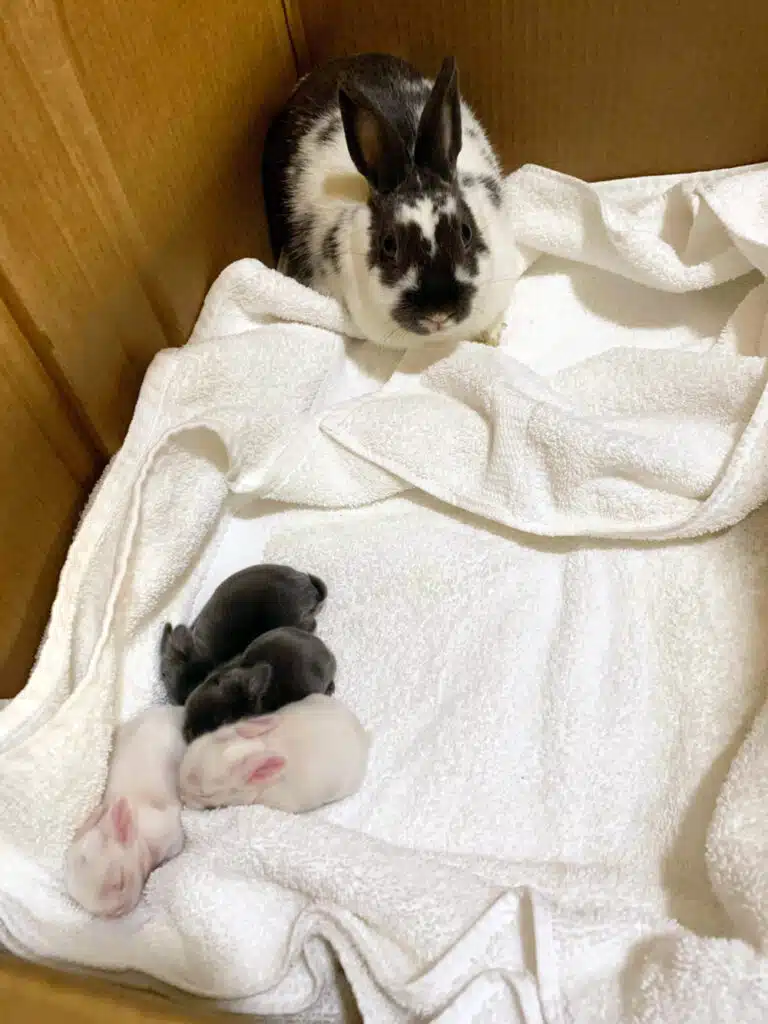
Working in close coordination with municipal animal control, IAATP personnel removed 29 rabbits from the property within a 24-hour window, a number that included fragile newborns and nursing mothers. The sheer volume of animals required an immediate regional mobilization. IAATP founder Erika Seibert coordinated multi-state and regional rescue placements, partnering with HRS Wisconsin, Hoopy Haven Rabbit Rescue, and Lost Woods Animal Sanctuary to avert a triage disaster.
When investigators questioned the homeowners regarding the origin of the animals, the owners confirmed that the breeding pair responsible for the property-wide infestation had been purchased from the Petland location in Hoffman Estates.
Voices From the Front Lines
The repeated convergence of commercial retail sourcing and mass rescue operations has left shelter leadership frustrated and exhausted. Industry veterans argue that corporate profits continue to be prioritized over animal welfare.
"Petland is a major source of rabbits who later end up abandoned or in crisis," stated Rachael Sanders, Director of HRS Chicago. "We regularly see mis-sexed pairs adopted from stores that lead to repeated litters. While Petland profits, rabbits suffer."
This sentiment is echoed by Toni Greetis, Vice President of Red Door Animal Shelter, who oversaw the grueling aftermath of the 2021 hotel rescue. "We managed back-to-back mass-intake crises in Schaumburg—each beginning with owner-reported Petland-origin pairs—stretching volunteers, foster space, and medical budgets to the breaking point," Greetis noted.
Advocates point out that while national retailers like Petco and PetSmart long ago phased out the sale of live rabbits and dogs in favor of shelter adoption partnerships, companies like Petland continue to utilize business models that rely on commercial breeding networks.
Supporting Data and Systemic Implications
The struggle in Chicago is a microcosm of a national debate over retail pet sales. The Rabbit.org Foundation and its allied Stop Rabbit Sales Coalition have documented similar trends across multiple states, where municipal shelters and private sanctuaries report spikes in surrendered rabbits following holiday seasons and promotional retail events.
The Mathematics of Rabbit Overpopulation
- Reproductive Capacity: Rabbits reach sexual maturity as early as 3.5 to 4 months of age. Unlike dogs and cats, female rabbits do not experience heat cycles; instead, they are induced ovulators, meaning they can become pregnant almost continuously if housed with intact males.
- Gestation and Litter Size: The gestation period for a rabbit is roughly 30 to 31 days. A single litter frequently yields between 4 to 12 kits (baby rabbits). A pair of unspayed and unneutered rabbits can theoretically give rise to hundreds of descendants within a single year.
- Shelter Economics: Treating, housing, and sterilizing a single rabbit involves substantial veterinary overhead. Unlike cats and dogs, rabbits require specialized exotic veterinary care, highly specific diets (timothy hay and fresh greens), and precise surgical sterilization protocols that cost rescues significantly more than standard feline or canine spay/neuter procedures.
When retail stores sell unsterilized rabbits—often mis-sexed by untrained or indifferent staff—they bypass the safety nets established by rescues, which routinely mandate sterilization and provide client education before adoption.
Action and Assistance: What the Public Can Do
As local rescues struggle to maintain operations amid rising inflation and swelling surrender waitlists, community advocates emphasize that public participation is vital to shifting corporate policy and protecting animals.
Petitions and Corporate Reform
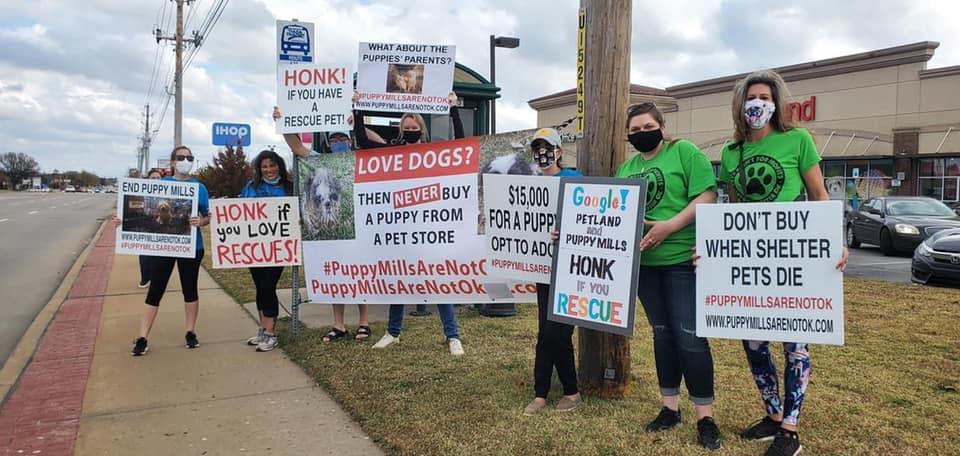
Campaigners are directing public energy toward peaceful advocacy. A petition hosted on Change.org titled "Stop Rabbit Sales at Petland" is actively gathering digital signatures from concerned citizens across the Midwest and nationwide. Activists stress that every signature strengthens the collective leverage needed to compel corporate leadership to phase out live animal sales and transition to a humane, adoption-focused retail model.
Guidance for Overwhelmed Owners
For community members in the Chicago area who find themselves overwhelmed by unexpected rabbit litters or changing life circumstances, local rescues offer a crucial warning: Never abandon a domestic rabbit outdoors. Domestic rabbits lack the survival instincts, camouflage, and foraging capabilities of wild cottontails and face near-certain death from predators, weather, or starvation if released outside.
Instead, pet owners are encouraged to utilize established surrender channels:
- HRS Chicago & Red Door Animal Shelter: Contact regional rescue intake coordinators to discuss owner-surrender waitlist protocols and rehoming guidance.
- Municipal Animal Control: For emergency or stray situations, local municipal shelters can provide immediate intake protocols and safe intake pathways.
- Veterinary Consultations: Local rabbit-savvy veterinarians can offer immediate guidance on behavioral management, housing separation, and emergency medical triage.
Looking Forward
The pressure on Petland in the Chicago area highlights a broader cultural shift in how consumers view the commercial trade of companion animals. As coalitions of rescue workers, volunteers, and veterinarians continue to sound the alarm, the demand for corporate accountability grows louder.
Whether through legislative oversight, public boycotts, or direct corporate petitions, Chicago’s animal welfare community remains resolute in its mission: to end the cycle of impulse retail sales that transforms vulnerable pets into preventable rescue crises.