In the world of professional dog training, the narrative often focuses on the triumph of the perfect recall or the seamless execution of a complex agility routine. However, the reality of living with animals is frequently much messier, defined by the grit of daily management and the inevitability of human error. As we observe National Dog Training Month this January, a candid look at the daily struggles of canine behavior—from the nuisance of coprophagia to the high-stakes management of chronic health conditions—offers a refreshing, humanizing perspective on the bond between species.
The Reality of Coprophagia and the Trainer’s Struggle
For many owners, the behavior of coprophagia—the consumption of feces—is a source of profound frustration and embarrassment. Maggie, a dog whose predilection for "poopsicles" during the winter months has become a recurring challenge, serves as a case study for the disconnect between idealized training and the raw reality of animal behavior.
When a dog engages in this behavior, it is, in a biological sense, normal. Yet, for the human primate, it remains a visceral, repulsive experience. Recently, the stress of managing a household while simultaneously tending to the complex medical needs of another dog, Skip, led to a breakdown in training protocol. A simple "leave it" command, usually effective, was ignored as fatigue took hold of the handler. The subsequent emotional fallout—a sense of failure and the feeling of being an ineffective trainer—is a sentiment shared by countless pet owners who struggle to maintain composure during the less-than-glamorous moments of animal husbandry.
Finding Perspective: The "54 Percent" Philosophy
The antidote to this cycle of self-flagellation arrived from an unlikely source: a graduation speech by tennis icon Roger Federer. Despite his status as the "GOAT" (Greatest of All Time) of tennis, having held the world number one ranking for 237 consecutive weeks, statistics reveal that Federer won only 54% of the points he played throughout his career.
This margin is razor-thin. It suggests that even at the highest level of mastery, failure is not an outlier; it is a fundamental component of the process. For those dedicated to dog training, this provides a vital lesson: perfection is not the goal, nor is it the standard. Dog training is not a zero-sum game where one "wins" or "loses" against an opponent. Instead, it is a long-term project of building a relationship. The challenge lies in shifting the focus from the momentary mistake—a missed cue or a frustration-driven outburst—to the broader context of communication and mutual understanding.
The Core Philosophy of National Dog Training Month
National Dog Training Month, established by the Association of Professional Dog Trainers (APDT), serves as an annual reminder of the power of positive reinforcement (R+). The initiative promotes training as a mechanism to foster communication, build confidence, and solidify the bond between humans and their canine companions.

Despite the growing scientific consensus on the efficacy of R+, the industry faces persistent headwinds. In many regions, there is a troubling trend toward "quick-fix" solutions, such as board-and-train facilities that rely on aversive tools like electric collars. The alternative—investing the time and effort into positive reinforcement—is, by contrast, nothing short of transformative. By focusing on learning theory and behavioral shaping, owners can move away from coercive methods and toward a partnership based on trust.
Practical Application: Husbandry and the "Bucket Game"
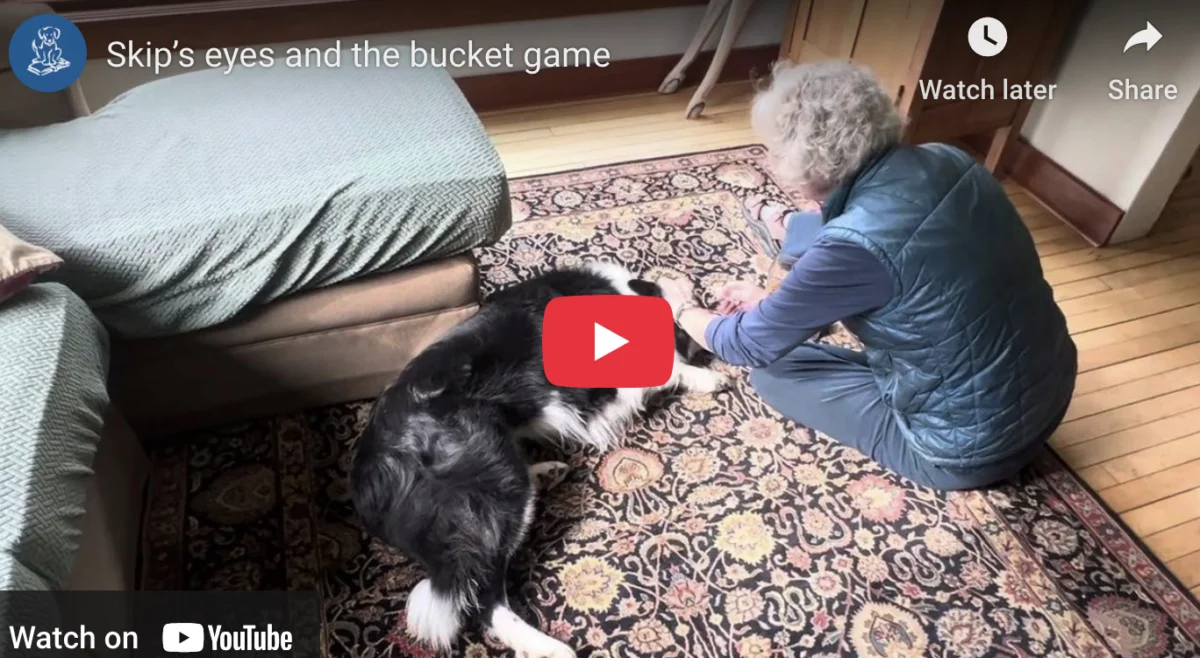
One of the most profound applications of positive reinforcement is in the realm of husbandry—the daily medical care required for aging or ailing dogs. Skip, who suffers from pannus, an immune-mediated eye disease, requires daily, lifelong application of a stinging, viscous ointment.
In traditional training contexts, such a procedure would be considered a "forced" event, potentially leading to fear and defensive behavior. By utilizing techniques such as Chirag Patel’s "Bucket Game," however, the handler empowers the dog to participate in his own care. The "Bucket Game" creates a framework where the dog’s choice to remain still is reinforced, turning a stressful medical procedure into a cooperative activity. This approach highlights the crux of modern training: the use of behavioral knowledge to harmonize the lives of two species that share a home but operate on different cognitive planes.
Rethinking the "Problem" Behavior
The recent struggles with Maggie’s coprophagia illustrate how a shift in mindset can convert a problem into a training opportunity. Rather than succumbing to helplessness, the trainer utilized the dog’s natural drives. Maggie possesses a strong scent-detection ability and a high motivation for food. By training her to alert the handler to the presence of feces rather than consuming them, the behavior is redirected into a useful, rewarded task. This proactive approach turns a "disgusting" behavior into a game, reducing the stress on the owner and reinforcing the bond through shared, goal-oriented activity.
A Health Scare and the Importance of Grace
The past week on the farm has been overshadowed by significant health concerns regarding Skip. Initial diagnostic concerns regarding potential bladder cancer created a period of extreme anxiety. Following a series of tests, the relief of ruling out a mass was tempered by the specter of leptospirosis—a serious, potentially fatal bacterial disease common in rural environments.
This period of uncertainty serves as a stark reminder that our dogs are living, breathing, and vulnerable beings. The stress of clinical uncertainty, coupled with the daily demands of professional responsibilities and an injury that makes basic tasks like typing painful, underscores the fragility of our daily routines.

In this context, the concept of "grace" becomes more than a platitude; it is a necessity. Grace for the dog who continues to engage in unwanted behaviors, and, perhaps more importantly, grace for the human who is simply doing the best they can under trying circumstances.
Implications for the Future of Training
As the month progresses, the focus remains on the synthesis of technical skill and emotional regulation. Whether navigating the complexities of a dog’s medical regimen or managing behavioral issues, the path forward requires:
- Objective Analysis: Stepping back from emotional responses to evaluate the antecedent, behavior, and consequence of any given incident.
- Commitment to R+: Resisting the allure of punitive "quick fixes" in favor of methods that prioritize long-term psychological health.
- Self-Compassion: Acknowledging that, like the tennis champion who wins just over half his points, the expert trainer is not defined by perfection but by the ability to learn from the 46% of points lost.
As we continue through the winter, the focus remains on the simple, everyday moments: a dog’s curious nature, the quiet success of a medical treatment administered with care, and the shared warmth of a snowy farm. By adopting a posture of grace, we not only improve our training outcomes but also enhance the quality of the life we lead alongside our dogs.
Ultimately, the goal of dog training is not to create a machine that obeys, but to cultivate a relationship that thrives. Whether through a "find the poop" game or the patient application of eye ointment, the journey is defined by the effort we put into understanding the world from our dog’s perspective. May your own training endeavors this year be marked by patience, growth, and, above all, the grace to recognize that you—and your dog—are doing your best.