
For many cat owners, the vision of a "low-maintenance" pet is a primary reason for choosing a cat over a dog. While it is true that cats do not require walks or constant companionship in the same way canines do, this misconception has birthed a widespread epidemic of feline behavioral challenges. Far from being solitary, self-entertaining creatures, domestic cats rely heavily on environmental and social stimulation to remain physically healthy and emotionally balanced.
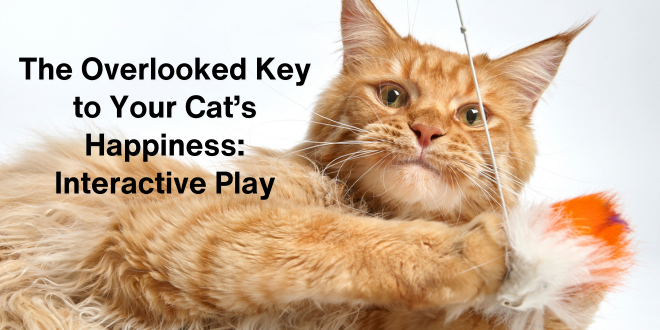
At the heart of this wellness strategy is a concept often ignored or misunderstood: interactive play.
Main Facts: The Anatomy of a Happy Cat
Interactive play is not merely a hobby; it is a fundamental requirement for a species that retains the instincts of an apex predator. When we talk about "interactive play," we are not referring to leaving a basket of feather toys on the floor for the cat to bat at in isolation. We are talking about a collaborative effort between the cat parent and the feline.
The core of this engagement is the natural hunting sequence: stalk, chase, catch, eat, and rest. In the wild, a cat’s day is governed by this cycle. Domestic life often strips away the "hunt" and "catch" components, leaving the cat with a surplus of energy and a frustrated predatory drive. When these drives have no healthy outlet, they manifest as destructive behaviors: furniture scratching, nighttime vocalization, aggressive ankle-biting, or chronic lethargy associated with feline depression.
The "interactive" component is the human element. By being the operator of the "prey," you become an essential partner in your cat’s psychological landscape.
Chronology: The Lifecycle of a Perfect Play Session
To maximize the benefits of these sessions, owners should look at a play session as a narrative with a beginning, a middle, and an end.
The Warm-Up (The Stalk)
Begin by observing your cat’s energy levels. The goal is to pique their curiosity rather than force them into an immediate frenzy. Use a wand toy to mimic the subtle movements of a mouse or bird. Low-to-the-ground movements are essential here. A bird does not fly erratically in a circle for twenty minutes; it hops, freezes, pecks, and takes flight. By hiding the toy behind furniture or around a corner, you engage your cat’s mental strategy. This pause is where the "stalk" happens.
The Climax (The Chase and Catch)
As the cat enters the "chase" phase, allow them to burn energy. However, be mindful of the pacing. If you move too fast, the cat may lose interest or become overwhelmed. The goal is to lead the cat toward the "catch." This is why wand toys are vastly superior to laser pointers. A laser pointer provides a visual chase but denies the cat the physical sensation of "killing" their prey. This creates a state of perpetual frustration. If you must use a laser, always aim it at a physical toy at the end of the session so the cat can finalize the hunt with a physical "catch."
The Cool-Down (The Eat and Rest)
This is where most owners fail. They stop the play abruptly, leaving the cat in a state of high arousal. Instead, "injure" the prey. Slow the movements of the wand toy down, make it move weakly, and finally, let the cat "kill" it. Once the capture is made, transition immediately to the "eat and rest" phase. Feeding a small meal or a high-value treat immediately after play signals to the cat’s brain that the hunt was successful. This completes the hormonal loop, leading to a state of deep, post-hunt contentment.
Supporting Data: Why "Toys on the Floor" Don’t Work
Research into feline ethology suggests that cats are "crepuscular" hunters, meaning their internal clocks are hardwired for activity during dawn and dusk. This is why many owners complain about the "3:00 AM zoomies." A cat that has not had its hunting instincts satisfied during the day will attempt to satisfy them at night, often by hunting your feet under the covers.

Data from animal behaviorists indicate that consistent, twice-daily interactive play sessions—ideally 15 minutes each—can reduce incidents of:
- Inter-cat aggression: By providing a constructive outlet for predatory energy, cats are less likely to view their feline housemates as targets for displaced aggression.
- Attention-seeking vocalization: Cats that are "bored" often resort to constant meowing to force engagement from their owners.
- Anxiety-induced grooming: Providing a healthy distraction reduces the stress that often leads to over-grooming or bald patches.
Official Perspectives: The Role of the Human Partner
Renowned feline behaviorist and best-selling author Pam Johnson-Bennett has long championed the idea that interactive play is the "overlooked key" to feline happiness. According to Johnson-Bennett, the human’s role is that of a "prey controller."
When you engage in play, you aren’t just exercising the cat’s muscles; you are exercising their brain. The mental calculation required to time a pounce on a moving target is a cognitive workout. For shy or under-confident cats, this process is transformative. Each successful "catch" builds the cat’s confidence, making them more likely to explore their environment and engage with their human family members.
Furthermore, from a veterinary standpoint, the exercise provided by these sessions is a critical defense against the growing epidemic of feline obesity. By controlling the pace and intensity of the movement, you can tailor the workout to the cat’s age and physical ability, ensuring they stay fit without overexerting them.
Implications: The Long-Term Bond
The implications of adopting a structured play schedule extend far beyond behavioral correction. When you take the time to engage in the hunting cycle with your cat, you are speaking their language. You are moving from a provider of food to a partner in their most primal, essential activity.

This bond-building creates a foundation of trust. Cats that feel their needs are met are generally more affectionate, more secure, and more relaxed in their living environment.
Implementation Strategies for Busy Owners
For those concerned about time constraints, consider these adjustments:
- The Morning Trigger: A 10-minute session before you leave for work can help your cat settle into a resting state while you are away.
- The Evening Reset: A 15-minute session before your own dinner can curb the "evening crazies" and promote a quiet night for the household.
- The "Slow-Down" Rule: Never end a session on a high-energy note. If your cat is panting or looking for more, decrease the intensity until they have achieved the capture.
Conclusion
Interactive play is not merely a "daily requirement" to be checked off a list; it is a pillar of feline welfare. By respecting the natural hunting sequence—stalk, chase, catch, eat, and rest—you provide your cat with a sense of purpose and fulfillment that no autonomous toy can replicate.
Whether you are dealing with a cat that is destructive, anxious, or simply bored, the solution often lies at the end of a string. Investing 30 minutes a day into this process will not only resolve behavioral issues but will fundamentally change the dynamic of your relationship, transforming your house into a home where your feline companion feels truly satisfied, safe, and understood.
For those looking to dive deeper into the science of feline behavior, consider exploring the works of experts like Pam Johnson-Bennett. Their insights on environmental enrichment continue to provide the framework for a more harmonious life between humans and their feline counterparts.