

To the casual observer, a cat’s ears are merely expressive appendages that swivel toward the sound of a treat bag opening or twitch in response to a rustle in the grass. However, upon closer inspection, cat owners often notice a fascinating array of specialized hairs. Whether it is a dense, fuzzy thicket inside the ear canal or the regal, pointed spikes atop the tips, these features are far from ornamental. They are "ear furnishings" and "ear tufts," two distinct anatomical adaptations that serve as the front line of defense and sensory refinement for the domestic cat.
Main Facts: Decoding the Anatomy of the Feline Ear
The feline ear is a marvel of evolutionary engineering, capable of detecting frequencies far beyond the range of human hearing. The anatomy responsible for this acuity is supported by two specific types of hair growth:
- Ear Furnishings: These are the tufts of hair that grow from the inner part of the ear canal. They vary significantly from cat to cat; some individuals possess a lush, velvet-like cluster, while others have sparse, wispy hairs.
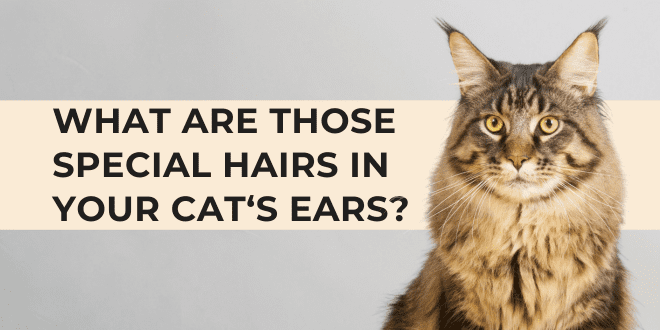
- Ear Tufts (Lynx Tips): Often confused with furnishings, these are the distinctive, elongated hairs found at the very apex of the ear flap (pinna). They are a hallmark of specific breeds, most notably the Maine Coon, the Norwegian Forest Cat, and the Siberian.
While these features undoubtedly contribute to the "wild" aesthetic that many cat enthusiasts find endearing, their primary purpose is functional. They act as a sophisticated biological filtration and amplification system, ensuring that the cat remains both healthy and hyper-aware of its environment.
Chronology of Evolutionary Adaptation
The presence of ear furnishings and tufts is not a recent mutation but a long-standing trait developed through the evolutionary lineage of the Felis catus. Millions of years ago, the ancestors of modern house cats occupied diverse environments, ranging from dense, debris-filled forests to open, windswept plains.
- The Primitive Era: Early wild feline ancestors required heightened hearing to survive as both ambush predators and prey. The development of ear tufts likely emerged to help focus sound waves in open terrains, while internal furnishings evolved to prevent particulates from entering the delicate inner ear in dusty or brush-heavy environments.
- The Domestication Shift: As cats transitioned into human households, these traits were preserved through genetic inheritance. In some breeds, such as the Maine Coon, these features were selectively amplified by breeders who favored the "lynx-like" appearance, inadvertently maintaining the functional benefits of these hairs.
- Modern Observational Science: In the contemporary era, veterinary researchers have cataloged these features as essential components of feline health, noting that cats with robust furnishings are often better protected against common otitis (ear infections) than those with minimal hair coverage.
Supporting Data: The Biological Utility of Feline Hairs
The functionality of these hairs can be broken down into two primary categories: hygienic filtration and acoustic amplification.
Hygienic Filtration
The feline ear canal is a delicate, sensitive structure that is highly susceptible to infection from mites, dust, and environmental debris. Because cats are fastidious groomers, they naturally want to keep their heads clean. However, a cat cannot insert its claws or tongue into its own ear canal.
Ear furnishings act as a physical mesh. By trapping dust, pollen, and microscopic foreign bodies at the entrance of the canal, they prevent these irritants from reaching the eardrum. Once trapped, the debris is often pushed toward the outer ear by the natural movement of the cat’s head or during the grooming process, where the cat’s paws can easily brush the particulate away. This simple mechanism significantly reduces the incidence of ear-related inflammation.
Acoustic Amplification
The role of ear tufts (Lynx tips) is largely acoustic. Research suggests that these elongated hairs act as "sound funnels." By capturing sound waves from the atmosphere and channeling them downward into the ear canal, the tufts increase the sensitivity of the ear. This allows the cat to pinpoint the precise location of a scurrying rodent or a hidden bird with greater accuracy. In the wild, this translates to higher hunting success rates; in the home, it manifests as the cat’s uncanny ability to hear a refrigerator door open from three rooms away.

Official Responses and Veterinary Perspectives
Veterinarians frequently emphasize that while ear furnishings are beneficial, they also require owner attention. Dr. Pam Johnson-Bennett, a renowned expert in cat behavior and feline health, highlights the importance of understanding these anatomical quirks.
According to veterinary consensus, the dense nature of ear furnishings can occasionally make it difficult for owners to spot the early signs of ear mite infestations or wax buildup. Because the hairs act as a shield, they can effectively hide an infection until it becomes advanced. Therefore, veterinarians recommend that owners perform regular, gentle checks of their cat’s ears. If the furnishings are thick, it is essential to look past the hair to ensure the skin within the ear remains pale pink and free of dark, coffee-ground-like debris, which is a hallmark sign of ear mites.
Implications: The Intersection of Beauty and Utility
The existence of these hairs forces a re-evaluation of how we view feline aesthetics. Often, "cute" traits in animals are the result of human selection for vanity, but in the case of ear furnishings and tufts, the aesthetic "wildness" is intrinsically tied to the cat’s survival mechanism.
Impact on Breeding and Breed Standards
Breed standards for cats like the Maine Coon explicitly mention ear tufts as a desirable trait. This is a rare instance where the "show" standard perfectly aligns with the animal’s biological efficiency. Breeders are essentially selecting for better acoustic capabilities and better ear protection.

Care Considerations for Owners
For the average cat owner, the existence of these features has several practical implications:
- Grooming: Do not trim or pluck ear furnishings. Unlike human nose hair, which is often removed for aesthetic reasons, ear furnishings in cats are protective. Removing them leaves the ear canal exposed to irritants and infections.
- Monitoring: If you own a long-haired breed, take time to gently brush the hair around the base of the ears to prevent matting. Mats near the ear canal can restrict airflow and create a warm, humid environment—a breeding ground for bacteria.
- The "Henry’s Pocket" Connection: It is important to distinguish between these protective hairs and the cutaneous marginal pouch, or "Henry’s Pocket." This small, slit-like fold at the base of the ear is a normal anatomical feature. Owners often confuse this pocket with a wound or a tear, but it is entirely natural. Understanding these nuances helps owners provide better, less anxious care for their pets.
Conclusion: A Testament to Evolutionary Design
The cat remains one of nature’s most refined predators, and every inch of its anatomy serves a specific, optimized purpose. The "special hairs" we see—the furnishings inside and the tufts on top—are not merely decorative flair. They represent a sophisticated, multi-layered system designed to protect the cat’s hearing, maintain its hygiene, and sharpen its senses.
As cat owners, recognizing the purpose of these features allows us to better appreciate the complexity of our companions. Whether your cat is a sleek, shorthaired house cat with subtle furnishings or a majestic, tufted Maine Coon, they are equipped with a biological toolkit that has been perfected over thousands of years. By respecting these features and ensuring we keep the surrounding areas clean and free of mats, we honor the evolutionary history that makes our feline friends the incredible creatures they are today.
For those looking to deepen their understanding of feline behavior and anatomy, resources such as the works of Pam Johnson-Bennett provide an essential roadmap. Understanding that your cat’s "cute" ear hairs are actually a high-performance sensory and protective system is just the first step in unlocking the deeper mysteries of the feline world.