
Introduction: A Stand Outside the Wire
Last Saturday, April 18, 2026, the quiet landscape outside Blue Mounds, Wisconsin, became the epicenter of a high-stakes confrontation between animal welfare advocates and the industrial apparatus of laboratory research. Approximately 1,000 activists converged on Ridglan Farms, a controversial facility that serves a dual purpose: breeding beagles for global research laboratories and conducting in-house experiments.
While the facility’s perimeter remained breached by protesters seeking to rescue the estimated 1,900 dogs held inside, the event concluded without a mass liberation. Instead, it resulted in a series of arrests, accompanied by harrowing reports of excessive force used by security and law enforcement against demonstrators. As the dust settles, the event has reignited a fierce national debate: Are current regulations surrounding laboratory animals ethically defensible in the modern era, or are they a moral relic that has failed the very creatures we rely upon for scientific advancement?
A Chronology of Conflict
The tension surrounding Ridglan Farms is not a spontaneous development but the culmination of years of mounting evidence and systemic frustration.
The Discovery of Neglect: For years, animal welfare organizations and former employees have raised alarms regarding the conditions at the facility. Reports have consistently alleged a pattern of untreated physical trauma, inadequate veterinary care, and psychological deterioration among the beagles.
Legal Intervention: The situation reached a turning point when the advocacy group Dane4Dogs initiated legal action. Seeking to hold the facility accountable, they petitioned the Wisconsin Attorney General to appoint a special prosecutor. When the state initially declined, the group took the matter to the courts, presenting video evidence provided by a whistleblower.
Expert Testimony: In early 2026, renowned applied animal behaviorist Patricia McConnell was brought on to evaluate footage from the facility. Her analysis was unequivocal, describing the dogs as living in a state of “frantic, rapid, repetitive circling behaviors”—a psychological condition known as stereotypy.

The Settlement: Following the court’s appointment of special prosecutor Tim Gruemke, a legal agreement was reached in October 2025. Ridglan Farms agreed to relinquish its “seller’s license” by July 1, 2026, in exchange for the dropping of felony animal cruelty charges related to unsanitary, unlicensed surgeries performed on the dogs. Notably, the facility is permitted to continue its on-site research operations indefinitely.
The April 18 Protest: Frustrated by the slow pace of justice and the continued confinement of nearly 2,000 dogs, activists attempted a large-scale intervention. The subsequent arrests and reports of violence have transformed a local animal rights dispute into a broader crisis of public oversight.
Supporting Data: The Case for Inhumane Conditions
The evidence presented against Ridglan Farms is both quantitative and qualitative. The facility maintains that no “substantiated” evidence of cruelty exists; however, inspection reports from the Wisconsin Department of Agriculture, Trade and Consumer Protection (DATCP) paint a starkly different picture.
The Behaviorist’s Perspective
In her statement to the court, Patricia McConnell detailed the psychological trauma observed in the video evidence:
"The dogs are being held in barren, small cages in solitary confinement, preventing them from having any meaningful interactions… They lack the bare minimum of healthy stimulation and enrichment… They are forced to urinate and defecate where they sleep. The dogs are unsurprisingly exhibiting the stereotypic, hysterical behaviors of highly stressed animals."
The Anatomy of a Violation
The documentation includes reports of:

- Poor Air Quality: High concentrations of ammonia due to inadequate ventilation and waste management.
- Physical Trauma: Dogs suffering from untreated “cherry eye” and other chronic, painful conditions.
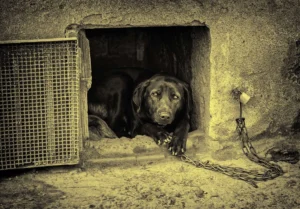
- Social Deprivation: The use of wire-bottomed, solitary cages that prevent natural species-specific behaviors, leading to a total collapse of the animals’ mental health.
Official Responses and the Regulatory Fog
The regulatory framework governing these facilities is governed by the federal Animal Welfare Act (AWA) and overseen by the USDA. However, critics argue that these standards are so low they provide a veneer of legality to what is effectively animal hoarding and abuse.
The USDA and APHIS
According to animal behaviorist Marc Bekoff, the USDA’s own Inspector General has identified that 80% of accredited laboratory animal breeders have failed to correct previous non-compliances. The Animal and Plant Health Inspection Service (APHIS) has been frequently criticized for a lack of enforcement and a failure to respond to consistent, documented complaints.
The "Legal" Standard
Under the AWA, a dog’s cage is only required to be six inches larger than the animal’s body on all sides. There is no federal requirement for exercise, socialization, or human interaction. Furthermore, researchers are permitted to bypass even these minimal standards if they claim such requirements would “interfere with the experiment.” This creates a regulatory vacuum where the dog’s status as a sentient being is superseded by its status as a piece of laboratory equipment.
Implications: The Ethical Crossroads of 2026
The situation at Ridglan Farms forces a confrontation with the fundamental ethics of modern research.
The Scientific Argument
There is a growing movement within the scientific community to re-evaluate the necessity of using canine subjects. If the justification for using these dogs is to develop canine medicine, critics argue that the research environment itself creates "confounding factors." A dog that is stressed, sleep-deprived, and psychologically damaged in a wire cage is not a reliable biological model.
The Moral Obligation
The American Veterinary Medical Association (AVMA) states that animals should be cared for in ways that "minimize fear, pain, stress, and suffering." The conditions at facilities like Ridglan clearly violate this ethical mandate. The "biological miracle" of the human-canine bond—a relationship built on thousands of years of mutual reliance—is being weaponized against the very animals that have served as our protectors, guides, and companions.

A Path Forward
The closure of the Envigo facility in Virginia stands as a precedent. In that case, federal and state authorities acted decisively to seize the animals and facilitate their rehoming. Currently, private offers to purchase and rehabilitate the Ridglan beagles have been rejected by the facility owners.
As July 1 approaches—the date by which Ridglan must cease sales—the fate of the 1,900 beagles remains uncertain. They are, under the law, property, not patients. The legal system views them as assets to be liquidated or utilized, while the public increasingly views them as victims of a broken, outdated system.
Conclusion: "When You Know Better, You Do Better"
The Maya Angelou adage cited by advocates is central to the movement: "When you know better, you do better." We now possess an advanced understanding of canine neurobiology, emotional intelligence, and social needs. Continuing to treat beagles—a breed uniquely evolved to trust and connect with humans—as disposable commodities in a cage is a failure of our collective conscience.
The "black stain" on the reputation of Wisconsin will only be removed when these animals are granted the dignity of a life outside the wire. Until then, the cries of the activists in Blue Mounds will continue to echo, serving as a reminder that the bond between human and dog is one that we are morally obligated to protect, not exploit.
What happens next is not just a matter of law, but a test of our humanity. As the community looks toward the July deadline, the call for the immediate release and rehoming of the Ridglan beagles is becoming a chorus that the state of Wisconsin can no longer ignore.