
By Paige K Parsons
Edited by Our Think Tank
As the American pet landscape continues to diversify beyond the traditional mainstays of dogs and cats, companion animals like rabbits are carving out a significant space in modern households. For decades, furry, long-eared companions have transitioned from backyard hutches to living room free-roam family members. But just how many pet rabbits are currently hopping around American homes?
Recent data compiled from organizations such as the American Veterinary Medical Association (AVMA) and the American Pet Products Association (APPA) paint a fascinating picture of shifting demographics, generational shifts in pet ownership, and the evolving place of exotic pets in contemporary American culture.
Main Facts: The State of Rabbit Ownership in 2025
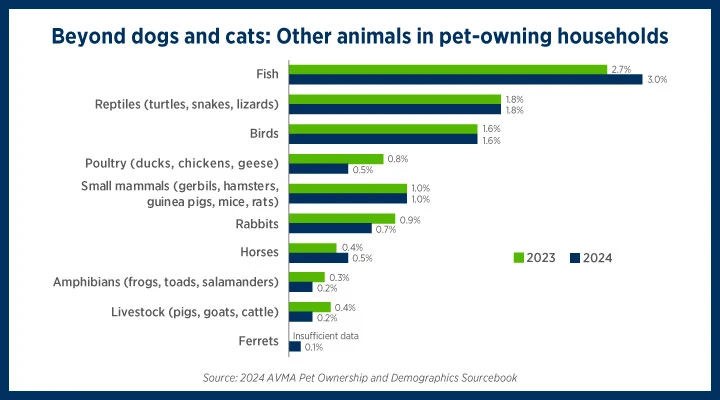
The most recent data provides a clear snapshot of how rabbits fit into the modern U.S. household. According to public statistics released by the AVMA in May 2025—drawing from its comprehensive 2024 Pet Ownership & Demographics data—roughly one million U.S. households, or approximately 0.7% of the nation, currently live with rabbits.
While this represents a slight contraction from peaks seen in previous decades, rabbits remain a dominant force within the "small animal" category. According to historical metrics and ongoing surveys by the APPA, rabbits consistently rank as the most popular small animal pet in America, frequently outpacing traditional favorites like hamsters, guinea pigs, and mice. Furthermore, contemporary market analyses—including reports from publications like Forbes—highlight that exotic pets, including rabbits, enjoy a particularly passionate following among younger demographics, specifically Millennials and Gen Z.

However, caring for a companion rabbit requires specialized knowledge, distinct veterinary care, and a lifestyle adjustment compared to traditional pets, making these population numbers vital for shelters, rescue organizations, and exotic veterinarians alike.
Chronology: A Historical Overview of U.S. Rabbit Demographics
To understand where the rabbit population stands today, it is helpful to look back at how ownership trends have fluctuated over the last thirty years. Comprehensive data tracking by organizations like the AVMA, APPA, and the United States Department of Agriculture (USDA) reveals a steady, if occasionally fluctuating, trajectory.
The 1990s: Establishing a Baseline
At the dawn of the decade, rabbit ownership was already firmly established in American culture, though largely considered a niche hobby.
- 1991: Approximately 1.4 million households (1.50% of overall households) owned rabbits, with an average of 3.22 rabbits per household, bringing the total estimated population to 4.6 million.
- 1996: Ownership expanded slightly to 1.9 million households (1.90%), with a total population hovering around 4.9 million.
The Turn of the Century and Peak Populations
The early 2000s marked a golden era for the domestic rabbit population, with total numbers climbing significantly as advocacy groups began promoting indoor rabbit care.
- 2000: An estimated 2.2 million households (1.6%) housed pet rabbits, resulting in a total population of 5.3 million.
- 2002: USDA reports confirmed 5.0 million pet rabbits living across 2.2 million households.
- 2007: Both the AVMA and APPA reported a dramatic surge, estimating a total population of 6.1 million pet rabbits in the United States, housed in roughly 1.9 million homes. At this point, surveys noted that rabbits had officially surpassed hamsters as the top small pet choice.
- 2010: The high-water mark for modern rabbit populations was recorded, with the APPA estimating an incredible 6.6 million pet rabbits in the U.S., accounting for 42% of the nation’s 15.9 million small animal pets.
The 2010s to 2020s: Stabilization and Normalization
Following the peaks of the late 2000s, the overall estimated raw population of rabbits adjusted downward, stabilizing into more modest, sustainable household metrics.
- 2012: AVMA surveys indicated 1.2% of American households (about 1.4 million homes) lived with roughly 3 million rabbits.
- 2017: Ownership metrics held steady at 1.5 million households and a total estimated population of 2.2 million rabbits.
- 2022: The AVMA U.S. Pet Ownership & Demographics Sourcebook reported that 1.2% of households (1.5 million homes) owned rabbits, with a total population estimated at 2.2 million.
- 2024–2025: AVMA updates point toward roughly one million households (0.7%) maintaining rabbits as companions, reflecting a post-pandemic normalization of pet acquisition rates.
Supporting Data: Sourcing, Demographics, and Acquisition Trends
Beyond sheer headcounts, industry surveys offer vital context regarding how people acquire their rabbits and who is bringing them home.
Where Do Pet Rabbits Come From?
Data from the APPA’s historical and ongoing tracking highlights notable shifts in the rabbit supply chain. For instance, in the 2013–2014 survey period, data revealed that:
- 25% of all pet rabbits were acquired via adoption from shelters or rescues.
- 14% were purchased directly from commercial pet stores.
- The remaining majority came from private breeders, online marketplaces, or unplanned litters.
Crucially, the commercial side of pet rabbit sales has faced significant headwinds. Between the 2011–2012 survey cycle and the 2013–2014 cycle, the number of rabbits purchased at traditional pet stores declined by 42%. This drop largely mirrors the success of grassroots "Bunny Freedom" campaigns, municipal retail pet sale bans, and increased public education regarding shelter overpopulation. Today, animal advocates strongly encourage adoption from specialized rabbit rescues, where thousands of abandoned Easter pets or surrendered animals await permanent homes.
The Generational Shift
As traditional family structures evolve, pet ownership demographics shift with them. Forbes and other lifestyle analysts have noted that younger generations—Millennials and Gen Z—are driving the demand for non-traditional and "exotic" pets. Because younger adults are increasingly delaying traditional milestones like marriage and homeownership, or opting for smaller living spaces such as apartments, small mammals like rabbits offer an appealing alternative to dogs and cats. Rabbits can be litter-trained, do not require outdoor walks, and can form deeply affectionate, quiet bonds with their human companions when allowed to free-roam indoors.
Official Responses and Industry Perspectives
Veterinary and animal welfare organizations have closely monitored these shifting statistics to better tailor their outreach, medical care, and advocacy efforts.

Veterinary professionals emphasize that while rabbits are smaller than dogs and cats, their medical needs are often just as complex—and frequently more specialized. Because rabbits are prey animals, they instinctively hide signs of illness, meaning that routine wellness checks by an exotic-certified veterinarian are critical. The AVMA’s continuous tracking of pet demographics ensures that veterinary colleges and private practices can allocate adequate resources toward exotic animal medicine training.
Meanwhile, rabbit rescue organizations and shelters view the population and ownership data through a lens of cautious optimism balanced by ongoing concern. National organizations like the House Rabbit Society note that while a baseline of one to two million rabbit-owning households demonstrates a robust appreciation for the species, it also correlates directly with rescue intake numbers. Uninformed impulse purchases—often tied to the Easter holiday—frequently result in surrenders once owners realize that rabbits have complex dietary needs, require bunny-proofing to protect electrical cords, and can live upwards of 10 to 12 years.
Implications for the Future of Rabbit Care
The statistical reality of pet rabbits in the United States carries several profound implications for owners, veterinarians, and animal welfare advocates:
- The Rise of Indoor, Free-Roam Housing: Gone are the days when a wire cage in a dark garage or backyard was considered acceptable housing. With millions of households integrating rabbits into their daily lives, the standard of care has shifted dramatically toward free-roaming, house-rabbit management, enriching environments, and high-quality timothy hay diets.
- Specialized Veterinary Access: As the pet rabbit population stabilizes around the 2 to 2.2 million mark, the demand for qualified exotic veterinarians continues to outpace supply. Advocacy groups are pushing for broader inclusion of exotic species training in veterinary curriculums to ensure these animals receive prompt, expert medical attention.
- Combating Impulse Buying: With generational interest remaining high, animal advocates stress the importance of education. By leveraging modern data trends, shelters can better target educational campaigns toward younger demographics, ensuring that future pet owners understand that a rabbit is a decade-long commitment, not a temporary holiday novelty.
Ultimately, the data from 2025 shows that while the total raw number of pet rabbits has dipped slightly from the highs of the late 2000s, the human-rabbit bond remains remarkably strong. As care standards improve and veterinary medicine advances, the domestic rabbit has firmly secured its place as an integral—and deeply cherished—member of the American family.