

By: Our Think Tank
Reviewed by: Paige K Parsons
Published by: Rabbit.org Foundation Community Safety Desk
Main Facts
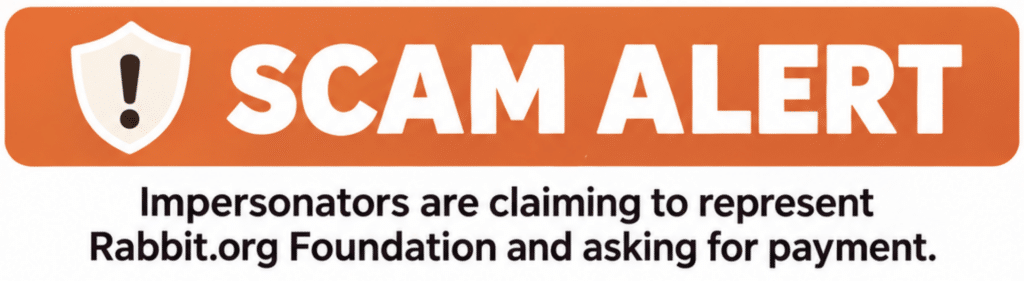
The Rabbit.org Foundation, a globally recognized authority and leading advocate for rabbit welfare, education, and rescue, has issued an urgent public safety announcement regarding a sophisticated wave of fraudulent impersonation scams. According to official reports released by the organization’s think tank and reviewed by Foundation leadership, malicious actors are actively posing as representatives, administrators, or affiliates of the Rabbit.org Foundation.
These bad actors have specifically targeted authors who contribute to the organization, as well as broader members of the rabbit welfare community, including rescue groups, volunteers, and independent advocates. The primary objective of these cybercriminals is financial exploitation, with fraudsters demanding unauthorized payments, processing fees, or fraudulent donations under the guise of official Foundation business.
Key facts regarding the ongoing scam include:
- The Impersonation Vector: Scammers are utilizing spoofed email addresses, fake social media profiles, and direct messaging applications to initiate contact, falsely claiming to represent the Rabbit.org Foundation.
- The Financial Hook: Victims are being pressured to send funds through untraceable or unconventional payment channels under various pretexts, including administrative fees, publication costs, or urgent fundraising drives.
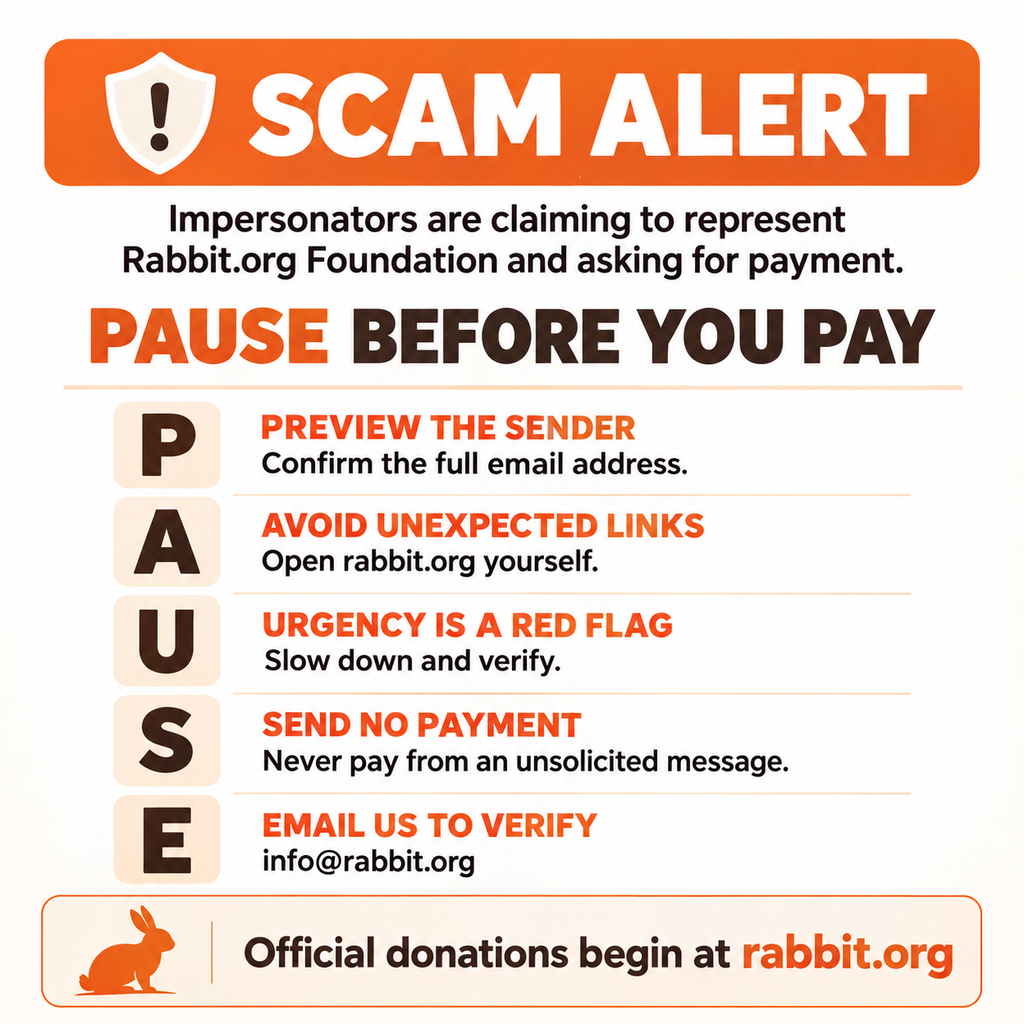
- The Official Protocol: The Rabbit.org Foundation has reiterated that it never solicits payments, fees, or donations through direct messages, personal requests, or unverified channels. All legitimate financial transactions, contributions, and donations must be initiated strictly through their official portal at rabbit.org.
- Community Vulnerability: Authors, content creators, and grassroots rescue operators are being explicitly targeted due to their public association with the organization, making them prime targets for social engineering and phishing tactics.
The Foundation is urging all community members to exercise extreme caution, verify the identity of any individual claiming to represent the organization, and immediately report suspicious communications to the appropriate internal teams.
Chronology of Events and the Rise of Nonprofit Impersonation
To understand the gravity of the current threat facing the Rabbit.org Foundation and its supporters, it is necessary to examine the timeline of how digital fraud has evolved within the non-profit and animal welfare sectors.
Early Warning Signs and Initial Reports
In recent months, the administrative offices of the Rabbit.org Foundation began receiving subtle inquiries from independent writers and affiliated rescue groups. These individuals questioned the legitimacy of sudden, unsolicited communications they had received from individuals claiming to be high-ranking staff members or editorial coordinators.
Initially treated as isolated incidents of phishing—a common occurrence in the modern digital landscape—the frequency and sophistication of these contacts escalated sharply. By mid-autumn, multiple authors reported receiving detailed messages that mimicked the professional tone, branding, and formatting of official Rabbit.org correspondence.
Escalation to Direct Financial Demands
As the scheme progressed, the tactics employed by the bad actors shifted from simple reconnaissance and phishing to aggressive financial extortion and fraudulent solicitations. Scammers began contacting authors with fabricated claims regarding administrative processing fees required for published works, urgent publishing updates, or mandatory compliance contributions.
Concurrently, independent rabbit rescue organizations and prominent advocates reported receiving outreach from individuals claiming to coordinate fundraising partnerships on behalf of the Foundation. These communications were meticulously crafted to lower the target’s guard by referencing actual past projects, public articles, and community initiatives associated with Rabbit.org.
The Official Response and Public Disclosure
Recognizing an immediate threat to the financial security and trust of its community, the Rabbit.org Foundation initiated an internal security review. Prompted by these accumulating red flags, the organization’s leadership and review boards—including insights compiled by contributor Paige K Parsons—decided to issue a formal, widespread security alert.
The resulting public announcement serves as a critical firewall, designed to inform vulnerable stakeholders, disrupt ongoing fraudulent campaigns, and establish clear protocols for reporting malicious activity.
Supporting Data: The Anatomy of Nonprofit Phishing and Social Engineering
The targeting of the Rabbit.org Foundation is not an isolated incident; rather, it reflects a broader, highly lucrative trend in cybercrime: the exploitation of mission-driven non-profit organizations and their human networks.
The Vulnerability of Niche Communities
Niche communities centered around animal rescue, specialized education, and advocacy are uniquely vulnerable to social engineering. Unlike large corporate entities with dedicated, 24/7 cybersecurity operations and centralized communication channels, non-profits often rely on decentralized networks of volunteers, freelance writers, and independent regional advocates.
- High Trust Environments: Because organizations like the Rabbit.org Foundation operate on mutual trust, shared passion, and community-driven advocacy, members are inherently less suspicious of communications that reference familiar topics, animal welfare terminology, or organizational milestones.
- Open-Directory Information: Authors, rescue directors, and active contributors often have their contact information, social media handles, and professional backgrounds publicly accessible. Scammers utilize this open-source intelligence (OSINT) to craft highly personalized spear-phishing messages.
Financial Fraud Vectors in the Digital Age
Cybersecurity experts categorize the tactics used against the Rabbit.org community as a hybrid of CEO fraud, business email compromise (BEC), and peer-to-peer social engineering.
- Email Spoofing and Display Name Deception: Fraudsters frequently register look-alike domains (typosquatting) or manipulate the "display name" of free email service providers to mirror official Foundation personnel. A casual glance by a busy author often fails to catch subtle character substitutions in the domain header.
- Pressure and Urgency Tactics: To prevent victims from pausing to verify the request through official channels, scammers employ high-pressure tactics. They may claim that a publication is about to be pulled, that a critical grant is dependent on immediate compliance, or that an emergency rescue operation requires an immediate financial transfer.
- Diversion of Funds: By steering victims away from secure, encrypted, and auditable payment processors (such as the Foundation’s verified Stripe integration), scammers utilize irreversible payment methods, including cryptocurrency, wire transfers, peer-to-peer payment apps, or gift card codes.
Official Responses and Security Protocols
In response to the impersonation attempts, the leadership of the Rabbit.org Foundation has outlined rigorous, non-negotiable security protocols designed to protect its community. The Foundation emphasizes that transparency and vigilance are the strongest defenses against sophisticated fraud.
Statement from Foundation Leadership
A spokesperson for the Rabbit.org Foundation emphasized the organization’s unwavering commitment to safeguarding its contributors and supporters:
"The trust between our organization, our authors, and our global community of rabbit advocates is our most valuable asset. It is deeply distressing to see malicious actors attempt to exploit that trust for personal financial gain. We are taking every possible measure to investigate these fraudulent communications, and we urge our community to remain vigilant, adhere strictly to our official communication channels, and report any suspicious outreach immediately."
Step-by-Step Verification Protocol for Community Members
To ensure absolute safety, the Foundation has established clear guidelines for interacting with anyone claiming to represent Rabbit.org:
- Verify the Sender’s Domain: All legitimate email communications from the Foundation originate exclusively from official, verified organizational domains ending in
@rabbit.org. Be highly suspicious of Gmail, Yahoo, Outlook, or slightly misspelled alternate domains. - Reject Direct Payment Requests: The Rabbit.org Foundation will never contact an author, volunteer, or donor via direct message, text, or personal email to request money, processing fees, or wire transfers.
- Use Official Donation Channels Only: Legitimate financial contributions must always be initiated through the secure, encrypted donation gateway hosted directly on the official website via the official Donate link on rabbit.org.
- Preserve Evidence: If you receive an unexpected, suspicious message claiming to be from the Foundation, do not delete it immediately. Preserve digital evidence by taking comprehensive screenshots, recording the sender’s full email address or phone number, and saving any payment instructions provided.
- Report Immediately: Forward all preserved evidence of impersonation attempts to the Rabbit.org Foundation’s administrative team so they can document the tactics, track the perpetrators, and issue updated safety warnings to the community.
Broader Implications for the Rabbit Welfare Community
The emergence of these scams carries profound implications not only for the Rabbit.org Foundation, but for the entire ecosystem of animal rescue and advocacy organizations worldwide.
Erosion of Community Trust
The most insidious damage caused by imposter scams is psychological and relational. When bad actors successfully impersonate trusted institutions, victims often experience feelings of violation, embarrassment, or generalized distrust. If an author or advocate is successfully scammed by someone pretending to be a representative of Rabbit.org, their willingness to engage with, promote, or trust legitimate future communications from the organization can be severely compromised.

Increased Administrative and Operational Burden
For non-profit organizations already operating with limited financial resources and lean staff rosters, dealing with cybercrime represents a massive drain on productivity. Time and energy that should be dedicated entirely to rabbit rescue, medical advocacy, educational outreach, and content creation must instead be diverted toward crisis communication, legal advisement, and digital forensics.
A Call for Collective Vigilance
Ultimately, the battle against online fraud requires a collective, community-wide defense strategy. The Rabbit.org Foundation is calling upon every author, reader, rescue worker, and rabbit owner to act as an active participant in cybersecurity defense.
By sharing this warning widely across professional networks, social media groups, and local rescue coalitions, the community can effectively immunize itself against future impersonation attempts. Education remains the most potent weapon against cybercriminals who rely on secrecy, isolation, and ignorance to execute their schemes.
How You Can Help
- Share This Warning: Disseminate this article and the official Foundation warning across your local rescue networks, author groups, and social media channels.
- Double-Check Contacts: Always cross-reference unexpected outreach by visiting rabbit.org directly rather than replying to unsolicited messages.
- Support Legitimate Causes: Ensure that your financial contributions support the welfare of rabbits by donating exclusively through verified, secure channels linked directly from the official website.
Together, by maintaining heightened awareness and rigorous security habits, the rabbit advocacy community can protect its members and continue its vital mission without interruption.