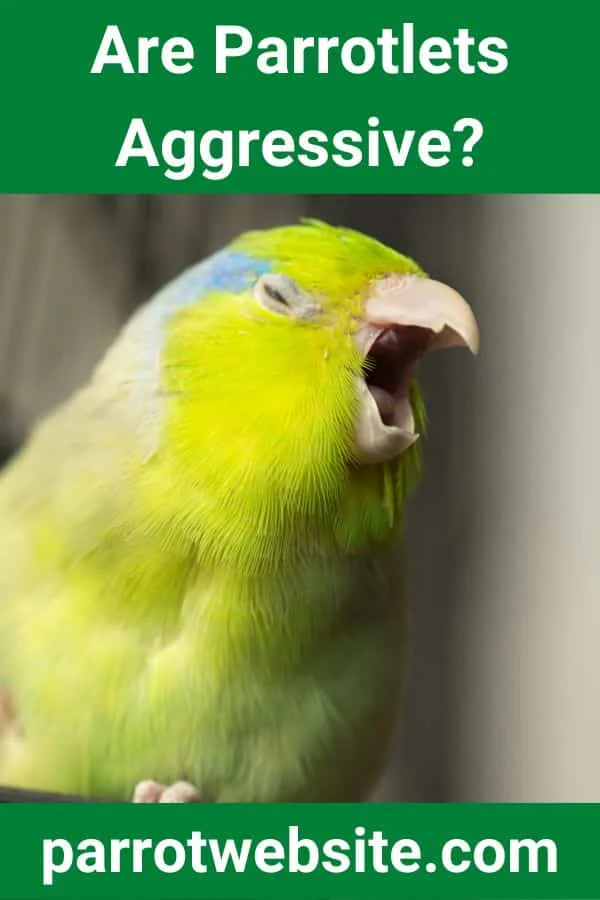
Despite their diminutive size—often weighing less than an ounce—the Pacific Parrotlet (Forpus coelestis) commands a reputation in the avian community that rivals birds ten times their size. Frequently dubbed the "pocket parrot," these birds are often misunderstood, perceived as either sweet, docile companions or territorial, feisty biters. As the popularity of these birds grows among pet owners, so too does the confusion regarding their temperament.
Are parrotlets inherently aggressive, or is their "bad reputation" merely a reflection of human error in husbandry? To understand these complex creatures, we must look beyond their aesthetic appeal and delve into the science of their behavior, their developmental requirements, and the reality of living with a bird that possesses the spirit of a raptor in the body of a finch.
Main Facts: The Nature of the Parrotlet
At the core of the debate surrounding parrotlet aggression is a misunderstanding of their evolutionary biology. In the wild, these birds are not naturally aggressive toward humans; they are, however, naturally wary and territorial. Like all parrots, they are prey animals. When a bird feels threatened, cornered, or unable to retreat, its primary defense mechanism is to engage in defensive posturing or biting.
The reputation of the parrotlet as an "aggressive" species is often inflated. While they are known for a "big bird" personality, this intensity is frequently a trait of their high intelligence and bold curiosity. When a parrotlet bites, it is rarely an act of unprovoked malice. Instead, it is almost always a reaction to environmental stressors, lack of socialization, or an attempt to communicate a boundary that the human owner has failed to perceive.
Chronology of Development: The Crucial Window
The trajectory of a parrotlet’s temperament is largely determined during two distinct life stages: the early developmental phase and the transition to a new home.
1. The Breeder Phase (Weeks 0–12)
The foundation of a well-adjusted parrotlet is laid by the breeder. Because these birds are naturally inclined toward skittishness, a reputable breeder must engage in "hand-taming" during the critical weaning process. If a bird is not socialized correctly during these formative weeks, it will likely develop a permanent distrust of human hands.
2. The Integration Phase (Post-Acquisition)
Once a bird reaches a new home, the first three months are the most volatile. During this period, the bird is testing the boundaries of its new environment. Many owners unknowingly exacerbate aggression by forcing physical contact or failing to read the bird’s body language. In the world of avian behavior, "aggression" is often simply a misinterpretation of a bird saying, "I am not ready for you yet."
Supporting Data: Why "Small" Doesn’t Mean "Gentle"
The physics of a parrotlet bite is a common point of contention. While their beaks are small, they are designed to crack seeds and forage in dense vegetation. Consequently, a bite from a parrotlet can be surprisingly sharp and capable of drawing blood.
Data regarding household incidents suggests that children are the most common victims of these bites. This is not because the bird is "vicious," but because children often lack the fine-tuned motor control and ability to read subtle avian cues (such as a slight flattening of the head feathers or a soft hiss).
Furthermore, behavioral studies indicate that parrotlets are highly individualistic. While one individual may be a "velcro bird" that enjoys constant handling, its sibling may be independent and prone to territorial displays. To assume that all parrotlets will behave the same is a primary mistake made by novice owners.
Official Responses and Expert Consensus
Avian behaviorists and veterinarians largely agree on the root causes of "problem" aggression in this species. The consensus can be broken down into three pillars of care:
1. Nutritional Balance
A diet consisting solely of seeds is often deficient in essential nutrients and can lead to hormonal imbalances, which manifest as irritability. Experts advocate for a diet of high-quality pellets supplemented with fresh, dark leafy greens and occasional fruits.
2. The Circadian Rhythm
Parrotlets are sensitive to light cycles. A bird that is not provided with 10–12 hours of uninterrupted, pitch-black darkness often suffers from sleep deprivation. In humans, sleep deprivation leads to mood swings; in parrots, it leads to chronic stress and, inevitably, biting.
3. Mental Stimulation
Parrotlets are incredibly active and intelligent. If a bird is left in a cage without enrichment—foraging toys, destructible materials, and puzzle feeders—it will redirect its excess energy into destructive behavior, such as cage aggression or plucking.
Implications: Is the Parrotlet a "First Bird"?
The prevailing advice from avian experts is that the parrotlet is not an ideal bird for a first-time owner.
While their small size suggests a lower maintenance level, the reality is quite the opposite. Their "bossy" nature and high sensitivity to their environment require a level of experience that most beginners lack. An inexperienced owner may inadvertently create a "monster" by rewarding aggressive behaviors (e.g., reacting loudly when bitten, which the bird perceives as an exciting game) or by failing to recognize the signs of an overwhelmed bird.
The "Pairing" Alternative
For those who want the joy of parrotlets without the burden of constant, human-focused socialization, many experts suggest keeping a bonded pair. When two parrotlets are raised together, they form a social unit that provides them with the companionship they crave. While this may mean they are less likely to want to "cuddle" with their human owners, it ensures a much higher quality of life for the birds and significantly reduces the stress-induced aggression often seen in solo-kept birds.
Addressing Specific Scenarios
Aggression Toward Other Birds
It is a common misconception that all birds can live together. Parrotlets are notoriously territorial. Introducing a new bird into the territory of an established, mature parrotlet is a recipe for disaster. Because of their "big bird" personality, they will not hesitate to challenge birds significantly larger than themselves. These confrontations can result in severe injuries or death.
The Role of Veterinary Intervention
If a previously docile parrotlet suddenly turns aggressive, the first step should not be "discipline," but a trip to an avian veterinarian. Many instances of behavioral shifts are actually manifestations of underlying physical pain or illness. Because birds are prey animals, they are experts at hiding their symptoms; aggression is often one of the only ways they can signal that something is wrong.
Conclusion: The Path to Harmony
The parrotlet is a magnificent creature that offers immense reward to those willing to meet its complex needs. They are not merely "decorations" for a room, nor are they toys for children. They are sentient, intelligent, and highly social individuals that require respect and understanding.
If you are considering a parrotlet, you must look past the "cute" exterior. Ask yourself: Can I commit to 3–4 hours of daily social interaction? Am I prepared to study the nuances of avian body language? Can I provide a stable, stimulating, and nutritionally balanced environment?
If the answer is yes, you may find that the parrotlet is one of the most rewarding companions in the avian world. Their "aggression" is not an inherent defect, but a boundary. When those boundaries are respected, the "pocket parrot" ceases to be a feisty biter and becomes a loyal, spirited, and deeply affectionate friend. The key, ultimately, is not in changing the bird, but in changing our own expectations of what it means to keep a wild animal in a domestic setting.