
By: Our Think Tank
Reviewed by: Paige K Parsons
Published by: Rabbit.org Foundation
Main Facts
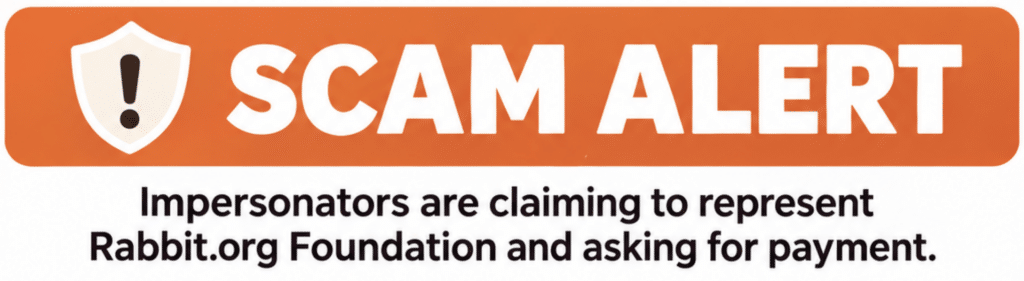
The Rabbit.org Foundation, a nationally recognized and long-standing nonprofit organization dedicated to rabbit rescue, welfare, and public education, has issued an urgent security warning to its community members, authors, volunteers, and supporters. The foundation has received multiple credible reports of malicious actors impersonating representatives of the organization. These bad actors are actively targeting authors who contribute content to the platform—and potentially expanding their reach to wider networks of rabbit advocates, rescue operators, and donors—under the false pretense of conducting official business, securing publication fees, or soliciting direct financial transactions.
According to leadership at the Rabbit.org Foundation, these fraudulent communications are engineered to deceive individuals into believing they are corresponding with legitimate administrative staff, editors, or board members. Once trust is established, the scammers request payments, fees, or unauthorized money transfers.
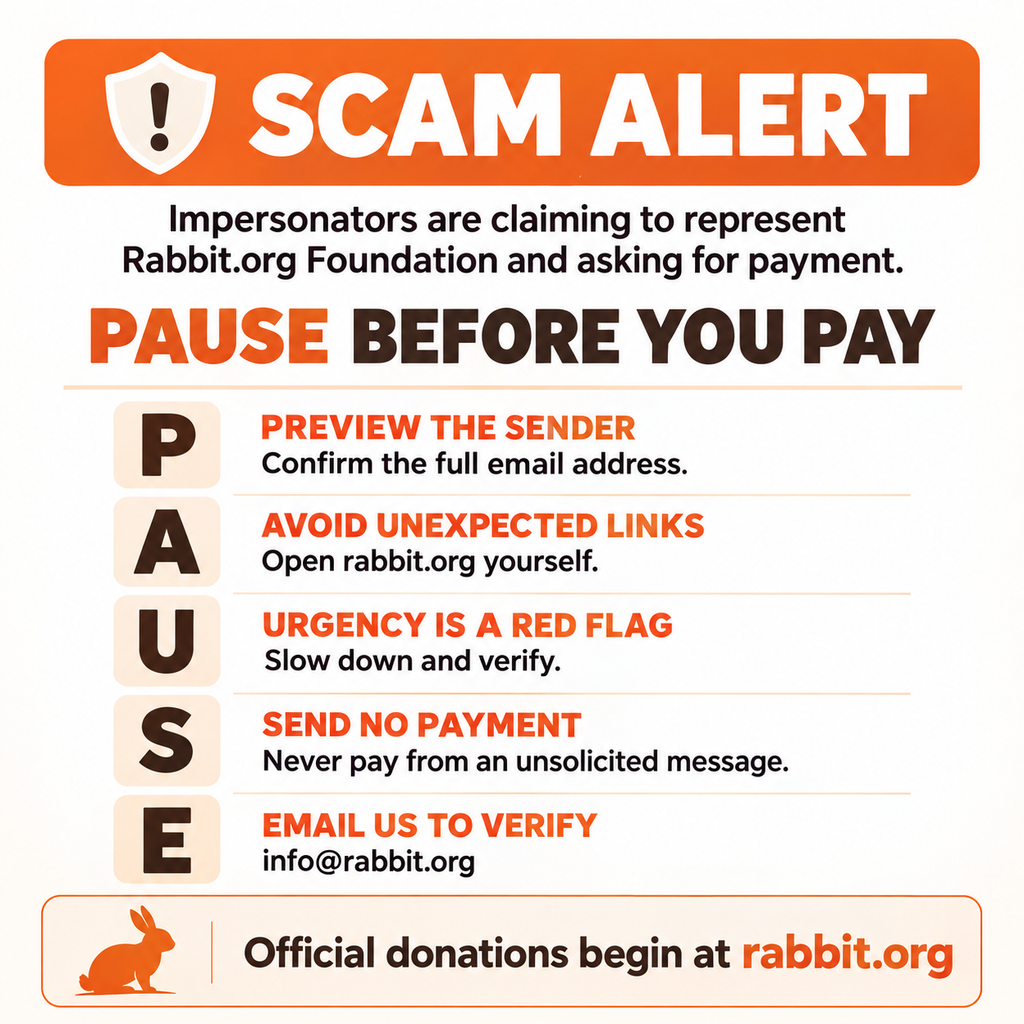
The organization is moving quickly to clarify its operational protocols to protect its supporters. Representatives of the Rabbit.org Foundation emphasize that legitimate donations, contributions, and official financial interactions will never be conducted via unsolicited direct messages, private chat applications, or informal email requests. Furthermore, the foundation’s authorized fundraising and donation collection processes are strictly restricted to verified channels, beginning exclusively through the official donation portal hosted on their website at rabbit.org.
In response to this emerging cyber threat, the foundation is urging anyone who receives suspicious communications to refrain from engaging with the sender, avoid clicking any unverified links, and refuse any requests for money, gift cards, or cryptocurrency. To aid in potential investigations and to map the scope of the scam, the Rabbit.org Foundation is asking victims and recipients of these fraudulent messages to preserve all available evidence, including screenshots, email headers, specific sender addresses, phone numbers, and payment instructions.
Chronology of the Threat
The emergence of these impersonation attempts highlights a broader, concerning trend of bad actors weaponizing the trusted names of animal welfare nonprofits to commit financial fraud. While isolated complaints began trickling into the Rabbit.org Foundation’s administrative inboxes over recent weeks, the pattern of behavior reveals a coordinated and targeted effort to exploit community members.
Phase 1: Initial Reconnaissance and Targeting
Scammers began by identifying active contributors, guest writers, and researchers associated with the Rabbit.org Foundation’s publications and educational resources. By scraping public author profiles, contributor pages, and social media networks linked to the rabbit rescue community, the perpetrators compiled lists of high-value targets. Authors are frequently targeted in these schemes because they maintain a public-facing association with the organization, making them believable marks for impersonators claiming to coordinate editorial calendars, publication updates, or administrative compliance.
Phase 2: Execution of Impersonation Messages
Using spoofed email addresses, newly registered domains mimicking the foundation’s branding, and compromised or fake social media accounts, the scammers initiated contact. Posing as high-ranking staff members or managing editors, they established a conversational baseline. The initial messages often appeared professional, referencing specific articles, organizational initiatives, or upcoming projects to disarm the targets and lower their guard.
Phase 3: The Pitch and Financial Demand
Once a line of communication was open, the scammers escalated their tactics by introducing a fabricated crisis, an administrative fee, a processing charge, or an urgent fundraising plea. In some instances, they demanded immediate payment under the threat of manuscript removal, delayed publication, or compliance penalties.
Phase 4: Organizational Discovery and Whistleblowing
As the frequency of these fraudulent contacts increased, several vigilant authors recognized inconsistencies in the payment requests and communication styles. They directly contacted the Rabbit.org Foundation’s core leadership to verify the legitimacy of the messages. Recognizing the immediate danger posed to their community, the foundation’s leadership mobilized their communications team to issue a public-facing security alert, warning the broader network of rescue workers, fosters, and advocates before further financial harm could occur.
Supporting Data: The Rising Tide of Nonprofit Impersonation
While the Rabbit.org Foundation’s specific alert focuses on targeted attacks against its author base, the incident mirrors a wider global surge in cybercrime targeting the nonprofit and animal welfare sectors. According to data compiled by cybersecurity analysts and consumer protection watchdogs, fraud schemes targeting charitable organizations and their networks have scaled dramatically over the last five years.
The Anatomy of Nonprofit Scams
Nonprofits are uniquely vulnerable to social engineering attacks due to their open, community-driven nature. Unlike corporate entities with rigid, heavily guarded financial gatekeepers, organizations like the Rabbit.org Foundation rely on public participation, volunteer collaboration, and open lines of communication. Scammers exploit this openness by preying on the goodwill of individuals who are already emotionally invested in a cause—in this case, rabbit rescue and welfare.
- Target Vulnerability: Authors, volunteers, and donors are prime targets because their affiliations are publicly visible on organizational websites.
- Medium of Attack: Threat actors predominantly utilize email spoofing, compromised social media profiles (primarily Facebook, Instagram, and LinkedIn), and encrypted messaging apps to bypass standard email security filters.
- Financial Vehicles: Scammers increasingly rely on peer-to-peer payment apps, cryptocurrency wallets, wire transfers, and unverified third-party checkout links that offer little to no consumer protection or chargeback remedies.
Cyber Threat Statistics in the NGO Sector
- Over 60% of nonprofit organizations report experiencing at least one targeted phishing or social engineering attempt annually.
- Financial impersonation scams targeting individuals affiliated with charities account for millions of dollars in undocumented global losses each year, as many victims hesitate to report losses due to embarrassment.
- The use of AI-generated text and deepfake communication tools has allowed scammers to craft grammatically flawless, highly convincing spear-phishing emails that closely mimic the distinct voice and tone of legitimate organizational leadership.
Official Responses and Expert Analysis
The leadership and review teams behind the Rabbit.org Foundation have taken a proactive stance against these malicious actors, stressing transparency and community defense as the primary lines of protection.
Statements from the Foundation Leadership
In a joint statement released via their official channels, the foundation’s think tank and editorial review board—including contributors and reviewers such as Paige K Parsons—underscored that protecting the community requires collective vigilance.
"We treat the security and trust of our authors, volunteers, and supporters with the utmost seriousness," a foundation spokesperson noted. "Our organization operates with strict financial transparency. We will never use informal communication channels to demand money, processing fees, or unexpected payments from our writers or advocates. If an interaction feels irregular, we urge our community to halt communication immediately and verify directly through our official website."
Cybersecurity Best Practices for Nonprofit Communities
Security experts specializing in non-profit defense recommend several immediate steps to mitigate the risk of falling victim to organizational impersonation:
- Verify Sender Domains: Always check the exact email header and sender domain. Scammers often use subtle misspellings (e.g.,
rabbit-org.cominstead ofrabbit.org) or free webmail accounts disguised as institutional addresses. - Confirm via Secondary Channels: If an urgent financial request or administrative demand is received from a known colleague or editor, verify the request by contacting them through a known, trusted phone number or independent email thread rather than replying directly to the suspicious message.
- Inspect Payment Gateways: Never submit credit card details, bank information, or digital currency to links provided in direct messages. Legitimate organizations utilize secure, encrypted, and widely recognized payment processors anchored directly to their primary domain.
- Preserve Evidence: In the event of a suspected scam, do not delete the messages. Take comprehensive screenshots of the chat logs, note the exact timestamps, save email headers, and record any cryptocurrency wallet addresses or payment handles provided by the scammers.
Implications for the Rabbit Welfare Community
The targeted impersonation campaign against the Rabbit.org Foundation carries significant implications for the broader animal rescue and advocacy ecosystem. Beyond the immediate financial risk to individual contributors, these scams threaten to erode the vital trust that sustains grassroots nonprofit organizations.
Disruption of Collaborative Work
Authors and researchers who donate their time and expertise to the Rabbit.org Foundation do so out of a passion for animal welfare. When bad actors inject fear, confusion, and financial exploitation into these professional relationships, it creates a chilling effect. Writers may become hesitant to publicly display their affiliations, and new contributors may view outreach from the organization with unwarranted suspicion.

The Need for Ecosystem-Wide Vigilance
Rescue groups, shelter operators, and educational advocates must treat this incident as a wake-up call. Cybercriminals do not discriminate based on the size of an organization; they look for weak links in the human chain. By sharing the Rabbit.org Foundation’s warning across local rescue networks, foster groups, and social media platforms, the community can collectively inoculate itself against future attacks.
How You Can Help Protect the Community
The Rabbit.org Foundation has issued a direct call to action for its entire network:
- Share the Warning: Distribute this security alert widely among fellow authors, rabbit rescue organizations, shelter volunteers, and community advocates.
- Report Suspicious Activity: If you or someone you know has been contacted by an individual posing as a Rabbit.org Foundation representative demanding money, forward the details immediately to the organization’s official support channels.
- Donate Safely: Ensure that all financial contributions are made exclusively through verified, secure pathways, such as the official donation link: https://donate.stripe.com/00g2cd3Tgahv11u9AA#.
By maintaining strict adherence to cybersecurity protocols, verifying communications, and looking out for one another, the rabbit welfare community can neutralize these fraudulent threats and continue its vital work protecting rabbits worldwide.