

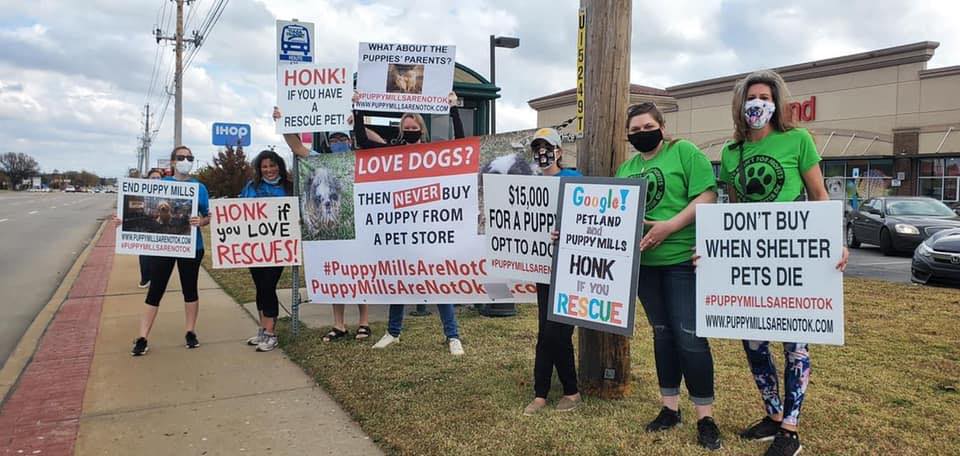
CHICAGO, IL — A coalition of prominent animal welfare organizations in the Chicago metropolitan area is intensifying pressure on national pet retailer Petland, demanding an immediate end to the commercial sale of live rabbits. Led by the House Rabbit Society of Chicago (HRS Chicago), Red Door Animal Shelter, and It’s All About The Paws (IAATP), local advocates argue that retail rabbit sales are a primary catalyst for a worsening cycle of impulse buying, mis-sexed pairings, explosive backyard breeding, and severe hoarding crises that have pushed municipal and private shelters to their absolute limits.
The advocacy campaign, backed by online petitions and regional protests, highlights a systemic failure in how commercially sold lagomorphs are marketed and distributed. Rescuers contend that while corporate storefronts turn a profit, local non-profit shelters are left to shoulder the devastating financial, emotional, and logistical fallout of population explosions.
Main Facts: The Retail-to-Rescue Pipeline
At the heart of the controversy is what animal welfare experts describe as the "impulse purchase" model of pet retail. Unlike dogs and cats, which are subject to rigorous municipal regulations and specialized rescue vetting in many jurisdictions, rabbits are frequently sold in commercial pet stores with minimal buyer education regarding their complex behavioral and dietary needs.
According to regional rescue directors, the primary issues stemming from retail rabbit sales include:
- Mis-sexed Pairs: Store employees frequently misidentify the sex of young rabbits. Unaware owners leave the store with an unsterilized male and female, resulting in rapid, accidental litters.
- Lack of Buyer Preparation: Rabbits are delicate, long-lived exotic pets—often surviving for 8 to 12 years—requiring specialized veterinary care, specific diets, and indoor housing. Many buyers treat them as disposable, short-term commitments.
- Systemic Overcrowding: Downstream effects hit local shelters immediately. Rescues across Cook and DuPage counties report extended waitlists for owner surrenders, severely restricted foster networks, and depleted medical budgets driven by emergency spay/neuter interventions.
In response to these compounding crises, animal advocates have launched a Change.org petition calling for national humane reform, urging Petland to follow the precedent set by major chains like Petco and PetSmart by phasing out the sale of live rabbits and pivoting toward adoption-partner models.
Chronology of Crisis: Two Schaumburg Hoarding Cases
Local rescue leadership points to two major hoarding interventions in suburban Schaumburg as definitive proof of the dangers associated with commercially sourced lagomorphs. In both instances, responders tracing the lineage of the animal populations found that the root cause traced directly back to a single retail point of origin: Petland Hoffman Estates.
Case 1: The May 2021 Extended-Stay Hotel Intake
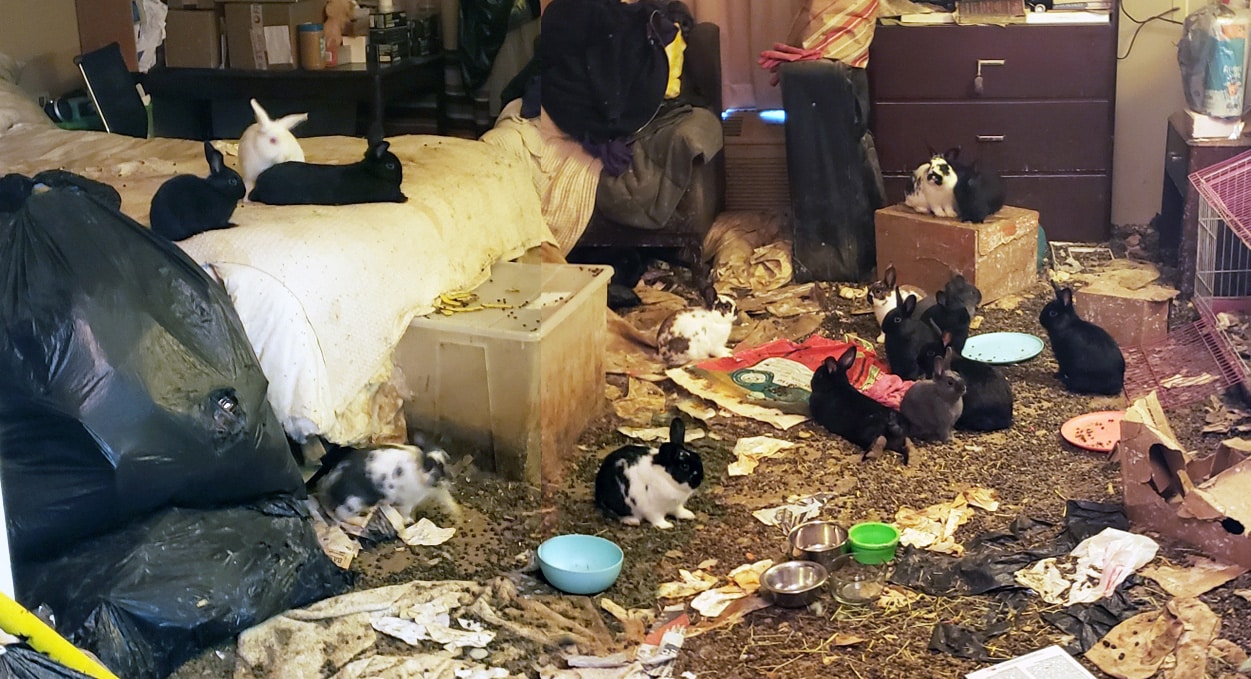
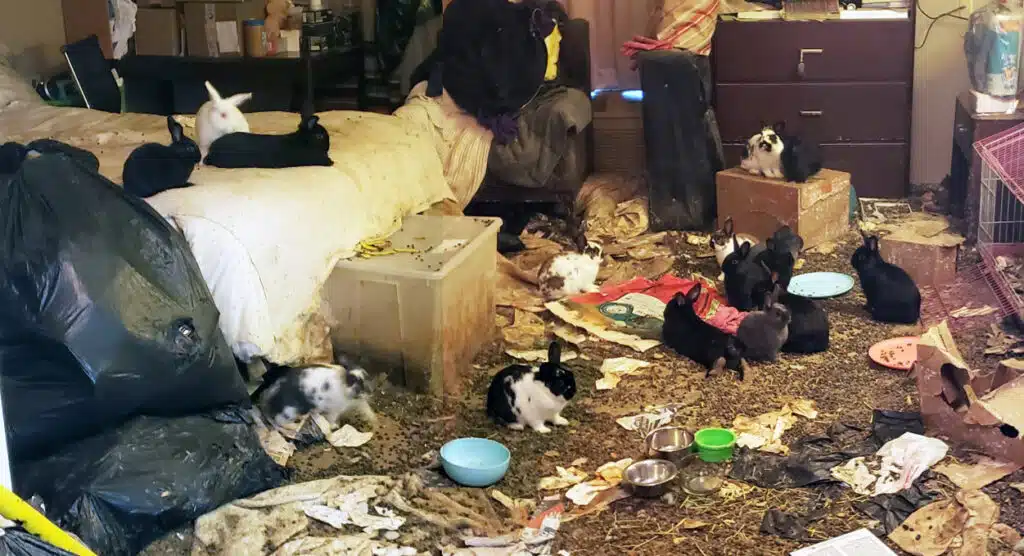
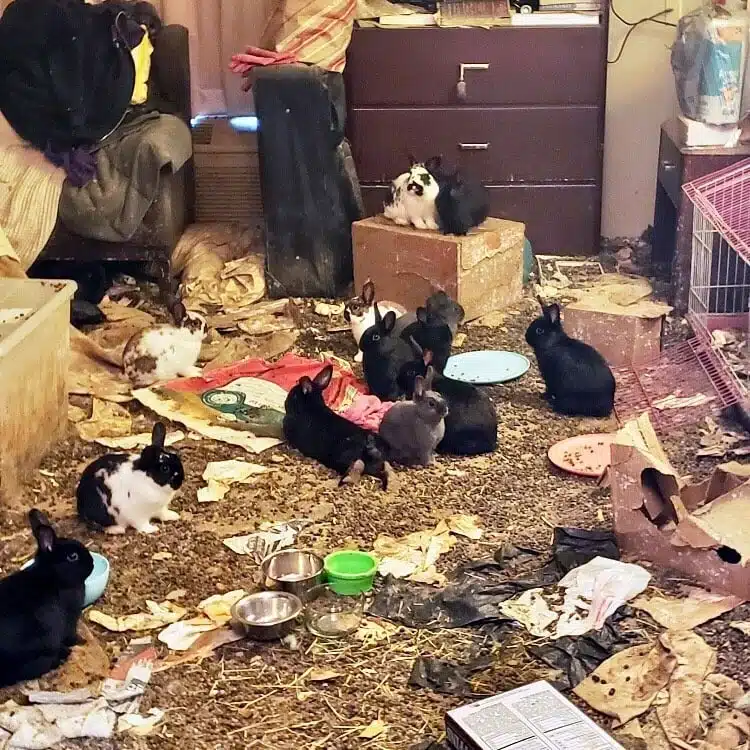
In May 2021, local animal control and rescue organizations were alerted to a catastrophic hoarding situation inside a long-stay Schaumburg hotel room. Responders entering the debris-filled space—outfitted in personal protective equipment—discovered a staggering 47 rabbits crammed into the confined living quarters.
- The Triage: Of the 47 rabbits removed from the room, 15 were visibly pregnant, threatening an even larger population explosion if intervention had been delayed by even a few days.
- The Distribution: Red Door Animal Shelter took in 22 of the rabbits, shouldering immediate, emergency medical costs that exceeded $7,000. DuPage County Animal Services accepted the remaining 25 animals.
- The Sourcing: According to documentation and statements from Red Door, the primary caretaker on-site reported that the entire population originated from the very first pair of rabbits purchased at Petland Hoffman Estates.
Case 2: The July 2023 Single-Family Home Intake
Just over two years later, a second massive intake operation unfolded in a Schaumburg residential home. IAATP was called to assist local authorities with an escalating domestic rabbit population.
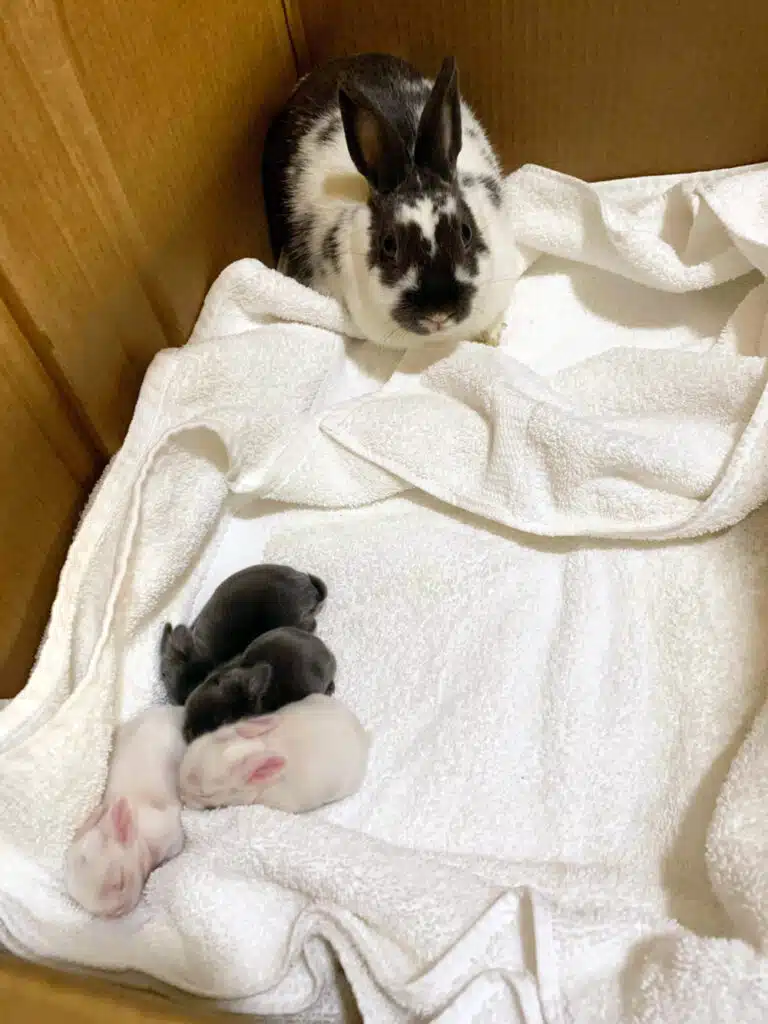
- The Rapid Response: Within 24 hours of the initial call, rescue workers and animal control officers removed 29 rabbits from the premises, including numerous fragile newborns.
- The Network Relief: Recognizing the sheer scale of the emergency, IAATP founder Erika Seibert coordinated emergency interstate and inter-agency placements with HRS Wisconsin, Hoopy Haven Rabbit Rescue, and Lost Woods Animal Sanctuary to prevent euthanization due to lack of space.
- The Sourcing: Investigators interviewing the homeowners confirmed that the breeding cycle began with an initial pair of rabbits purchased from the same retail location: Petland Hoffman Estates.
Supporting Data and Frontline Voices
The anecdotal evidence from suburban hoarding cases is supported by broad operational strain across the entire regional animal welfare community. Frontline leaders have spoken out against the corporate indifference they believe enables these crises.
“Petland is a major source of rabbits who later end up abandoned or in crisis… We regularly see mis-sexed pairs adopted from stores that lead to repeated litters. While Petland profits, rabbits suffer.”
— Rachael Sanders, Director, HRS Chicago“We managed back-to-back mass-intake crises in Schaumburg—each beginning with owner-reported Petland-origin pairs—stretching volunteers, foster space, and medical budgets to the breaking point.”
— Toni Greetis, Vice President, Red Door Animal Shelter
Financially, the burden of these retail-fueled incidents is immense. Emergency veterinary stabilization, parasite treatments, enclosure setups, and mandatory spay and neuter procedures cost rescues tens of thousands of dollars annually—funds that could otherwise be directed toward community education or preventative adoption counseling.
Official Responses and Industry Context
The campaign against Petland is part of a broader national movement by The Rabbit.org Foundation and its Stop Rabbit Sales Coalition. Protesters have gathered outside various Petland franchises across the country, demanding that the corporation align its business practices with contemporary ethical standards.
While major pet supply competitors have successfully transitioned away from selling live rabbits and dogs—focusing instead on hosting weekend adoption events in partnership with local shelters—Petland has largely maintained its live-animal sales model. Advocacy groups argue that this outdated retail model prioritizes short-term merchandise turnover over animal welfare, leaving vulnerable species exposed to neglect, ignorance, and abandonment.
Broader Implications for Animal Welfare and Municipal Shelters
The implications of the Chicago-area coalition’s push extend far beyond corporate boardrooms and retail storefronts; they touch directly upon public infrastructure and municipal resources.
- Strained Municipal Services: When private rescues are completely overwhelmed by multi-animal seizures and hoarding cases, municipal animal control facilities—already operating under tight taxpayer-funded budgets—are forced to absorb the overflow. This often results in difficult capacity choices for county shelters.
- Environmental Impact: Abandoned domestic rabbits lack the survival instincts of wild cottontails. When overwhelmed owners illegally release retail-bought rabbits outdoors, the animals frequently fall victim to predators, vehicular trauma, or starvation, creating an avoidable public nuisance and animal cruelty crisis.
- Legislative Precedent: The concentration of high-profile hoarding cases linked to single retail outlets provides local lawmakers with compelling data to consider municipal or state-level restrictions on the retail sale of unsterilized exotic pets and lagomorphs.
Resources for Chicago-Area Rabbit Owners
Local organizations emphasize that struggling pet owners have humane alternatives to abandonment. Anyone feeling overwhelmed by their pet rabbit population is urged to contact:
- House Rabbit Society of Chicago
- Red Door Animal Shelter
- It’s All About The Paws (IAATP)
- Local Municipal Animal Control (for emergency or stray surrenders)
Rescuers reiterate that surrendering an animal to a qualified facility saves lives and prevents the compounding tragedies seen in Schaumburg. As the petition campaign continues to gather signatures, the message from Chicago’s animal welfare community remains clear: live rabbit sales must end to protect animals, support overextended shelters, and halt the cycle of preventable suffering.