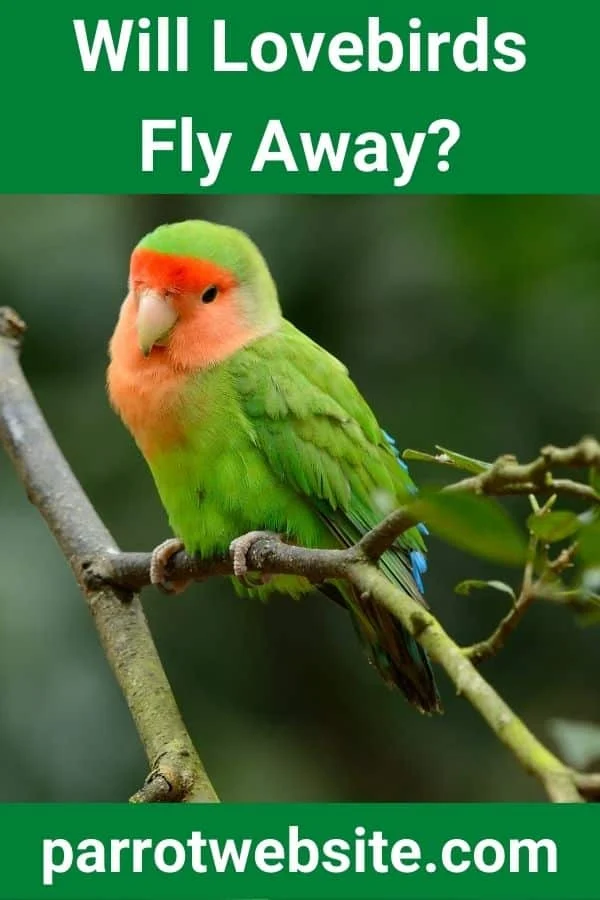
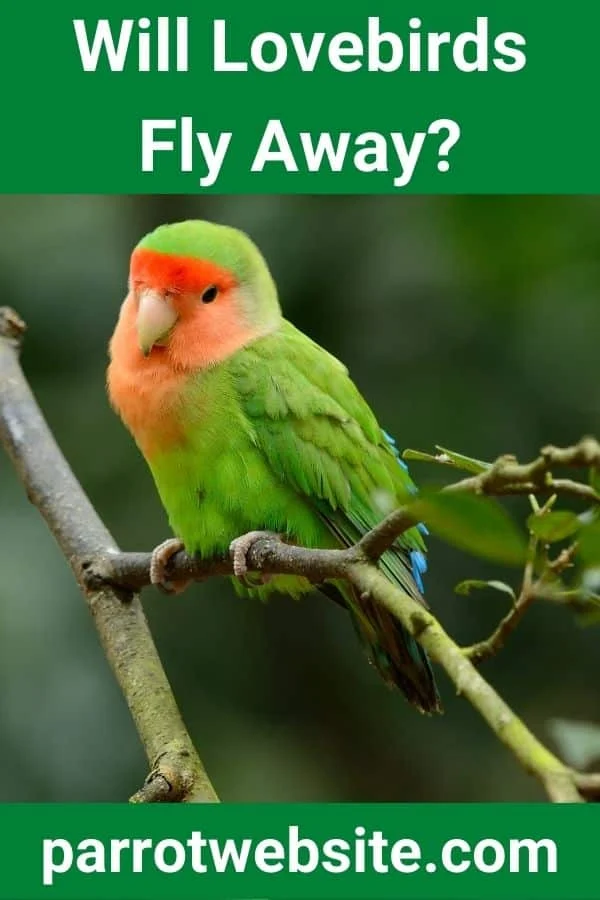
For many avian enthusiasts, the lovebird is more than just a pet; it is a companion, a source of joy, and a vibrant fixture of the household. These small, social parrots are known for their affectionate nature and energetic personalities. However, even the most devoted owners often grapple with a persistent question: if given the opportunity, will their beloved pet simply fly away?
The short answer is yes. While your lovebird may be perfectly content in its cage, surrounded by toys, fresh water, and high-quality feed, the impulse to take flight is hardwired into their biology. Understanding why this happens, how to prevent it, and how to react during a crisis is essential for every bird owner.
Main Facts: The Biology of the Impulse
To understand why a lovebird might bolt, one must look beyond the concept of "freedom." When a lovebird flies out an open door or window, it is rarely a conscious decision to leave its owner behind. Instead, it is an expression of an ancient, reflexive impulse to survey, explore, and react to stimuli.
The Instinctive Urge
Lovebirds are prey animals in the wild. Their primary defense mechanism is flight. When they see a wide-open space, their instinct dictates that they should take to the air to scan for threats or forage for resources. This behavior does not differentiate between a familiar living room and the vast, unknown sky. They are not "running away" from their life of comfort; they are simply acting on a biological command that has evolved over millennia.
Lack of Spatial Awareness
A critical fact for owners to recognize is that domestic lovebirds lack the navigational skills required to navigate a landscape they have never viewed from the air. Because they have lived their lives within the four walls of a home, they have no concept of their house’s appearance from an aerial perspective. This makes the prospect of a "successful return" significantly more challenging than it might be for a homing pigeon or a migratory species.
Chronology of a Crisis: What Happens When a Bird Escapes
When a bird makes a sudden exit, time is of the essence. The following timeline outlines the stages of an escape and the necessary responses.
Phase 1: The Initial Escape (0–30 Minutes)
The moment a lovebird exits a structure, it is typically overwhelmed by the sensory input of the outside world. The wind, the noise, and the vastness of the horizon often lead to "flight shock." In this state, the bird may fly a short distance—often just to the nearest tree or rooftop—and then freeze. This is the "golden window" for retrieval.
Phase 2: The Search and Stabilization (1–5 Hours)
During these hours, the bird will likely remain in the immediate vicinity of the exit point. It is hungry, confused, and anxious. If the owner acts quickly—placing the cage outside and using familiar cues—the chances of the bird returning voluntarily are at their highest.
Phase 3: The Survival Phase (24+ Hours)
Once a night has passed, the bird’s situation becomes dire. Without a source of water or food, and lacking protection from predators or elements, a domestic lovebird’s health will decline rapidly. By this stage, the search must transition from a passive "wait for return" strategy to an active, community-wide recovery effort.
Supporting Data: The Reality of Domestic Survival
The sobering reality of avian escape is that domestic lovebirds are ill-equipped for the wild. Data regarding captive-bred birds indicates that their survival rate in an outdoor environment is exceptionally low.
The Vulnerability Gap
- Foraging Skills: A pet lovebird does not know how to identify wild food sources. They are accustomed to a bowl of pellets or seeds.
- Predatory Awareness: Domestic birds often lack the necessary fear response toward local predators such as hawks, neighborhood cats, or even large rodents.
- Environmental Stress: Sudden changes in temperature, rainfall, and wind speeds can cause a bird to enter a state of shock, which can be fatal for such small creatures.
Experts generally agree that a domestic bird’s chances of survival beyond the first 48 hours are slim. Consequently, the emphasis must always be placed on prevention rather than recovery.
Official Recommendations: How to Prevent the "Great Escape"
Avian veterinarians and behaviorists emphasize a multi-layered approach to home safety.
1. The "Air-Lock" System
The most common cause of escape is a door left ajar. Many owners use an "air-lock" method: a secondary screen door or a small foyer area that prevents a bird from having a direct line of flight to the outdoors.
2. Cage Security
Never assume a cage is "secure" enough for outdoor use. If you intend to take your bird outside for fresh air, invest in a dedicated travel carrier with double-locking mechanisms. Many escapes occur because a standard cage door was jostled open by a gust of wind or a minor impact.
3. The Window Alternative
If your bird enjoys fresh air, the safest method is to leave the bird inside its secure cage while opening a nearby window. This provides the environmental stimulation (the sounds of birds, the breeze) without the inherent danger of a full-scale escape.
Emergency Protocols: What to Do If Your Bird Flies Away
If the worst-case scenario occurs, panic is your greatest enemy. Follow this structured protocol to maximize the chances of recovery.
The "Home Base" Strategy
Place the bird’s cage in a highly visible spot near where it was last seen. Fill the food bowls with their favorite high-value treats (such as millet). The cage serves as a visual beacon of safety and familiarity.
Auditory Lures
Play recordings of the bird’s favorite music or videos of other lovebirds chirping. If you have another lovebird, their vocalizations can act as a powerful siren, drawing the escaped bird back to the sound of its flock.
Community Outreach
Do not hesitate to alert your neighbors. Post flyers, use local social media groups, and contact local veterinarians. Often, someone will spot the bird, but they may not know who it belongs to. Providing a clear photo and a contact number is vital.
Implications: The Psychological Toll and Ethical Responsibility
The decision to keep a bird is an ethical commitment to its safety. The psychological toll of losing a pet is significant for the owner, but the physical toll on the bird is often irreversible.
The Shift in Perspective
Owners must realize that the lovebird is not a domesticated animal in the same sense as a dog or a cat; it is a wild creature living in a domestic setting. Its biology remains that of a bird meant to inhabit the canopy. By acknowledging this, owners can better respect the bird’s limitations and the inherent risks of its environment.
Responsible Stewardship
In conclusion, while lovebirds will almost always take the opportunity to fly if a window is open, it is not an act of malice or a rejection of their owners. It is a fundamental expression of their nature. As stewards of these intelligent and sensitive beings, our responsibility is to bridge the gap between their natural instincts and the safety of our homes. Through meticulous home-proofing, vigilance, and a calm, strategic response to emergencies, we can ensure that our lovebirds live long, healthy lives, safely tucked away from the unpredictable dangers of the open sky.
If you are a lovebird owner, review your home setup today. A single piece of mesh on a window or a reinforced latch on a travel cage could be the difference between a lifetime of companionship and a tragic, preventable loss.