Main Facts
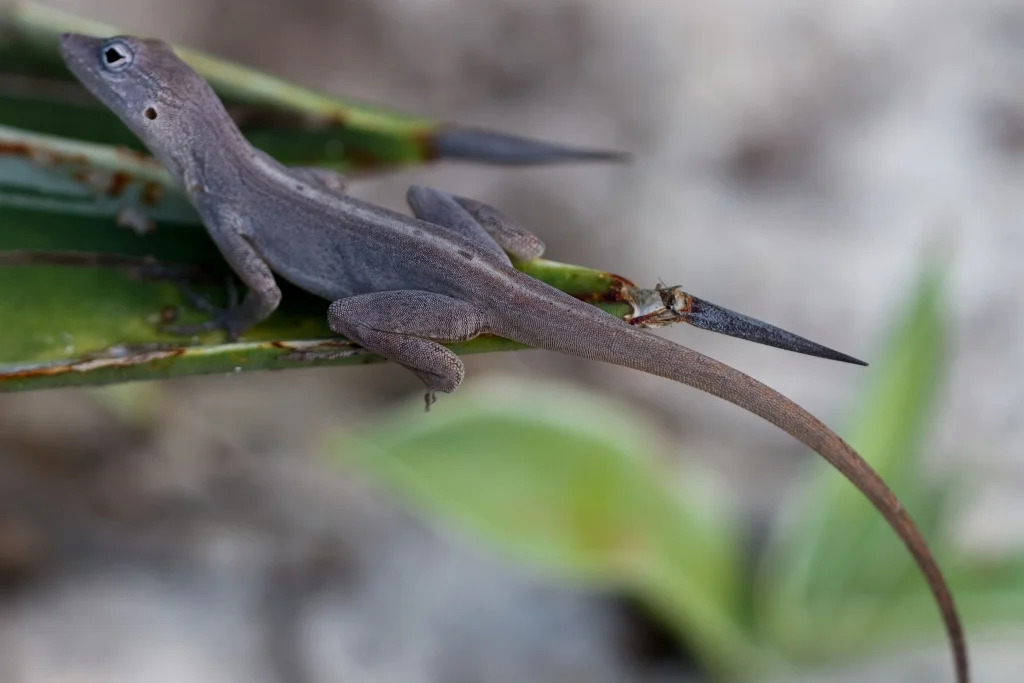
In the relentless theater of natural selection, catastrophic weather events are increasingly recognized not merely as ecological disruptions, but as powerful engines of evolutionary change. A landmark study published in the journal Current Biology provides compelling empirical evidence of this phenomenon, focusing on populations of the Silver Key anole (Anolis scriptus) inhabiting the Turks and Caicos Islands. Following the devastation wrought by Hurricanes Irma and Maria in 2017—two back-to-back Category 5 storms that battered the Caribbean—researchers discovered that survival was not entirely random. Lizards blessed with shorter fourth hind toes possessed a distinct, life-saving advantage over their longer-toed counterparts.
The research reveals that these catastrophic hurricanes exerted intense directional selection favoring enhanced clinging performance. When faced with sustained hurricane-force winds capable of stripping vegetation and scouring landscapes, anoles had to hold on for dear life. Those with shorter fourth hind toes were physically better equipped to grip surfaces securely against the ferocious gales.
Beyond documenting shifts in physical traits, the international team of scientists performed rigorous genomic analyses. They identified five candidate loci that exhibited striking signatures of parallel selection across two distinct island populations. Most notably, the hs6st1 gene emerged as a primary genetic driver associated with hind toe length. By utilizing gene-editing techniques on a related species, the brown anole, the researchers confirmed functional causality: disrupting the hs6st1 gene directly resulted in the development of shorter hind toes.
This comprehensive study bridges the gap between macro-environmental disasters and micro-evolutionary genetics. It demonstrates how extreme weather can simultaneously reshape an animal’s physical morphology, functional performance, and underlying genetic architecture in real-time, offering a profound glimpse into how wild populations adapt to an increasingly volatile climate.
Chronology of the Research
To fully understand how extreme weather leaves an indelible mark on an animal’s DNA, it is necessary to examine the timeline of events, stretching from the initial ecological disaster to the final genetic validations in the laboratory.
Phase 1: The Gathering Storms (September 2017)
In September 2017, the Atlantic hurricane season produced one of its most ferocious chapters. Hurricane Irma, followed closely by Hurricane Maria, cut a swath of destruction across the Caribbean. The Turks and Caicos archipelago, characterized by low-lying islands and exposed habitats, took the full brunt of the meteorological fury. Sustained winds exceeding 150 miles per hour scoured the vegetation, presenting an unprecedented stress test for the native fauna, including the resident populations of Silver Key anoles (Anolis scriptus).
Phase 2: Post-Storm Assessments and Field Sampling (Late 2017 – 2018)
In the wake of the hurricanes, field researchers seized a rare scientific opportunity. By comparing pre-storm demographic and morphological data—collected during ongoing biodiversity and evolutionary monitoring projects in the region—with post-storm survivor populations on two separate islands in the Turks and Caicos, the scientists could directly measure differential survival. They captured surviving anoles, measured their morphological traits (including limb and toe lengths), and preserved tissue samples for subsequent DNA extraction.
Phase 3: Genomic Sequencing and Discovery (2019 – 2021)
Back in the laboratory, genomic sequencing technologies were deployed to analyze the genetic profiles of the pre-storm populations and the post-storm survivors. By mapping the genomes and running scans for selection signatures, the researchers sought to determine whether the physical changes observed in survivors were mirrored by genetic shifts. This genomic deep-dive pinpointed five candidate loci that showed parallel selection across the two distinct island populations. Among these, the hs6st1 gene stood out due to its strong correlation with the length of the longest hind toe.
Phase 4: Functional Validation via Gene Editing (2022 – 2024)
Correlation, however, does not equal causation. To test whether the hs6st1 gene actually dictated toe development, the research team designed an ingenious functional experiment. Using CRISPR-Cas9 or comparable gene-editing methodologies on brown anole (Anolis sagrei) embryos—a tractable model species within the anole genus—they targeted the hs6st1 pathway. The resulting hatchlings successfully developed shorter hind toes, providing definitive functional proof that modifications to this specific genetic pathway could produce the exact morphological phenotype favored by the 2017 hurricanes.
Phase 5: Publication and Dissemination (2026)
Following years of peer review, data validation, and manuscript preparation, the complete findings were formally published in Current Biology under the title "Genomic targets of hurricane-induced selection on clinging performance in an island lizard," bringing a decade of ecological observation to the scientific forefront.
Supporting Data and Methodology
The rigor of the study rests on a robust methodological framework combining field ecology, high-throughput genomic sequencing, and experimental embryology.
Morphological Metrics and Clinging Performance
Field data demonstrated a statistically significant shift in population averages before and after the storms. Anoles that perished during Hurricanes Irma and Maria tended to have longer limbs and longer fourth hind toes compared to those that survived. Biomechanical analyses of anole clinging performance indicate that shorter toes reduce the leverage that powerful winds can exert against the adhesive toe pads (lamellae) when the lizard grips bark, rocks, or artificial structures. By having shorter digits, the lizards minimized the torque pulling their feet away from the substrate, effectively upgrading their aerodynamic anchoring system.
Genomic Analysis and Parallel Selection
Genomic sequencing of individuals from two separate islands revealed remarkable convergence. Parallel selection occurs when independent populations facing identical environmental stressors evolve similar phenotypic and genetic solutions. In this study, genome-wide association studies (GWAS) and selection scans identified five candidate loci shared across the isolated populations.
The hs6st1 gene was a focal point of this discovery. This gene encodes a crucial enzyme—heparan sulfate 6-O-sulfotransferase 1—which is responsible for modifying heparan sulfate molecules located on cell surfaces. Heparan sulfate plays a foundational role in cell-to-cell signaling cascades during embryonic development. Specifically, it regulates the outgrowth, patterning, and segmentation of developing limbs and digits.
Experimental Verification Data
To confirm that hs6st1 was indeed the genetic lever controlling this trait, researchers manipulated the gene in developing brown anole embryos. Quantitative measurements of the resulting hatchlings confirmed a statistically significant reduction in hind toe length compared to wild-type controls. This experimental data closed the loop between macro-level ecological survival metrics and micro-level molecular biology, establishing a mechanistic chain of causation:
- Environmental Pressure: Hurricane-force winds select for better clinging ability.
- Morphological Phenotype: Shorter fourth hind toes provide superior grip.
- Genetic Architecture: Variations near the hs6st1 gene correlate with toe length.
- Functional Causality: Experimental disruption of hs6st1 successfully generates shorter toes.
Official Responses and Scientific Perspectives
The publication of this research has generated significant commentary within the broader scientific community, illuminating how evolutionary biology is adapting to address contemporary ecological realities.
Dr. Colin Donihue, an evolutionary biologist and co-author of the study, emphasized the rarity and value of capturing evolution in action. "For a long time, evolutionary biology was viewed as a historical science—something we study in the rearview mirror by looking at fossils or deep phylogenetic trees," Donihue noted in discussions surrounding the publication. "What studies like this allow us to do is witness natural selection as it happens, capturing the immediate biological toll of extreme weather events and tracking how populations rebound and adapt."
Other evolutionary geneticists who were not directly involved in the research have praised the study’s multi-tiered approach. Dr. Elizabeth Carlen, an urban evolutionary ecologist, remarked that the integration of field ecology with CRISPR-style functional validation sets a new standard for ecological genomics. "It is one thing to find a statistical correlation between a gene and a trait in surviving animals," Carlen observed. "It is an entirely higher bar of scientific proof to actually edit that gene in a living organism and watch the predicted physical trait emerge. This study achieves that gold standard."
Conservation biologists have also weighed in, noting that understanding the genetic underpinnings of climate resilience provides critical insights into how native species might cope with anthropogenically intensified weather patterns. While the Silver Key anole population demonstrated a resilient, adaptive response to a catastrophic event, experts caution that there are hard biological limits to how fast populations can adapt when storms become more frequent and severe.
Implications: Evolution in the Anthropocene
The findings of this Turks and Caicos anole study extend far beyond the specific ecology of lizards on small Caribbean islands. They offer profound implications for how science views biodiversity, climate change adaptation, and the future of evolutionary trajectories in the Anthropocene.
1. Rewriting the Timeline of Adaptation
Traditionally, evolutionary adaptation was thought to require thousands or millions of years of gradual genetic drift and mutation. However, recent empirical work—pioneered by studies on island lizards, urban wildlife, and organisms subjected to rapid environmental shifts—demonstrates that natural selection can operate at blinding speeds. When faced with catastrophic events like Category 5 hurricanes, selection gradients can be intensely steep, weeding out maladaptive traits within a single generation and driving measurable evolutionary shifts almost overnight.
2. The Predictive Power of Functional Genomics
By linking macro-phenotypes (toe length) to specific genetic pathways (hs6st1) and proving causality through embryological experimentation, this research highlights the power of modern functional genomics. As sequencing technologies become cheaper and more accessible, conservationists and evolutionary biologists will increasingly be able to map the genetic vulnerabilities and resilience profiles of endangered or vulnerable species facing climate disruption.
3. Climate Change and Extreme Weather as Evolutionary Drivers
As global temperatures rise, climate models project an increase in the frequency and intensity of extreme weather events, including more powerful hurricanes, severe droughts, and prolonged heatwaves. Far from being isolated disturbances, these weather anomalies are shaping up to be primary evolutionary filters of the 21st century. Species that possess the underlying genetic plasticity and standing genetic variation to adapt rapidly—such as the Silver Key anole—may survive and thrive. Conversely, specialized species lacking such genetic flexibility face heightened risks of extirpation or extinction.
4. Future Research Directions
The insights generated by this study open up several exciting avenues for future research. Scientists are now eager to investigate whether the genetic shifts observed in the Silver Key anole are permanent fixtures of the post-hurricane gene pool or if traits will drift back once the immediate selective pressure subsides. Furthermore, researchers are expanding these methodologies to other island-dwelling taxa, such as birds, insects, and other reptiles, to determine whether hurricane-induced selection is a universal law of island biogeography or a species-specific phenomenon.
Ultimately, the story of the Silver Key anole is a testament to the tenacity of life on Earth. Even in the face of nature’s most violent tempests, biology finds a way to grip on, adapt, and rewrite its code for survival.