DUBLIN, IRELAND — In the natural world, color is rarely just aesthetic; it is a profound evolutionary language. For decades, biologists have marveled at the brilliant crimson, striking canary yellow, and stark jet-black banding of certain serpents. While pop-culture tropes often associate dull, earthy tones with danger, a comprehensive new study turns conventional wisdom on its head.
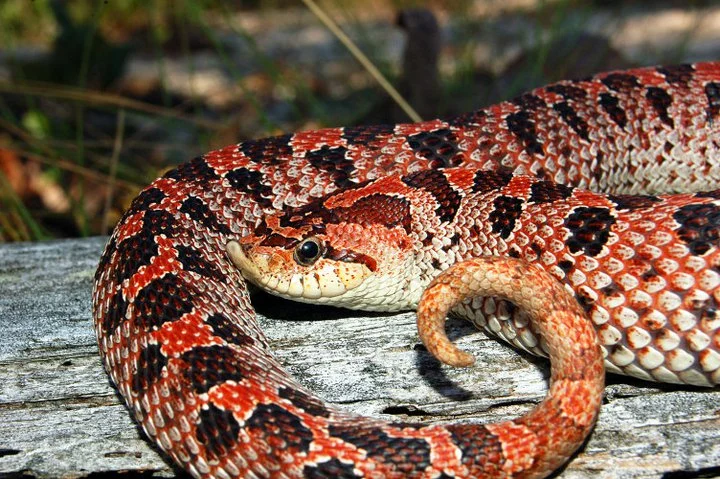
According to recent research published in the prestigious Journal of Animal Ecology, the most vibrantly colored and uniquely patterned snakes are, in fact, significantly more likely to pack a potent, venomous punch. Mirroring the ecological strategies of dazzling poison dart frogs, these snakes utilize high-contrast pigmentation as a clear, unmistakable biological billboard—a warning to potential predators that reads, quite literally, "proceed with caution."
The research, spearheaded by a team of evolutionary biologists from the University of Galway, offers unprecedented insight into how serpents navigate the high-stakes trade-offs of survival, defense, and predation. By examining thousands of data points and leveraging modern citizen-science databases, the Irish researchers have mapped out a complex web of environmental pressures that dictate why some snakes blend into the shadows while others flash like neon signs.
Main Facts: Decoding the Serpent’s Palette
At the core of the study is the concept of aposematism—the biological phenomenon whereby dangerous or unpalatable animals advertise their toxicity through striking, conspicuous coloration. While aposematism is a well-documented survival strategy in amphibians, insects, and mammals (such as skunks and wasps), its evolutionary mechanics across the diverse suborder of snakes (Serpentes) have long remained a subject of intense scientific debate.
Led by researchers Amy Duclaux, Dr. Michel Dugon, and Dr. Kevin Healy from the Zoology Department within the School of Natural Sciences at the University of Galway, the study establishes a definitive statistical link between visual conspicuousness and venom toxicity.
However, the team emphasizes that warning coloration is not a blunt instrument; it is intricately tailored to an individual species’ lifestyle. The research underscores several core findings:
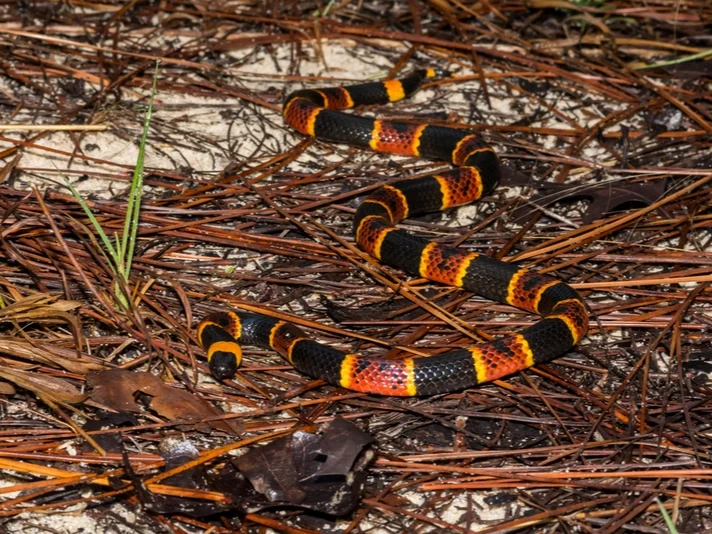
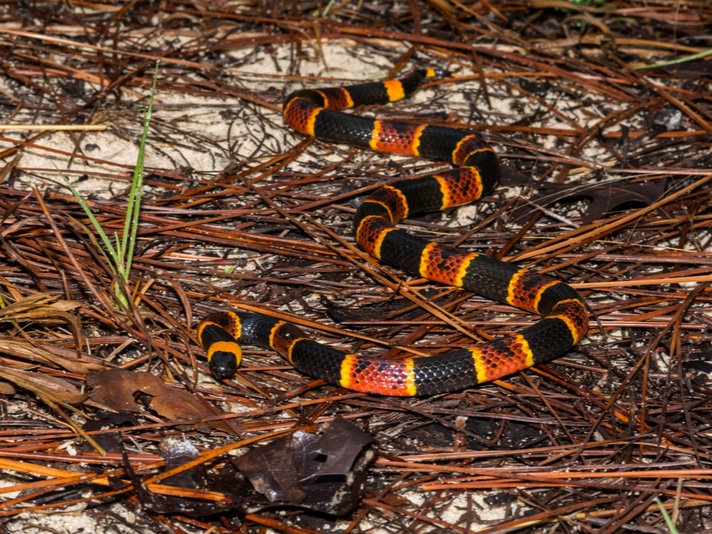
- The Toxicity Correlation: Snakes that display high-contrast patterns—such as the iconic rings of the Eastern coral snake (Micrurus fulvius)—are far more likely to possess venom capable of inflicting severe harm.
- The Venom-Defense Trade-Off: Interestingly, the study posits an inverse relationship between venom potency and color intensity in certain contexts. Snakes sporting ultra-conspicuous warning signals may rely more heavily on psychological deterrence, potentially evolving slightly less toxic venom because predators have learned to avoid them on sight. Conversely, snakes with specialized defensive venoms may leverage specific color components to reinforce their deterrent effect.
- Ecological Context: A snake’s color is not determined by predators alone. Habitat structure, circadian habits (diurnal vs. nocturnal activity), and the visual capabilities of a snake’s own prey all exert evolutionary pressures on how a serpent looks.
Chronology: How the Research Unfolded
The path to decoding serpent coloration required a massive interdisciplinary approach, bridging classical natural history with modern computational ecology.
Phase One: Hypothesis Formulation
The project began as an inquiry into why certain reptile lineages evolved extreme phenotypic divergence. While pit vipers (Viperidae) often rely on disruptive camouflage to ambush prey and remain hidden from predators, elapids and other families frequently showcase startling, high-visibility hues. Duclaux, Dugon, and Healy sought to determine whether a snake’s appearance is systematically linked to its primary mode of self-defense, and whether environmental factors like habitat complexity dictate the evolution of these visual signals.
Phase Two: Data Sourcing via Citizen Science
Gathering comparative visual data across hundreds of snake species presented a monumental logistical hurdle. To overcome this, the researchers turned to vast ecological databases, most notably iNaturalist. By sourcing thousands of high-resolution, peer-verified photographs of snakes captured in their natural, unmanipulated habitats, the team was able to analyze how these reptiles actually appear to other animals in the wild.
Phase Three: Cross-Referencing Traits
With the photographic database established, the researchers cross-referenced the visual data with comprehensive toxicological and ecological datasets. They meticulously coded each species based on specific variables:
- Presence or absence of venom.
- Overall potency of the venom.
- Specific venom components known to trigger intense pain (a key psychological deterrent for mammalian and avian predators).
- Specific pattern types, such as longitudinal stripes, transverse banding, or blotches.
- Behavioral traits, including whether the species is strictly diurnal (day-active), nocturnal (night-active), or crepuscular.
- Microhabitat preferences (arboreal tree-dwellers, terrestrial ground-dwellers, or aquatic/semi-aquatic species).
Phase Four: Statistical Synthesis and Publication
Using advanced comparative phylogenetic methods to control for evolutionary relatedness among species, the team ran robust statistical models. The results conclusively demonstrated that contextually conspicuous species are significantly more likely to be venomous. The findings culminated in the peer-reviewed paper titled "Contextually conspicuous species are more likely to be venomous: Habitat-dependent aposematic colouration found throughout snakes," published in the Journal of Animal Ecology.
Supporting Data: The Ecological Equation
To fully grasp the implications of the University of Galway study, one must examine the physical and environmental variables that the researchers analyzed. Snakes do not exist in a vacuum; their coloration is the evolutionary compromise of multiple competing survival imperatives.
1. The Predator’s Perspective vs. Prey Detection
A striking coloration acts as a double-edged sword. While a bright red, yellow, and black banded pattern screams "dangerous" to a sharp-eyed hawk or a mammalian carnivore, it can simultaneously act as a beacon to the snake’s own prey.
The researchers noted that the evolutionary success of bright coloration depends heavily on what a snake eats and how well its prey can perceive color. For instance, a diurnal ambush predator feeding on color-blind rodents faces different visual constraints than an arboreal specialist hunting birds with tetrachromatic vision (the ability to see ultraviolet, red, green, and blue light).
2. Microhabitat Influence
Where a snake lives drastically alters how its colors are perceived. The study factored in three primary microhabitats:
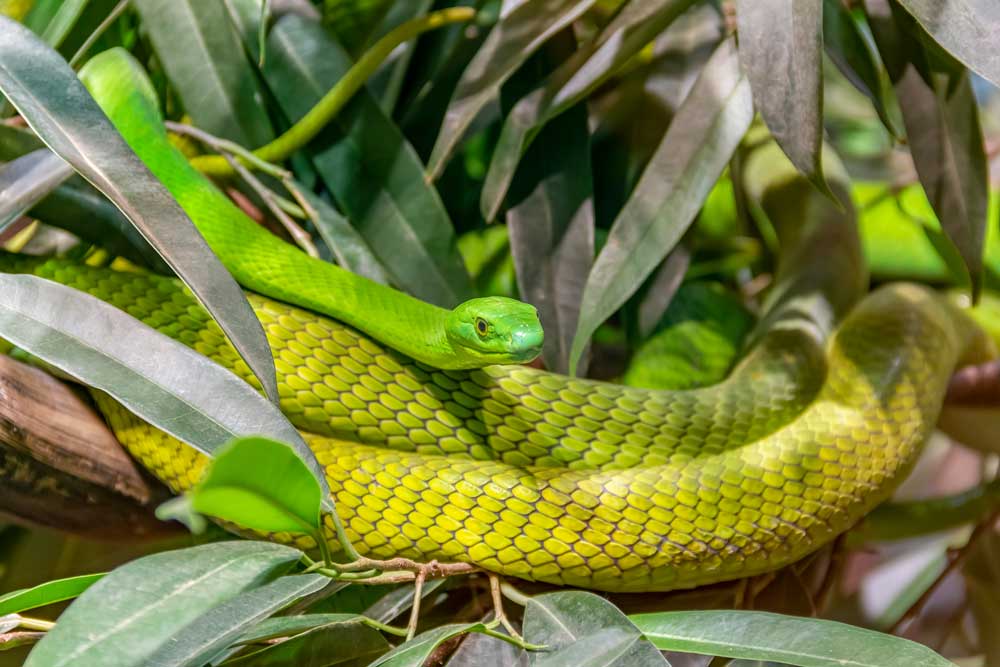
- Arboreal (Trees and Canopies): Canopy-dwelling snakes, such as certain green pit vipers, often utilize disruptive green camouflage to blend into foliage, though some exceptions exist where warning signals pierce through dappled sunlight.
- Terrestrial (Ground Level): Ground-dwelling snakes face panoramic threats from aerial and terrestrial predators alike, making high-contrast ground patterns particularly effective communication tools.
- Aquatic (Water and Wetlands): Water-dwelling serpents must contend with the refractive properties of light and murky aquatic environments, shifting the utility of certain chromatic displays.
3. Circadian Rhythms
Time of activity proved to be a critical divider. Snakes that hunt or bask during daylight hours are exposed to visually oriented predators (like raptors and diurnal mammals) that rely heavily on color vision. Nocturnal snakes, by contrast, operate under conditions where color is largely irrelevant, reducing the evolutionary pressure to maintain complex aposematic displays—which explains why many nocturnal species lean toward drab, protective camouflage.
Official Responses and Expert Insights
The academic community has widely praised the study for its methodological rigor and its broad contributions to evolutionary biology and herpetology.
Dr. Kevin Healy, one of the co-authors from the University of Galway, emphasized the complexity of the findings during discussions surrounding the publication. "When we look at a brightly colored snake, our first instinct is often fear, and evolution has ensured that potential predators share that exact reaction," Healy noted. "However, what this study proves is that nature doesn’t rely on a single playbook. The color of a snake is a finely tuned dialogue between the animal, its predators, its prey, and the very structure of the forest, desert, or wetland it calls home."
Co-author Dr. Michel Dugon highlighted the importance of leveraging modern digital databases for macro-ecological studies. "By utilizing platforms populated by naturalists and photographers across the globe, we were able to analyze natural variations in coloration on a scale that was previously unimaginable," Dugon stated. "It bridges the gap between controlled laboratory settings and the messy, beautiful reality of the wild ecosystem."
Independent herpetologists not involved in the study have also weighed in, noting that the research provides a vital framework for understanding complex evolutionary phenomena like Batesian mimicry—where harmless non-venomous species evolve to mimic the striking color patterns of their dangerous, venomous counterparts to deter predators.
Implications: Conservation, Medicine, and Future Research
The revelation that chromatic brilliance strongly correlates with venom toxicity carries far-reaching implications that extend well beyond academic curiosity, touching upon fields ranging from wildlife conservation to human medicine.
1. Public Safety and Wildlife Management
In regions where human-wildlife overlap is high, understanding visual cues in venomous snakes can improve public safety awareness. While local populations often develop indigenous knowledge regarding dangerous species, global travelers and outdoor enthusiasts can better assess ecological risks by recognizing the universal visual grammar of aposematism. Furthermore, respecting these visual warnings reduces instances of unnecessary snake-killing, promoting safer coexistence between humans and native reptile populations.
2. Conservation Ecology in a Changing Climate
As global habitats experience unprecedented fragmentation and climate disruption, understanding how animals signal danger and navigate predation pressures becomes critical. Conservationists can use these baseline ecological models to monitor how shifting environments might impact predator-prey dynamics. For instance, if deforestation alters the light filtration of a canopy habitat, arboreal species relying on specific visual deterrents or camouflage may face new survival hurdles.
3. Biomedical and Pharmacological Horizons
Venom is a complex biochemical cocktail, and understanding its evolutionary relationship with external morphology can guide bioprospecting efforts. Researchers studying pain-inducing venom components in tandem with aposematic signaling may unlock new pathways for pharmaceutical development, particularly in the fields of targeted analgesics and neurochemistry.
Summary
The landmark study by Duclaux, Dugon, and Healy reminds us that every scale, stripe, and shade found in the natural world tells a story shaped by millions of years of natural selection. Far from being random artistic flourishes, the vibrant hues of the world’s most stunning serpents serve as nature’s ultimate cautionary tale—a dazzling testament to the power of adaptation, survival, and defense.