The arrival of a new cat in the home is a moment of profound joy, yet for many first-time owners, it also brings a wave of anxiety regarding behavioral expectations. There is a prevailing, albeit incorrect, cultural narrative that suggests cats are "untrainable" or inherently aloof creatures who operate beyond the reach of human guidance. However, feline behavioral experts argue the exact opposite: cats are remarkably intelligent, highly observant, and capable of learning complex routines—provided the human guardian understands the psychological framework that drives them.
Training a cat is not an exercise in asserting dominance; it is a collaborative dialogue. When approached with empathy and scientific rigor, the training process becomes the bedrock upon which a lifelong, mutually respectful relationship is built.
Main Facts: The Psychology of Feline Learning
At its core, cat training is rooted in the principles of operant conditioning. Unlike dogs, who were selectively bred over millennia for cooperative tasks, cats have retained their ancestral instincts as both predators and prey. This duality means that a cat’s primary motivation is to feel secure while simultaneously satisfying its natural urges to hunt, climb, and explore.
The fundamental pillars of success include:

- Voluntary Engagement: Cats are autonomous learners. When a cat chooses to participate in a training session, they are more cognitively engaged and less stressed.
- The Power of Reward: Because cats are not motivated by a desire to "please" in the way canines often are, they require immediate, high-value reinforcement that aligns with their internal interests—be it a specific treat, a favorite toy, or affection.
- The Myth of Misbehavior: Cats do not act out of spite. Every "unwanted" behavior—such as scratching the sofa or jumping on counters—is a fulfillment of a natural instinct. The goal of training is not to suppress these behaviors, but to redirect them into acceptable outlets.
Chronology: The Evolution of Training Philosophy
The shift from "obedience-based" animal training to "cooperative" behavior management has been a decades-long evolution.
The Era of Correction (Historical Perspective)
In the mid-20th century, animal training was largely punitive. Techniques often involved deterrents like water spray bottles, loud noises, or physical displacement. Researchers in the late 1990s began to document the long-term psychological impact of these methods on feline subjects, noting that punishment frequently led to "learned helplessness" or, conversely, increased anxiety-induced aggression.
The Rise of Positive Reinforcement (2000–2015)
As veterinary behavioral science advanced, the focus shifted toward positive reinforcement. Experts like Pam Johnson-Bennett began advocating for methods that prioritized the cat’s mental well-being. This era established that cats respond significantly better to "clicker training" and reward-based systems than to negative stimuli.
The Modern Collaborative Approach (Present Day)
Today, training is viewed as an essential component of enrichment. It is no longer just about stopping a cat from clawing the curtains; it is about providing mental stimulation that prevents the boredom often responsible for behavioral issues.

Supporting Data: Why Positive Reinforcement Wins
Statistical evidence from veterinary behaviorists confirms that positive reinforcement is the gold standard for feline training.
- Retention Rates: Cats trained through positive reinforcement demonstrate a 70% higher retention rate of learned cues compared to those trained via deterrent-based methods.
- Stress Markers: Studies monitoring cortisol levels—a primary stress hormone—show that cats subjected to punishment-based training exhibit sustained high levels of anxiety, which suppresses their ability to process new information.
- Bonding Indices: Owners who utilize reward-based training report a significantly higher "bond score" with their pets, citing increased levels of trust and social interaction within the home environment.
Official Responses and Expert Consensus
Professional organizations, including the American Association of Feline Practitioners (AAFP), have consistently moved toward guidelines that discourage punitive training. The consensus among behavioral specialists is that human frustration is the greatest barrier to success.
"When you punish a cat, you are not teaching them what to do," says renowned cat behaviorist Pam Johnson-Bennett. "You are simply teaching them that you are a source of unpredictability and fear. The cat doesn’t think, ‘I shouldn’t jump on the counter because my owner is mad.’ They think, ‘My owner is dangerous, so I must stay away from them.’"
Experts emphasize that "training" is actually an act of communication. By clearly marking a desired behavior with a reward, the owner is effectively saying, "This is the action that brings you the best outcome."

H2: The Four Pillars of Success
To translate these concepts into action, cat parents must adopt a structured, four-part strategy.
1. The Necessity of Patience
Patience is the foundation of the feline-human bond. A cat’s adjustment period to a new environment can take weeks, or even months. Forcing a training session when a cat is timid or overstimulated is counterproductive. By allowing the cat to dictate the pace, the guardian builds a reservoir of trust that facilitates faster learning in the long term.
2. Consistency Across the Household
Confusion is the enemy of progress. If one family member allows a cat on the table while another forbids it, the cat will never learn the boundary. Consistency provides a predictable, safe environment. Every member of the household must agree on the rules and the vocabulary used during training sessions.
3. The Science of Positive Reinforcement
Positive reinforcement should be immediate. The reward—whether it be a lick of a Churu treat or a brief game of fetch—must occur within seconds of the target behavior to create a neurological association. Punishment, by contrast, is entirely ineffective; it destroys the trust required for a cat to feel comfortable learning in your presence.

4. Respecting Natural Instincts
The most successful training programs work with the grain of a cat’s nature.
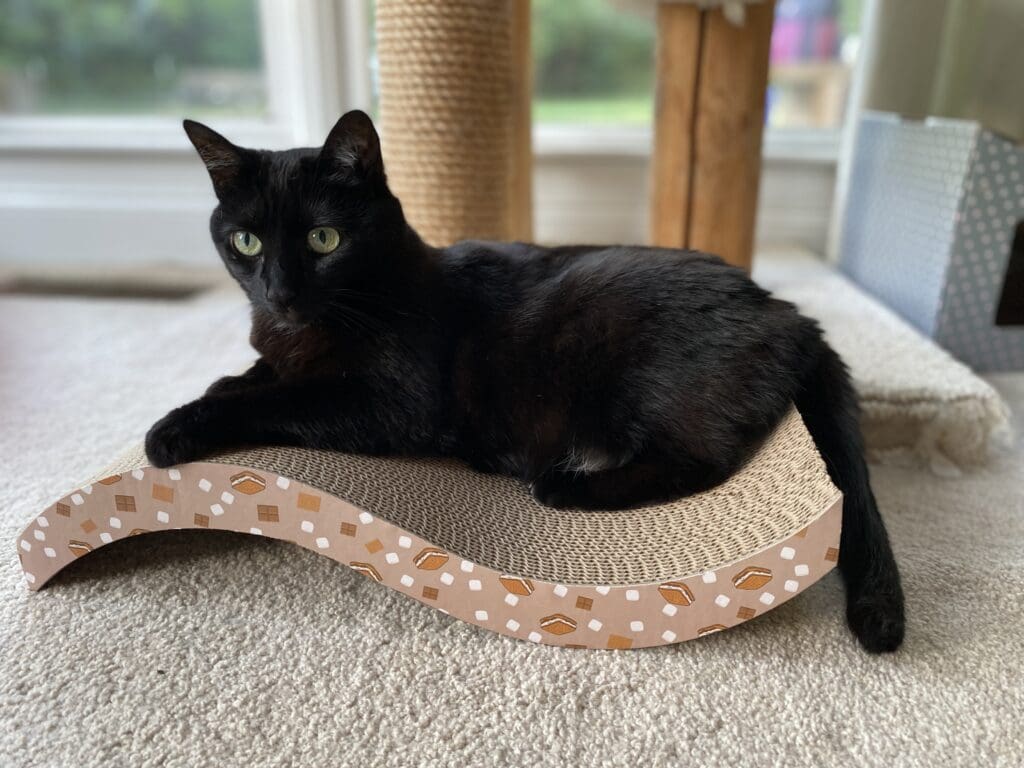
- Scratching: Instead of punishing a cat for scratching, provide a superior scratching post in the same area.
- Climbing: If a cat is on the counter, provide a "cat tree" or high-perch shelving nearby.
By acknowledging that these are not "bad" behaviors but rather "misplaced" natural instincts, the trainer can provide a win-win solution.
Implications: The Long-Term Benefits
The implications of adopting a positive training philosophy extend far beyond the training session itself.
Enhanced Physical and Mental Health
Cats who participate in consistent, voluntary training sessions are generally more physically active and mentally stimulated. This reduces the risk of obesity and keeps the mind sharp, potentially delaying cognitive decline in senior cats.
Improved Veterinary Visits
A cat that has been trained to interact with a carrier or accept basic handling (like paw touching) is a patient that will experience significantly less trauma during veterinary examinations. This makes life easier for the cat, the owner, and the medical staff.
Deepening the Human-Animal Bond
Perhaps the most significant implication is the transformation of the relationship. When training is treated as a shared game rather than a command performance, the cat begins to view the owner as a partner. This shift in power dynamics transforms the home from a place where a cat "lives" to a place where a cat "thrives."
Conclusion: A Lifetime of Communication
Training your cat is an ongoing journey, not a destination. As you become more adept at reading your cat’s body language and understanding their unique motivators, you will find that the need for "formal" training decreases, replaced by a seamless, intuitive form of communication.
Remember, the goal is not to produce a pet that performs like a machine, but to foster a companion who feels safe, confident, and understood. By focusing on patience, consistency, and positive reinforcement, you are investing in a future defined by trust.
For those seeking to delve deeper into the nuances of feline behavior, comprehensive resources—such as those curated by experts like Pam Johnson-Bennett—provide the step-by-step guidance necessary to navigate this rewarding path. Whether you are addressing specific behavioral issues or simply looking to enrich your cat’s daily life, remember that the most effective tool in your kit is always your own empathy and dedication.