
In the competitive world of professional dog grooming, the Bichon Frise remains an iconic canvas. Known for their cloud-like coats and cheerful dispositions, these dogs require a specific blend of technical precision and artistic flair to truly shine. Whether you are prepping a purebred for the show ring or styling a curly-coated mixed breed, the objective remains the same: achieving that quintessential, symmetrical, and manageable "round" look that Bichon fanciers adore.
Renowned groomer and industry educator Blake Hernandez, star of Netflix’s DOGS documentary and co-creator of Groomsource, recently shared his signature method for the perfect Bichon modification. This guide breaks down his step-by-step approach to creating a functional yet show-stopping aesthetic that works for both salon clients and competitive styling.
The Philosophy of the Modern Bichon Trim
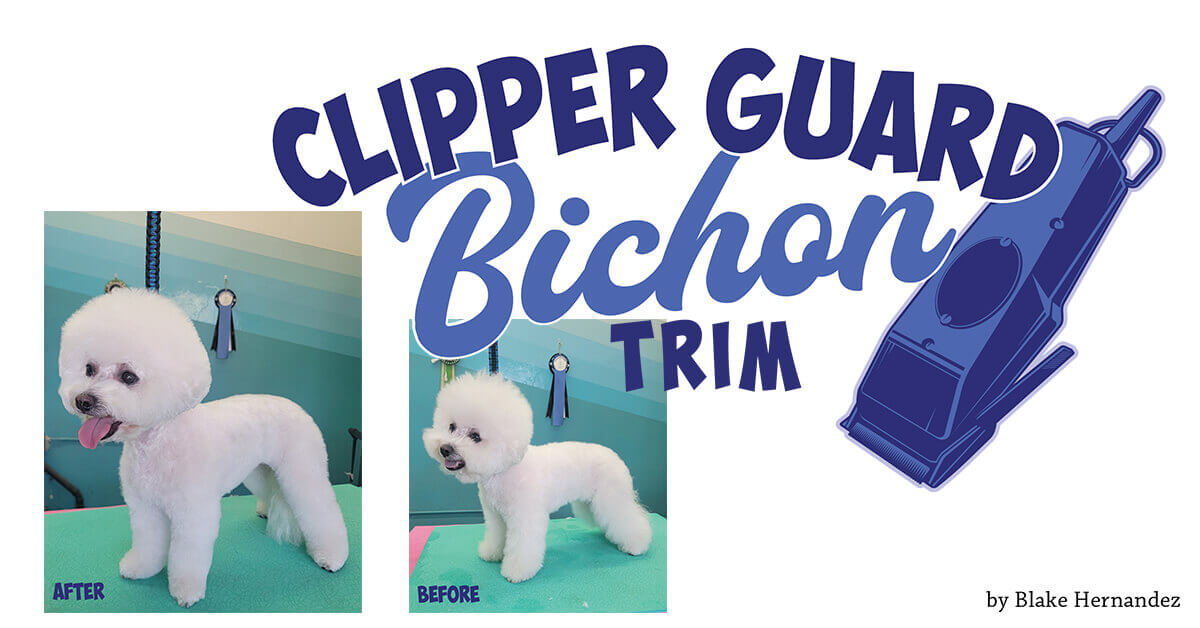
The "sassy" Bichon modification is designed for the modern pet owner who demands a high-end look without the burden of excessive daily maintenance. "Whether it’s a purebred show dog or a mixed mutt in drag, a round, cute face with a manageable body is a win with most pet owners," Hernandez explains.
By focusing on a structured top line and balanced legs, groomers can create a silhouette that highlights the dog’s natural movement while keeping the coat length practical. This style has gained significant traction because it prioritizes the dog’s comfort—specifically regarding the ears—while maintaining the sophisticated, rounded head shape synonymous with the breed.

Chronology: A Step-by-Step Grooming Guide
Achieving the perfect look requires a systematic approach, moving from the foundational body work to the intricate detailing of the face.
Phase 1: Establishing the Body Silhouette
The foundation of any great groom starts with the top line and the rib cage.

- Setting the Top Line: Begin exactly where the shoulder blades meet. For dogs on a standard six-to-eight-week maintenance rotation, Hernandez recommends a 1/2" guard comb over a #30 blade. This ensures a clean, uniform length that remains soft to the touch.
- The Ribs and Brisket: Carry the length established on the back around the ribs and underneath the brisket. This creates a cohesive "jacket" that flows naturally with the dog’s anatomy.
- The Throat Latch: Switch to a #5F blade and use it in reverse, moving from the Adam’s apple upward to the throat latch. This creates a sharp transition point that prevents the "unkept" look common in lower-quality grooms.
Phase 2: Refining the Legs and Rear
A common mistake in Bichon grooming is failing to create proper angulation, which can make the dog appear rectangular rather than square.
- Rear Angulation: To showcase the dog’s natural angulation, use a shorter length—a 1/4" guard—clipping from the pin bone down to just behind the knee. This contrast between the body and the rear creates depth.
- Leg Balance: To balance the shorter body, the legs should be kept longer. A 1" guard comb used all around the rear legs provides a plush, pillar-like effect. Apply this same technique to the front legs to ensure full body continuity.
- The Feet: Bichon feet should be rounded and tight. Keep the feet down and use your shears to create a clean, circular bevel. A well-scissored foot is the hallmark of a professional groomer’s attention to detail.
Phase 3: The Finishing Touches
The final stage is the "make-or-break" moment: the face.

- The Tail: Hold the tail over the back to assess the silhouette. Trim away any straggling hair that draws the eye away from the center of the dog, ensuring a clean, focused look.
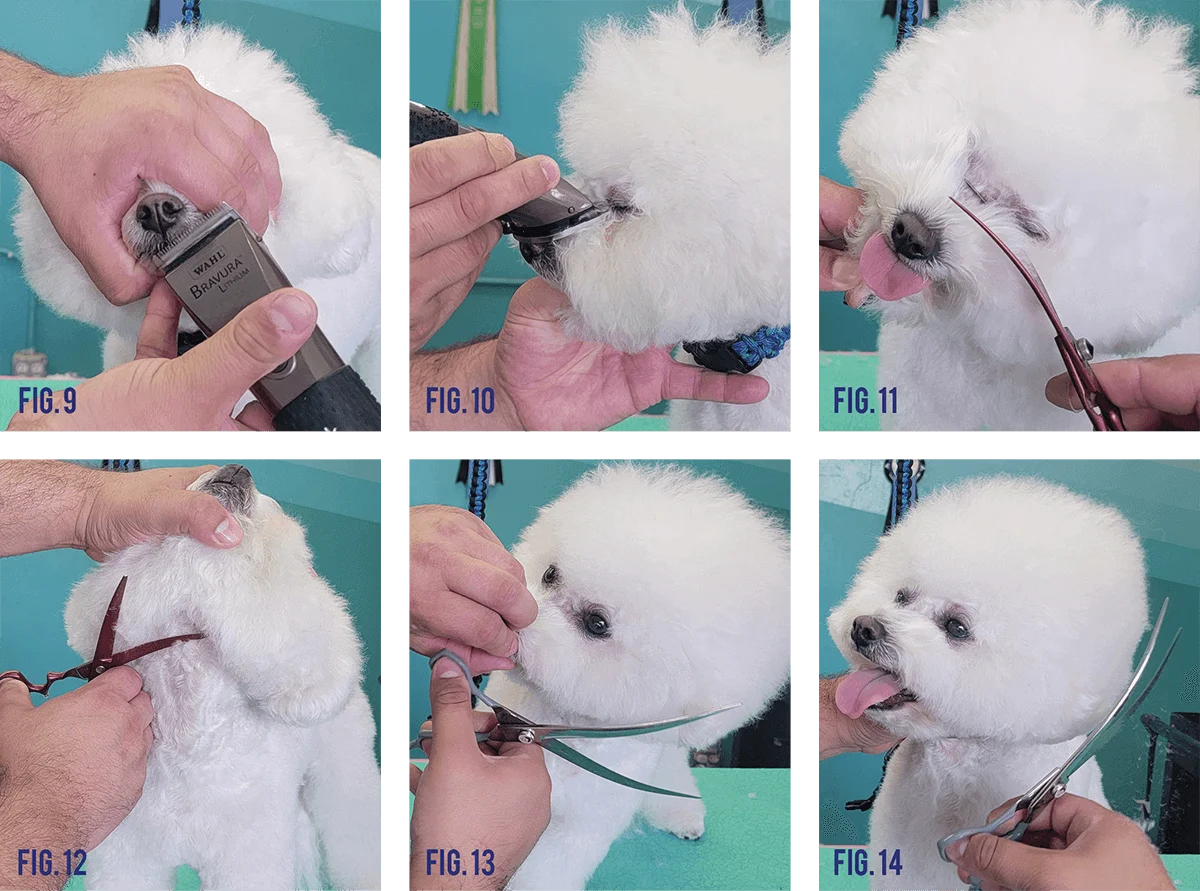
- Facial Detailing: Shave the top lip and create one or two clean lines of hair on the bottom lip, just beneath the nose. This cleans up the muzzle area without sacrificing the "cuddly" face.
- The Eyes: Use a #10 blade on the stop to help the eyes "pop." Then, comb the hair forward toward the eyes and trim at a 45-degree angle. This opens the face up and prevents eye irritation.
- Sculpting the Head: Use a curved shear in reverse at the throat latch to cleanly separate the head from the body. Start at the bottom of the head, shaping a tight lip line before rounding out toward the ears. As you reach eye level, turn your scissors upward to build that perfect sphere. Repeat the process on the opposite side for absolute symmetry.
Supporting Data: Why This Method Works
The efficacy of this trim lies in the transition of blade lengths. By using a 1/2" guard for the body, a 1/4" guard for the rear angulation, and a 1" guard for the legs, the groomer creates a visual hierarchy. This hierarchy forces the eye to appreciate the dog’s movement rather than just the density of the coat.
Furthermore, the choice to keep the ears short is a strategic decision for pet owners. Long ears on a Bichon often become matted or dirty during daily play. Hernandez’s method ensures the ears remain part of the rounded head shape without becoming a maintenance nightmare.

Official Perspective: Insights from Blake Hernandez
Blake Hernandez is a polarizing and beloved figure in the grooming industry. Known for his vibrant suits and high-energy personality, he has become a leading voice in education. In his view, the Bichon is not just a breed, but a standard of practice.
"Before I had any nice Bichons to practice on, I had tons of curly mixed breeds," Hernandez notes. "I would practice and practice on all sorts of mixes, as long as I could make them fluffy." This perspective reinforces the idea that professional grooming techniques are transferable. Whether you are working on a purebred Bichon or a Poodle/Bichon mix, the principles of geometry, blade angles, and scissoring technique remain universal.

Implications for the Grooming Industry
The implications of adopting a standardized, efficient, yet aesthetic approach like the one Hernandez outlines are profound for salon owners:
- Time Management: By establishing a clear, step-by-step chronology, groomers can reduce the time spent "fiddling" with the coat, leading to more profitable salon hours.
- Client Retention: Clients who walk away with a dog that looks professional and stays manageable for six to eight weeks are significantly more likely to book recurring appointments.
- Educational Growth: As seen with the popularity of Groomsource, there is a massive appetite for accessible, high-quality education. Groomers who master these "signature" styles are better positioned to act as mentors and leaders in their own local communities.
In conclusion, the modern Bichon trim is a balance of science and art. It requires the groomer to be part engineer—calculating blade lengths and angles—and part sculptor—carving out the round, inviting expression that has made the Bichon a perennial favorite among dog lovers worldwide. By following these professional guidelines, you can ensure that every Bichon that leaves your table is a testament to your technical skill and passion for the craft.