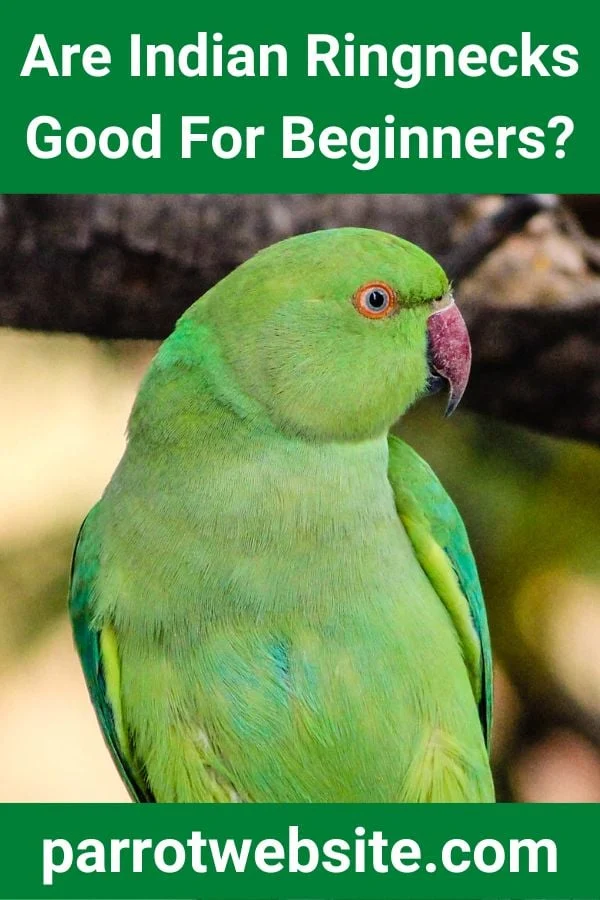
The Indian Ringneck Parakeet (Psittacula krameri) is a bird of striking aesthetic appeal. With their vibrant emerald plumage, iconic neck rings, and long, elegant tail feathers, they are undeniably among the most visually captivating avian species kept in captivity. However, beneath this aesthetic allure lies a personality that is as complex and demanding as it is rewarding. As the popularity of exotic pet ownership rises, prospective owners often find themselves drawn to the Ringneck, yet avian experts consistently sound a note of caution: the Indian Ringneck is not a bird for the novice.
Main Facts: The Nature of the Indian Ringneck
To understand why the Indian Ringneck (IRN) occupies a "high-difficulty" tier in the world of aviculture, one must first look at their behavioral profile. Unlike domesticated dogs or cats, parrots are essentially undomesticated wild animals living in a home environment. The Indian Ringneck is particularly known for its intelligence, high energy, and, if not properly managed, its propensity for assertiveness.
These birds are medium-sized parrots characterized by their extreme curiosity and playfulness. They are not passive ornaments; they are active participants in a household. They require substantial mental stimulation, a varied diet, and a consistent social structure. For an owner who lacks prior experience with the subtle body language and social cues of parrots, the Indian Ringneck can quickly become an overwhelming challenge. They are not merely "difficult"—they are highly sensitive to their environment and the temperament of their caregivers.
Chronology: The Lifecycle of an Indian Ringneck
Understanding the lifecycle of an Indian Ringneck is crucial for any potential owner, as their behavior changes drastically as they mature.
- The Juvenile Phase (0–6 months): This is the "honeymoon period." Young Ringnecks are often sweet, inquisitive, and relatively docile. Many first-time owners are deceived by this phase, assuming their bird will remain this way throughout its lifespan.
- The "Bluffing" Stage (6 months–1 year): This is a critical developmental milestone unique to the species. During this time, the bird may suddenly become hormonal, aggressive, and unpredictable. It is a natural part of their maturation process where they test their boundaries and exert independence.
- Adulthood (1 year+): Once the bird moves past the bluffing phase, their personality stabilizes. However, the habits formed during the first year—whether positive or negative—often set the tone for the rest of the bird’s life, which can span up to 25 to 30 years in captivity.
Supporting Data: Why Experience Matters
The consensus among professional breeders and avian veterinarians is that the Indian Ringneck is a "second-tier" parrot. This means it is a species that should only be acquired after an individual has successfully managed a more "beginner-friendly" species, such as a Cockatiel or a Budgerigar.
Data on behavioral issues in captive parrots suggests that a significant percentage of rehomed Indian Ringnecks result from "owner-expectancy mismatch." When an owner underestimates the level of daily interaction required, the bird often becomes bored, leading to feather plucking, screeching, or persistent biting.
The Bite Factor
It is a common misconception that because Ringnecks are small, their bites are inconsequential. In reality, their beaks are designed to crack hard seeds and nuts in the wild. A defensive or aggressive Ringneck can inflict a significant laceration, easily drawing blood. This poses a particular risk in households with children. Children often lack the refined understanding of avian body language required to avoid a bite, and the psychological impact of a bird attack on a young child can lead to permanent fear of the animal.
Official Perspectives: Expert Consensus on Taming
Avian behavioral specialists highlight that taming an Indian Ringneck is not a singular event, but a continuous process of trust-building.
The Myth of the "Tame" Bird
"Many people believe that if they buy a bird from a reputable breeder, the bird will come ‘tame’ and stay that way," says Dr. Elena Rossi, an avian veterinarian. "That is a fundamental misunderstanding. Taming is a dynamic relationship. If you stop interacting with the bird, or if you interact in a way that triggers fear or aggression, that ‘tameness’ will vanish."
The Necessity of Socialization
Experts agree that a well-adjusted Indian Ringneck requires:
- Consistent Interaction: A minimum of two to four hours of direct human interaction daily.
- Environmental Enrichment: A rotating selection of toys to prevent boredom.
- Positive Reinforcement: Training sessions that focus on rewarding good behavior rather than punishing the bad.
Implications: The Reality of Daily Care
For those considering bringing an Indian Ringneck into their home, the implications are profound. This is not a "low-maintenance" pet.
The Problem of Solitude
One of the most persistent issues is the bird’s social nature. Indian Ringnecks are flock animals. Leaving one alone for eight to ten hours a day while the owner is at work is a recipe for psychological distress. They suffer from separation anxiety, which manifests as destructive behavior. While some owners opt for a second bird to keep the first company, this requires doubling the effort, space, and financial investment, and there is no guarantee that two birds will get along without prior introduction and careful monitoring.
The Talking Talent
On the positive side, the Indian Ringneck is a prolific talker. Their voice is often described as a clear, high-pitched "cartoonish" mimicry. While this is an endearing quality, it should not be the sole reason for purchasing the bird. The ability to talk is an individual trait—some birds will become master mimics, while others will prefer to whistle or shriek.
Navigating the Challenges: Is it Worth It?
If the Indian Ringneck is so difficult, why are they kept at all? The answer lies in the unique bond they form with their owners. When a Ringneck decides to trust you, that bond is deep, intelligent, and highly interactive. They are capable of learning complex tricks, understanding context, and displaying a level of affection that surprises even experienced bird keepers.
However, the "reward" is directly proportional to the effort invested. If you are a first-time owner, the advice is clear: look for a species that is more forgiving of human error. Start with a bird that is less prone to the "bluffing" phase and less physically demanding in terms of behavioral management.
Final Considerations for Prospective Owners
Before finalizing the decision to adopt an Indian Ringneck, ask yourself the following:
- Do I have the patience to handle a bird that may bite for several months during its hormonal stages?
- Am I prepared to clean, feed, and interact with the bird every single day for the next two decades?
- Do I have access to an avian-specialist veterinarian? (Standard dog/cat vets are rarely equipped to handle exotic avian health issues).
- Is my household environment stable enough to accommodate a high-energy, vocal pet?
Conclusion
The Indian Ringneck is a magnificent creature, a jewel of the avian world that brings color and intelligence into a home. Yet, they remain one of the most misunderstood species in the pet trade. Their beauty is a siren song that often leads inexperienced owners into a situation they are not equipped to handle.
If you are a beginner, the most responsible path is to gain experience with less demanding species. Learn the nuances of bird care, understand the financial and temporal commitment, and develop the skills required to manage a parrot’s health and behavior. If, after several years, you find that the life of a parrot owner is truly for you, then the Indian Ringneck will be waiting—a rewarding, complex, and beautiful companion that is well worth the wait. For the right person, the Indian Ringneck is not just a pet; it is a life-changing relationship. But for the wrong person, it is a source of frustration that serves neither the human nor the bird. Choose wisely, and always prioritize the welfare of the animal above your own desire for a beautiful bird.