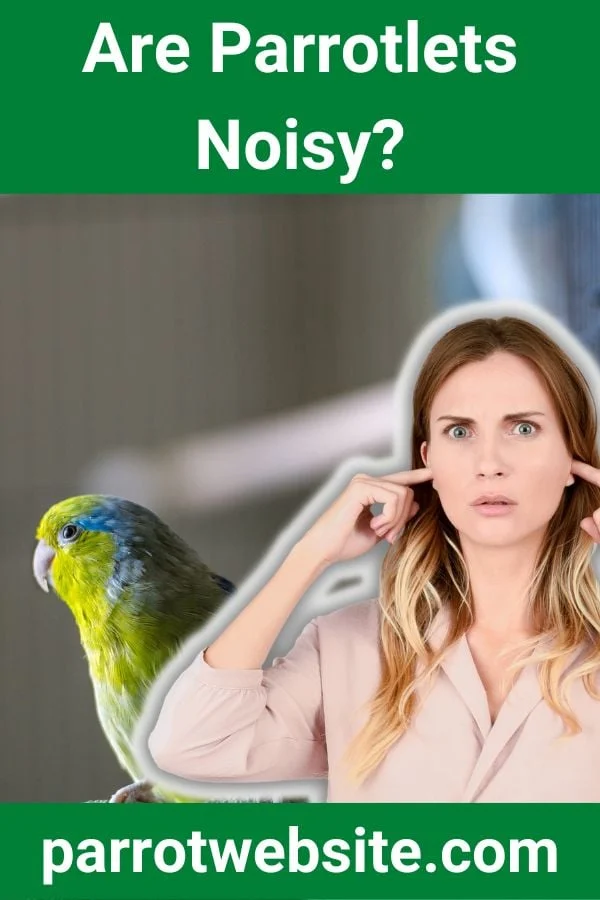
Parrotlets are frequently lauded for their diminutive stature, which makes them a popular choice for apartment dwellers and those with limited living space. As the smallest of all domestic parrot species, they are often perceived as the perfect "low-impact" avian companion. However, prospective owners often find themselves asking a pivotal question: Are they actually quiet?
While the answer is nuanced, it is essential to distinguish between "quiet for a parrot" and "quiet for a household pet." Understanding the vocal behavior of these birds is not merely a matter of convenience; it is a fundamental requirement for responsible pet ownership.
Main Facts: The Vocal Reality of Parrotlets
To understand the parrotlet, one must first understand the biology of a parrot. Regardless of size, all psittacine birds are social creatures that rely on vocalizations as their primary survival mechanism. In the wild, these calls serve to maintain flock cohesion, signal danger, and mark territory.
When a parrotlet enters a human home, it views its human companions as its "flock." Consequently, the bird’s need to communicate does not disappear; it is redirected. Parrotlets are not silent creatures. They possess a repertoire of chirps, whistles, and high-pitched screeches. While they lack the booming, ear-piercing volume of a Macaw or an Amazon parrot, they make up for it with persistent, high-frequency chatter that can last throughout the day.
Chronology: A Day in the Life of a Vocal Bird
The vocal patterns of a parrotlet follow a distinct circadian rhythm. Understanding this cycle is crucial for potential owners, as it dictates the level of noise management required throughout a 24-hour period.
Morning: The "Flock Call" Phase
As the sun rises, the parrotlet’s biological clock signals the start of the day. This is typically the most vocal period for the bird. In the wild, this is the time when the flock coordinates foraging activities. In a domestic setting, your bird will likely begin its day with enthusiastic chirping and calling. This is their way of checking in on the "flock" (you) and greeting the new day.
Mid-Day: Sustained Activity
Parrotlets are diurnal and highly energetic. Throughout the daylight hours, they remain active, which correlates directly with noise production. Whether they are playing with a toy, investigating a new object, or simply interacting with their owners, they will emit a consistent stream of sound. If the bird is kept in pairs, this noise level often increases as they engage in constant, rapid-fire communication with one another.
Evening: The Descent into Quiet
As twilight approaches, the bird’s natural instincts dictate that it is time to find a secure roosting spot. During this transition, vocalizations typically taper off. By the time the lights are dimmed, a healthy, well-adjusted parrotlet should be silent, preparing for a full night of rest.
Supporting Data: Decibels and Comparisons
When evaluating the noise potential of a parrotlet, data provides a clearer picture than mere speculation. By comparing decibel (dB) levels, we can objectively categorize the parrotlet as one of the quieter avian options available.
- Parrotlet Vocalizations: On average, a parrotlet’s screech peaks at approximately 65 decibels. To put this in perspective, this is roughly equivalent to the sound of a normal conversation or a quiet office environment.
- Comparison to Larger Parrots: For contrast, a Quaker parrot can reach volumes of 113 decibels—a level comparable to a loud rock concert or a chainsaw. By this metric, the parrotlet is significantly less intrusive.
- Comparison to Budgies: Many potential owners weigh the parrotlet against the popular budgerigar (parakeet). While both are considered "quiet" species, budgies average around 68 decibels. While the 3-decibel difference may seem marginal on paper, the quality of the sound differs; parrotlets often have a sharper, more piercing tone than the warbling, softer chatter of a budgie.
Official Perspectives and Expert Consensus
Avian behaviorists and veterinarians agree that the "quietness" of a parrotlet is largely dependent on environmental factors and the bird’s psychological well-being. There is no such thing as a "silent parrot," and any individual who claims a parrotlet is a silent pet is providing a disservice to the animal’s needs.
Experts emphasize that excessive noise—often described by owners as "screaming"—is usually a symptom of an underlying issue. This may include:
- Nutritional Deficiencies: A bored or malnourished bird is a loud bird.
- Lack of Stimulation: Because parrotlets are highly intelligent, they require mental challenges. Without a variety of toys, foraging opportunities, and social interaction, they will resort to vocalizing to express their frustration.
- Sleep Disruption: A parrot that does not receive 10–12 hours of uninterrupted darkness is akin to a sleep-deprived human; they become irritable, anxious, and prone to outbursts.
Implications for Prospective Owners
Before committing to a parrotlet, one must consider the implications of their vocal nature on the household environment.
The "Myth of the Silent Bird"
Prospective owners must dismiss the idea that a small bird equals a silent house. Even at 65 decibels, a bird that chirps continuously for four hours is a significant presence. If you work from home, attend virtual meetings, or require absolute silence to concentrate, a parrotlet may still prove to be a source of distraction.
The Role of Social Structure
Deciding between one or two birds has a significant impact on noise levels. A single bird will look to its human owner for constant engagement, which can lead to "attention calling." Two birds, while potentially happier due to avian companionship, will create a symbiotic cycle of chatter that is effectively twice as loud.
Training and Mimicry
It is important to manage expectations regarding speech. While parrotlets possess the physiological hardware to mimic human speech, they are not natural talkers. They are far more likely to master a specific chirp or a whistle than a vocabulary of words. Those seeking a "talking" bird should be cautioned that a parrotlet is an unlikely candidate for a conversationalist.
Managing the Noise: Best Practices for Owners
If you have decided that a parrotlet is the right pet for you, you can take proactive steps to ensure the noise remains at a manageable level.
- The "Night Routine" Protocol: The most effective way to ensure a quiet home is to establish a rigorous, non-negotiable bedtime. Using a cage cover creates an artificial dusk that signals to the bird that it is time to cease activity. Ensuring the room is dark and quiet is non-negotiable.
- Environmental Enrichment: Invest in a diverse array of toys, particularly those that require foraging. If the bird’s brain is occupied with solving a puzzle to get a treat, it is not screaming to get your attention.
- Dietary Variation: Boredom often stems from a repetitive diet. Rotating fresh vegetables, high-quality pellets, and occasional treats can keep the bird engaged and content.
- Positive Reinforcement: Never shout at your parrotlet to be quiet. Because they are social, they interpret your shouting as joining in the "flock call," which only encourages them to be louder. Instead, reward quiet, calm behavior with treats and attention, and ignore attention-seeking screeching.
Conclusion
The parrotlet occupies a unique space in the avian world: it is, by all reasonable metrics, one of the quietest parrots one can bring into a home. However, it is fundamentally a parrot, and it carries the genetic imperative to communicate through sound.
If you are looking for a pet that offers the companionship, intelligence, and personality of a large parrot without the bone-rattling volume of a Macaw or Cockatoo, the parrotlet is an exemplary choice. Yet, it remains a commitment to a life that will be filled with song, chatter, and the persistent presence of a vocal creature. If you are prepared to meet their needs for stimulation and rest, they will reward you with affection and joy—provided you are willing to embrace a little bit of noise as part of the bargain.