LONG BEACH, Calif. — In a race against time and the formidable power of the open ocean, wildlife conservationists have successfully executed a high-stakes rescue operation for more than 200 rare sea turtle eggs. Threatened by extreme weather churned up by distant tropical storms, the clutch—representing a biological milestone never before documented on the West Coast of the United States—was safely excavated and transferred to a state-of-the-art facility to ensure its survival.
The U.S. Fish and Wildlife Service (USFWS), working in close coordination with marine biologists and federal agencies, announced the emergency relocation on September 25. The intervention was forced by the looming threat of Hurricane Polo, a violent Category 5 storm churning off the coast of the Baja Peninsula. Packing sustained winds of approximately 180 mph (285 km/h), the hurricane generated dangerous surf conditions and abnormal high tides destined to batter Southern California beaches, putting the historic nests directly in the path of destruction.
Main Facts: A Historic Nesting Event Meets an Impending Natural Disaster
The unfolding narrative centers on a groundbreaking wildlife phenomenon that captured the attention of marine scientists worldwide before turning into a dramatic conservation rescue mission.
- The Historical Milestone: In late September, Southern California beaches played host to the first-ever documented sea turtle nesting events of any species along the entire U.S. West Coast.
- The Species: The nests were laid by olive ridley sea turtles (Lepidochelys olivacea), a species typically found in the warm, tropical waters of the Pacific, Indian, and Atlantic oceans. Their primary nesting grounds are located thousands of miles to the south in Mexico, Central America, and parts of South America.
- The Threat: Hurricane Polo, intensifying into a monstrous Category 5 storm off the Baja Peninsula, projected massive swells and severe coastal erosion along Orange County beaches from Sunday through Thursday.
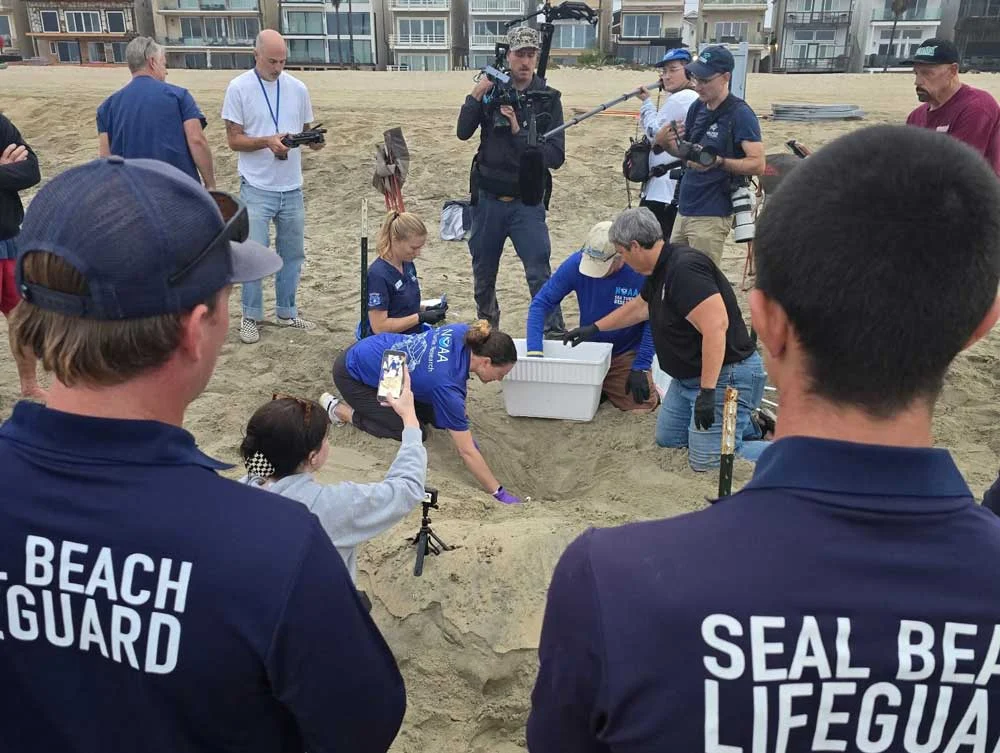
- The Rescue: Wildlife authorities excavated two distinct nests containing a combined total of more than 200 eggs, transporting them to the Aquarium of the Pacific in Long Beach, California. There, the eggs will complete their incubation in a secure, temperature-controlled environment.
Chronology of Events: From Discovery to Emergency Extraction
The sequence of events unfolded rapidly over a frantic week in late September, transforming a moment of pure scientific wonder into an emergency crisis response.
September 22: The First Record in U.S. West Coast History
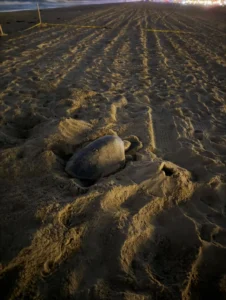
The extraordinary chain of events began on a seemingly ordinary day when NOAA Fisheries West Coast received startling reports from the shoreline. Observers watched in awe as an adult olive ridley sea turtle crawled ashore in Surfside, California, methodically dug a nest in the sand, and deposited her clutch. Marine biologists quickly confirmed the identification of the species. This marked a watershed moment in marine ecology: never before in recorded history had a sea turtle of any species nested on the West Coast of the United States.
September 25: A Second Surprise and Impending Danger
Just three days after the historic Surfside discovery, lightning struck twice. According to NOAA, a second olive ridley sea turtle was spotted just a few miles south, laying her eggs directly on the sand in Huntington Beach, mere yards from the city’s world-famous pier.
However, celebration among marine researchers was immediately tempered by severe meteorological warnings. Meteorologists tracking Hurricane Polo—at the time a catastrophic Category 5 storm positioned off the Baja Peninsula—noted that the storm’s immense energy was translating into towering swells. Forecasters predicted that these destructive waves and dangerously high tides would strike the Huntington Beach and Seal Beach coastlines aggressively between Sunday and Thursday, effectively washing away the delicate, shallow sand nests and drowning the developing embryos.
September 25 (Late): The Emergency Extraction
Recognizing that nature was about to destroy this unprecedented biological event, the USFWS made the executive decision to intervene. Working swiftly under strict wildlife handling protocols, specialists carefully excavated the eggs from both the Seal Beach and Huntington Beach locations.
The fragile cargo was safely packed into specialized, temperature-stable containers designed to minimize shock and motion. The eggs were transported under the cover of urgency to the Aquarium of the Pacific in Long Beach. Biologists placed the eggs into specially prepared, temperature-controlled incubation chambers designed to mimic the natural subterranean thermal environment. If successful, the hatchlings are expected to emerge within 45 to 60 days.
Supporting Data: Understanding the Olive Ridley Sea Turtle
To comprehend the magnitude of both the original nesting event and the subsequent rescue, it is vital to examine the biology and typical behavior of the olive ridley sea turtle (Lepidochelys olivacea).
Physical Characteristics and Lifespan
The olive ridley is widely recognized as the smallest of all sea turtle species inhabiting the globe.
- Size: Adults typically reach a modest weight of about 100 pounds (45 kg) and measure between 2.5 and 3 feet in shell length.
- Appearance: True to their name, they possess an olive-green, heart-shaped carapace (upper shell).
- Longevity: These resilient reptiles can live up to 50 years in the wild, spending the vast majority of their lives traversing the open pelagic zones of the ocean.
Global Distribution and Nesting Habits
While olive ridleys are considered the most abundant of all marine turtle species globally, their distribution is heavily concentrated in tropical and subtropical waters.
- Habitat Range: They are routinely found throughout the tropical expanses of the Pacific, Indian, and Atlantic oceans.
- Primary Nesting Zones: Pacific populations exhibit strong site fidelity, primarily nesting on tropical and subtropical beaches in Mexico, Nicaragua, Costa Rica, and Panama.
- The Anomaly: Finding nesting activity as far north as Southern California is entirely unprecedented. Scientists believe that warming ocean currents driven by shifting climatic patterns or El Niño-like phenomena may have coaxed the nesting females far north of their traditional geographic boundaries.
Official Responses and Stakeholder Perspectives
The convergence of rare wildlife and severe weather mobilized a multi-agency response, highlighting the complex intersection of marine biology, public policy, and emergency management.
Federal and local authorities stressed that while human intervention in wildlife is normally discouraged, the extraordinary circumstances of Hurricane Polo justified immediate action.
"When faced with a catastrophic weather event of this magnitude threatening a completely unprecedented biological occurrence for our coastline, standard hands-off protocols must be weighed against the catastrophic loss of a historic scientific milestone," noted regional wildlife officials during the joint agency announcements.
The Aquarium of the Pacific in Long Beach stepped forward as a critical operational partner. Its animal care and veterinary teams possess extensive experience in managing fragile aquatic life and maintaining precise environmental controls. Aquarium leadership emphasized their commitment to providing the highest standard of care for the eggs throughout the 45-to-60-day incubation window. Should the incubation prove successful, federal wildlife officials and aquarium staff will coordinate on the delicate logistics of safely returning the hatchlings to an appropriate marine environment.
Broader Implications: Climate Change, Ocean Warming, and Range Expansion
Beyond the immediate drama of hurricane-force waves and incubator rescue operations, the appearance of nesting olive ridley sea turtles in Southern California carries profound implications for marine science and conservation policy.
Shifting Marine Biogeography
For decades, the geographic range of sea turtle nesting has been bound by strict thermal thresholds. Female sea turtles require warm sand temperatures—typically above 25°C to 30°C (77°F to 86°F)—to successfully incubate their eggs. The fact that female olive ridleys successfully deposited eggs in Surfside and Huntington Beach suggests that local Southern California coastal temperatures during late summer have risen enough to trigger natural nesting instincts.
Marine researchers are increasingly documenting poleward range expansions across numerous marine species. As global sea surface temperatures continue to rise due to anthropogenic climate change, traditional boundaries that kept tropical species in equatorial regions are blurring.
Challenges for Future Conservation
This unprecedented event introduces a complex new paradigm for West Coast wildlife management agencies:
- Preparedness: State and federal wildlife agencies in California, Washington, and Oregon have historically not budgeted or planned for sea turtle nesting monitoring, as it was considered a physical impossibility. Authorities may now need to establish protocols for future occurrences.
- Public Education: Beachgoers and coastal communities along the West Coast must now be educated on how to spot and report sea turtle nesting activity, ensuring that future nests are identified early before heavy tourism or natural disasters strike.
- Climate Resilience: As extreme weather events such as Category 5 hurricanes become more frequent and potentially track into unusual latitudes due to altered atmospheric steering currents, wildlife managers will face difficult choices regarding whether to intervene or let natural selection take its course.
For now, all eyes are on the specialized incubation chambers at the Aquarium of the Pacific. More than 200 tiny lives rest quietly in the dark warmth of artificial nests, waiting to see if they will become the unlikely pioneers of a new chapter in Pacific marine ecology.