
At first glance, the anatomy of a house cat is a masterpiece of evolutionary engineering. From their sensitive whiskers to their retractable claws, every physical feature serves a specific survival purpose. However, perhaps the most overlooked aspects of a cat’s appearance are the wispy, delicate hairs found inside the ear and the bold, striking tufts perched on the tips. While owners often find these features charming, they are, in fact, biological marvels known as "ear furnishings" and "ear tufts." These structures are not merely aesthetic; they are essential components of a feline’s sensory and health-maintenance toolkit.
Main Facts: Decoding the Terminology
When observing a cat’s ear, there are two primary hair structures that frequently draw attention. The first are ear furnishings, which consist of the dense or sparse cluster of hairs growing within the inner ear canal. These vary significantly from cat to cat; some felines possess long, wispy plumes, while others have subtle, nearly invisible growth.
The second feature is the ear tuft, often referred to in the veterinary and cat fancy communities as "lynx tips." These are distinct, often longer, and more pronounced hairs that sprout directly from the apex of the ear. While all cats have ear furnishings, not all cats possess ear tufts. This trait is genetically linked to specific breeds, most notably the Maine Coon, the Norwegian Forest Cat, and the Siberian, though it can appear in domestic longhairs as well.
Chronology and Evolutionary Development
The evolutionary history of these features dates back to the wild ancestors of the domestic cat. The Felis silvestris lybica (the Near Eastern wildcat) and larger wild felines like the Lynx (Lynx lynx) rely on these physical attributes for survival in harsh, rugged environments.
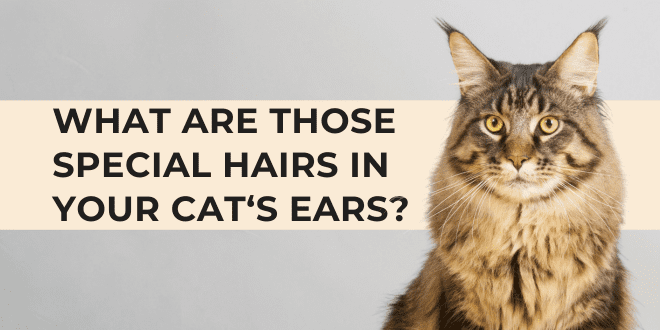
Over thousands of years of natural selection, the features that provided a sensory advantage were passed down through generations. The ear tufts, in particular, served as a "sound funnel" for predators living in dense forests or snowy landscapes, where pinpointing the rustle of a mouse under snow or leaves could mean the difference between starvation and survival. As the domestic cat evolved alongside humans, these traits were retained—some intentionally bred into specific lineages for their "wild" aesthetic, and others preserved simply because they are part of the cat’s fundamental, efficient design.
Supporting Data: The Biological Functions
To understand why cats have these hairs, one must examine the intersection of hygiene and acoustic sensitivity.
1. The Hygienic Barrier
The inner ear canal of a cat is a delicate, warm, and dark environment—the perfect breeding ground for bacteria, ear mites, and fungal infections. Ear furnishings act as the first line of defense. By creating a physical filter at the entrance of the canal, these hairs trap dust, pollen, and debris before they can migrate deep into the sensitive inner ear.
Furthermore, because cats are fastidious groomers, these hairs assist in the cleaning process. A cat cannot physically insert a paw into its ear canal, but by trapping debris on the furnishings, the cat makes it significantly easier to swipe the particles away during their daily grooming rituals. This simple mechanical filter dramatically reduces the incidence of otitis externa (outer ear inflammation).

2. Acoustic Amplification
Beyond hygiene, these hairs serve an acoustic purpose. The ear tufts function as antennas of sorts. By extending the surface area of the ear, they help capture and funnel sound vibrations down into the ear canal. This enhances the cat’s already superior hearing, allowing them to track high-frequency sounds that are well beyond the range of human perception. For a hunter, this level of sensitivity is paramount.
Official Perspectives and Veterinary Insight
Veterinarians frequently emphasize that the presence of ear furnishings is a sign of a healthy, functioning auditory system. However, they also caution that these hairs can sometimes become "too effective."
In some long-haired breeds, the furnishings can become so dense that they trap wax and moisture rather than just dry debris. When this occurs, it can create a plug that prevents air circulation, potentially leading to yeast infections. Veterinary experts suggest that while you should never pluck or trim these hairs—as they are essential to the cat’s sensory input—owners should monitor their cat’s ears for signs of excessive buildup or discharge.
If a cat is seen scratching its ears excessively, shaking its head, or if there is a foul odor, the "filter" may be overwhelmed. In these instances, a professional cleaning by a veterinarian is recommended, as the delicate skin of the ear canal can be easily damaged by amateur cleaning attempts.

The Mystery of Henry’s Pocket
It is impossible to discuss the intricate anatomy of the feline ear without mentioning the "cutaneous marginal pouch," commonly known as Henry’s Pocket. Located at the lower outer base of the ear, this tiny, slit-like fold remains one of the most curious features of feline anatomy.
While scientists have yet to reach a definitive consensus on its specific function, current theories suggest that the pocket helps to fold the ear in certain ways, allowing the cat to rotate its pinnae with greater precision. It may also serve to dampen or filter sound frequencies, adding yet another layer to the cat’s complex auditory processing capabilities.
Implications for Owners and Cat Enthusiasts
Understanding the role of these hairs changes the way we view our pets. Instead of seeing them as "messy" or simply "cute," we see them as highly evolved biological sensors.
For owners of high-tufted breeds like the Maine Coon, there is an added responsibility. Because these cats are prone to more complex ear structures, regular grooming and health checks are essential. Owners should incorporate ear inspections into their weekly routine, looking for signs of redness, heat, or debris.

Why Aesthetic Breeding Matters
The popularity of "lynx-tipped" cats has led to an increased interest in breeding for these traits. While the aesthetic is undeniably stunning, it serves as a reminder of our responsibility to prioritize the animal’s health over their appearance. Ethical breeders ensure that the structural integrity of the ear is maintained, ensuring that the tufts remain a functional part of the cat’s hearing apparatus rather than just a cosmetic accessory.
Conclusion: A Testament to Nature’s Design
Every aspect of a cat’s body, from the tip of the ear to the end of the tail, is a testament to the efficiency of natural selection. Ear furnishings and tufts are not just fluff; they are vital tools for environmental interaction, hygiene, and predatory success.
By acknowledging and respecting these features, cat owners can better appreciate the complex, wild spirit that remains within their domestic companions. Whether your cat has subtle, wispy hairs or prominent, dramatic lynx tips, they are carrying a piece of their ancestral heritage—a reminder that even in the comfort of a living room, they are still, at their core, masters of their environment.
For those seeking to deepen their understanding of feline behavior and the nuances of caring for these complex creatures, the works of renowned feline expert Pam Johnson-Bennett provide an exhaustive resource. Understanding the "why" behind your cat’s anatomy is the first step toward becoming a more informed and capable pet parent. You can find her best-selling guides on feline behavior and care through authorized retailers and Amazon, providing further insight into the fascinating life of the domestic cat.