
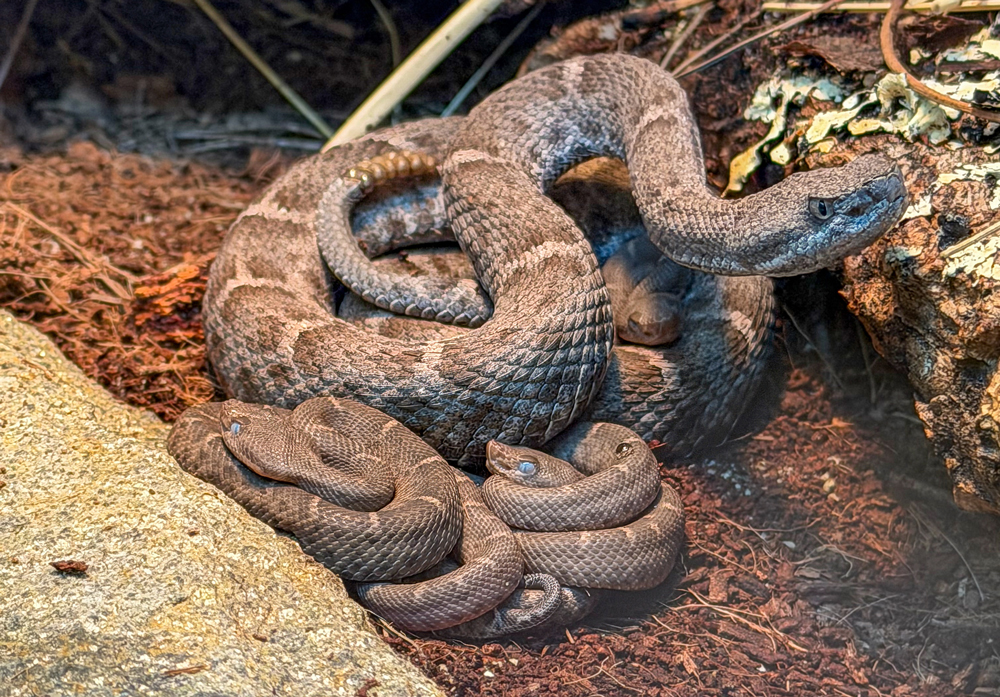
LOS ANGELES — In a major milestone for American herpetology and endangered species management, the Los Angeles Zoo has announced the successful breeding and birth of six New Mexico ridge-nosed rattlesnakes (Crotalus willardi obscurus). The arrivals—a litter of five born on August 18 followed by a single neonate on August 28—mark the first successful litters produced under the collaborative umbrella of Project Obscurus, a newly minted multi-institutional recovery initiative launched in 2024.
The birth of these six delicate pit vipers represents a critical breakthrough for a subspecies whose populations have plummeted across the American Southwest. As wildlife authorities race against habitat fragmentation, climate shifts, and historical population pressures, these neonates provide a tangible, slithering beacon of hope for the future of the rarest rattlesnake in the United States.
Main Facts: The Stakes for Crotalus willardi obscurus
The New Mexico ridge-nosed rattlesnake is a marvel of evolutionary adaptation, but its hyper-specific ecological requirements have rendered it uniquely vulnerable to extinction. Listed as Threatened under the U.S. Endangered Species Act by the U.S. Fish and Wildlife Service (USFWS), this small, shy pit viper is instantly recognizable by its distinct, upturned snout—the structural "ridge" from which it gets its common name.
Key Characteristics of the Species:
- Physical Description: Typically measuring up to 26 inches in length, the snake exhibits a pale gray to gray-brown coloration with contrasting crossbands, providing exceptional camouflage in its natural leaf-litter environment.
- Diet: As opportunistic ambush predators, adults feed on a varied diet of small mammals, lizards, birds, and large invertebrates, including scorpions and centipedes.
- Reproduction: Unlike many snake species that lay eggs, the New Mexico ridge-nosed rattlesnake is a livebearer (viviparous), giving birth to small litters typically ranging from one to nine young at a time.
- Rarity: Field biologists note the extraordinary elusiveness of the animal; according to USFWS data, surveyors in certain historical localities have spent upwards of 800 grueling field hours searching without encountering a single specimen.
The species is a classic "sky island" endemic. It is restricted almost exclusively to high-elevation montane habitats—ranging between 5,000 and 8,000 feet (1,500 to 2,500 meters)—in the Animas Mountains of southwestern New Mexico, the Peloncillo Mountains of southeastern Arizona, and across the border into the Sierra San Luis Mountains of northern Mexico. These cool, humid woodland environments and grassy mountain slopes are starkly isolated from one another by vast expanses of hot, arid lowlands, creating natural barriers that prevent natural migration and genetic mixing between populations.
Chronology: The Road to Project Obscurus and the 2026 Births
The journey toward this late-summer breeding success did not happen overnight; it is the product of decades of meticulous field research, institutional cooperation, and adaptive management.
Three Decades of Foundation-Building
- The 1990s–2010s: For over thirty years, dedicated herpetologists, academic researchers, and state and federal wildlife agencies conducted population monitoring, habitat assessments, and ecological studies to understand why C. willardi obscurus numbers were dwindling. These foundational decades highlighted the urgent need for a unified, captive-managed safety-net population.
- Early 2024: Recognizing that fragmented, ad-hoc conservation measures were insufficient to stave off local extinctions, conservation leaders formally established Project Obscurus. This collaborative recovery network was designed to pool institutional resources, standardize husbandry protocols, and coordinate genetic management across multiple facilities.
- Mid-2024 to Mid-2025: Partner institutions integrated their expertise, establishing optimal environmental parameters—such as simulated seasonal brumation cycles, precise humidity controls, and specialized dietary regimens—to encourage natural breeding behaviors in captive-held adults.
- August 18, 2026: The Los Angeles Zoo’s dedicated ectotherm care team welcomed the first major milestone of Project Obscurus: a healthy litter of five New Mexico ridge-nosed rattlesnake neonates.
- August 28, 2026: Just ten days later, a second reproductive event yielded a single neonate, bringing the total number of surviving offspring to six.
- September 2026: The Los Angeles Zoo publicly announced the historic births, shedding light on Project Obscurus and setting the stage for future conservation releases.
Supporting Data: Collaborative Power and Habitat Vulnerability
Project Obscurus represents a masterclass in modern species conservation through coalition-building. No single institution could shoulder the complex logistical, genetic, and financial burdens required to safeguard a high-elevation, venomous montane specialist.
The Coalition Behind Project Obscurus:
The multi-faceted recovery program relies on the synergy of diverse partners, including:
- The Los Angeles Zoo: Serving as a primary breeding hub and leveraging its decades of expertise in managing sensitive ectotherms.
- The Rattlesnake Conservancy: Providing specialized conservation science, educational outreach, and field support.
- The Arizona-Sonora Desert Museum: Offering critical regional ecological insights and specialized holding facilities suited to southwestern fauna.
- The San Antonio Zoo: Contributing husbandry resources and participating in the broader genetic management pool.
- State and Federal Wildlife Agencies: Including departments of game and fish in New Mexico and Arizona, alongside the USFWS, which oversee regulatory compliance, habitat protection, and future reintroduction planning.
Environmental Pressures on Sky Island Ecosystems
The data collected by USFWS and independent researchers underscore why captive intervention has become necessary. Sky island habitats are on the frontline of global climate change. As regional temperatures rise and precipitation patterns shift, the lower boundaries of these montane forests are warming and drying, effectively shrinking the livable zone for species like the New Mexico ridge-nosed rattlesnake. Furthermore, historical overgrazing, catastrophic wildfire risks, and localized human disturbances have further fractured an already restricted geographic range, heightening the risk of inbreeding depression and stochastic wipeouts.
Official Responses: Voices from the Front Lines of Conservation
The announcement of the successful litters elicited profound pride and optimism from the leaders spearheading Project Obscurus.
Byron Wusstig, Curator of Ectotherms at the Los Angeles Zoo, emphasized the technical difficulty and significance of the achievement in an official media statement:
"This incredible breeding success is a testament to our animal care team’s deep expertise in managing delicate montane pit vipers," Wusstig stated. "Being the first of the program partners to welcome these litters of New Mexico ridge-nosed rattlesnakes proves that our collaborative, science-based approach is working well. These two litters represent a tangible lifeline for a species whose numbers have drastically declined in the U.S."
Animal care specialists at the Los Angeles Zoo noted that working with montane pit vipers requires meticulous environmental controls. Unlike lowland rattlesnake species adapted to wide temperature swings, Crotalus willardi obscurus evolved in cool, damp canyon bottoms and pine-oak woodlands. Replicating these specific microclimates within a zoological setting demands constant monitoring of ambient temperatures, ultraviolet light exposure, and humidity levels to prevent respiratory infections and ensure proper metabolic function.
Conservationists from partnering organizations have echoed Wusstig’s sentiments, pointing out that public perception is another vital hurdle. Rattlesnakes—even rare, scientifically invaluable subspecies—frequently suffer from negative public relations. Project Obscurus aims to shift this narrative, framing the New Mexico ridge-nosed rattlesnake not as a hazard to be feared, but as an irreplaceable component of the American Southwest’s rich biodiversity.
Implications: The Path Forward and Ultimate Reintroduction
The birth of these six neonates at the Los Angeles Zoo is not merely an exhibition milestone; it is the opening phase of a long-term population reinforcement strategy.
Care, Growth, and Maturation
Currently, the six newborn snakes—along with any future offspring produced by the breeding pairs—are under the 24-hour care of the Los Angeles Zoo’s specialized ectotherms staff. Zookeepers are monitoring their feeding habits, shedding cycles, and structural growth. Because venomous snakes require specialized handling protocols, every interaction is executed with strict safety margins designed to minimize stress on the animals while ensuring optimal husbandry.
The Ultimate Goal: Return to the Wild
Captive breeding is never an end in itself; for Project Obscurus, captivity is a temporary bridge to survival. According to zoo officials, as these neonates mature and hit specific biological and developmental benchmarks, they will be slated for coordinated repatriation into their native habitats in Arizona or New Mexico.
These future reintroductions will not be random. Wildlife biologists working with state and federal agencies will carefully select release sites based on habitat quality, historical occupancy, and current population densities. By bolstering wild gene pools with captive-bred individuals that possess diverse genetic lineages, Project Obscurus hopes to rescue vulnerable local populations from the brink of localized extirpation.
As climate pressures mount and sky island ecosystems face an uncertain future, the success at the Los Angeles Zoo offers a blueprint for how modern zoological institutions can partner with conservation NGOs and government agencies to pull rare reptiles back from the precipice. For the tiny, ridge-nosed inhabitants of the Animas and Peloncillo mountains, a new generation has arrived—and with it, a fighting chance for survival.