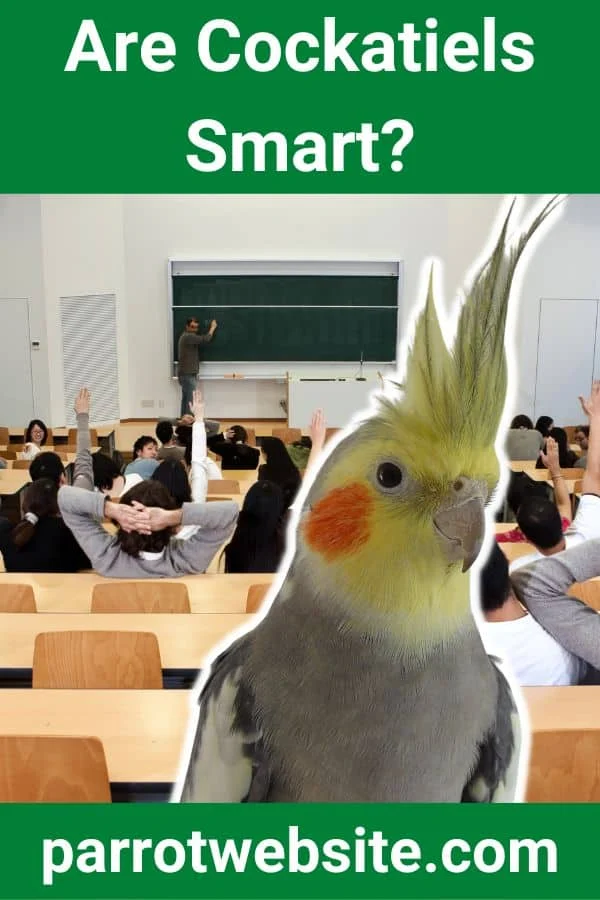
Parrots have long held a prestigious reputation in the animal kingdom, often cited alongside primates and corvids as paragons of cognitive ability. Yet, when discussions turn to the "geniuses" of the bird world, the conversation frequently drifts toward the large, charismatic macaws or the problem-solving African Greys. This leads to a persistent, often misguided, question among pet owners and enthusiasts: Are the smaller, ubiquitously popular cockatiels actually intelligent?
The short answer is a resounding yes. While they may be small in stature, cockatiels possess a remarkable capacity for memory, emotional depth, and social cognition. Far from being simple creatures of habit, these birds operate within complex social frameworks that require a high degree of "social intelligence." Understanding the cockatiel’s mind requires moving beyond narrow metrics of human-centric testing and embracing a more holistic view of animal intellect.
The Nature of Avian Intelligence: Defining the Undefinable
In the scientific community, there is no single, universally accepted definition of "intelligence." When we label an animal as smart, we often rely on specific benchmarks—the linguistic capabilities of a parrot, the spatial reasoning of a crow, or the memory recall of an elephant.
However, intelligence is multifaceted. It is the ability to adapt to one’s environment, navigate complex social hierarchies, and store vital information for long-term survival. For the cockatiel, intelligence is primarily expressed through its social brain. Because they are flock-dwelling birds in the wild, their survival is inextricably linked to their ability to form bonds, recognize individual flock members, and communicate effectively. This evolutionary pressure has fostered a brain wired for empathy, observation, and complex memory.
Chronology of the Bond: How Cockatiels Recognize Their Humans
The cognitive journey of a cockatiel within a human household is a fascinating process of observation and association.
- The Initial Observation Phase: Upon entering a new environment, a cockatiel does not immediately register a human as an "owner." Instead, they treat the human as a potential member of their flock. During this time, they are hyper-observant, noting auditory patterns (your voice), visual cues (your height, movement patterns), and even the colors you wear.
- The Association Phase: As time passes, the bird begins to link these stimuli with positive reinforcement—feeding, social interaction, and safety. This is where the "recognition" occurs. They learn that a specific voice or specific clothing indicates the arrival of a trusted social partner.
- The Deep Bonding Phase: Once a bond is established, the bird moves into a state of emotional reliance. They do not view their human as a master or owner; rather, they view them as a bonded mate or a critical member of their social unit. This transition represents a high level of cognitive development, as it requires the bird to hold a mental model of the human as a distinct, reliable entity.
Supporting Data: Memory and Cognitive Recall
One of the most impressive displays of cockatiel intelligence is their memory. In the wild, cockatiels are nomadic, traversing vast distances in search of food and water. They must remember the locations of these resources and recognize the calls of their lifelong partners.
Long-Term Memory Capabilities
Research into avian cognition suggests that cockatiels possess what psychologists term "episodic-like memory." They can remember specific individuals, the sound of a specific melody, and even the "vibes" of a particular environment.
- Facial and Auditory Recognition: A cockatiel can distinguish between dozens of different faces and voices. Even after a separation of several months, a well-bonded cockatiel will typically recognize its human owner, demonstrating that the information has been encoded into long-term memory.
- Environmental Cues: They remember spatial layouts. If a piece of furniture is moved, a cockatiel will notice immediately—a sign of a highly active, observant mind.
The Impact of Social Need
Because they are social, their memory is bolstered by their need for interaction. If a bird is kept in isolation, its cognitive faculties may decline, but in a stimulating, social environment, a cockatiel’s brain is constantly challenged. This is why experts emphasize the importance of enrichment. A bored cockatiel is a bird whose intelligence is being suppressed; a challenged cockatiel is a bird that continues to learn and grow throughout its lifespan.
Emotional Complexity: Beyond Simple Instinct
Do cockatiels experience emotions, or is it merely conditioned behavior? Current ethological consensus leans heavily toward the former. Cockatiels exhibit clear signs of joy, sadness, anxiety, and frustration—all of which serve as indicators of an intelligent, feeling mind.
The Spectrum of Cockatiel Emotion
- Joy and Excitement: Often expressed through whistling, wing-flapping, and "happy" body language, these emotions are clearly linked to social success and physical comfort.
- Loneliness and Grief: Perhaps the most poignant aspect of their intelligence is their capacity for attachment. When a long-term bonded partner (human or avian) is lost, a cockatiel will often exhibit signs of clinical depression, such as lethargy, loss of appetite, or self-mutilation. This depth of feeling requires a sophisticated neurological structure.
- Frustration and Boredom: A cockatiel that is not given puzzles, toys, or consistent interaction will become frustrated. This frustration is, in itself, a sign of intelligence; the bird is aware that its needs are not being met and it has the cognitive capacity to "complain" about it.
Do They Hold Grudges? The Psychology of Retribution
A common anecdote among bird owners is the "cockatiel grudge." Whether it’s a visit to the veterinarian or a perceived slight, some owners swear their bird is holding a grudge. From an evolutionary perspective, this makes sense. If an animal is mistreated or frightened by a specific individual, remembering that person as a "threat" is a critical survival mechanism.
While they do not hold grudges in the human sense of petty resentment, they do maintain "avoidance behaviors." If a bird feels threatened, it will remember the face and voice of the threat for a long time. However, because they are fundamentally social, they are often willing to "forgive" and rebuild the bond if the human consistently provides positive interactions. This ability to assess and reassess a relationship is a hallmark of high-level cognitive function.
Implications for Owners: Ethical and Practical Considerations
Understanding that cockatiels are intelligent beings changes the nature of the "pet" relationship. It shifts the dynamic from one of ownership to one of guardianship.
The Need for Intellectual Stimulation
Because they are intelligent, they require more than just a cage and a food bowl. They require:
- Cognitive Toys: Puzzles, foraging toys, and mirrors (though use with caution) help keep the brain active.
- Social Interaction: A cockatiel is not a "background" pet. They require hours of daily interaction to maintain their mental health.
- Training: Teaching a cockatiel tricks—such as spinning, stepping up, or even talking—is not just a party trick. It is a vital exercise that strengthens the bond and provides the mental challenge they crave.
The "Individual" Variable
It is crucial to note that, like humans, every cockatiel is an individual. Some are naturally more inquisitive and adept at learning, while others may be more reserved. Comparing a cockatiel to a budgie or another parrot species often results in a draw, as different species have evolved different types of intelligence to suit their specific ecological niches. There are genius cockatiels and there are "average" ones, just as there are genius budgies and average ones.
Conclusion: Recognizing the Avian Intellect
When we assess the intelligence of the cockatiel, we are looking at an animal that has mastered the art of social living. They may not be able to solve advanced physics problems, but they excel in the areas that matter most for their survival: complex memory, emotional bonding, and nuanced communication.
The next time you look at your cockatiel, recognize that behind those small, bright eyes is a complex, active, and deeply sensitive mind. They are not merely "little parrots"—they are sophisticated beings capable of love, memory, and profound social awareness. By providing them with the stimulation and respect they deserve, we don’t just own a pet; we engage in a fascinating, life-long relationship with a truly intelligent creature.