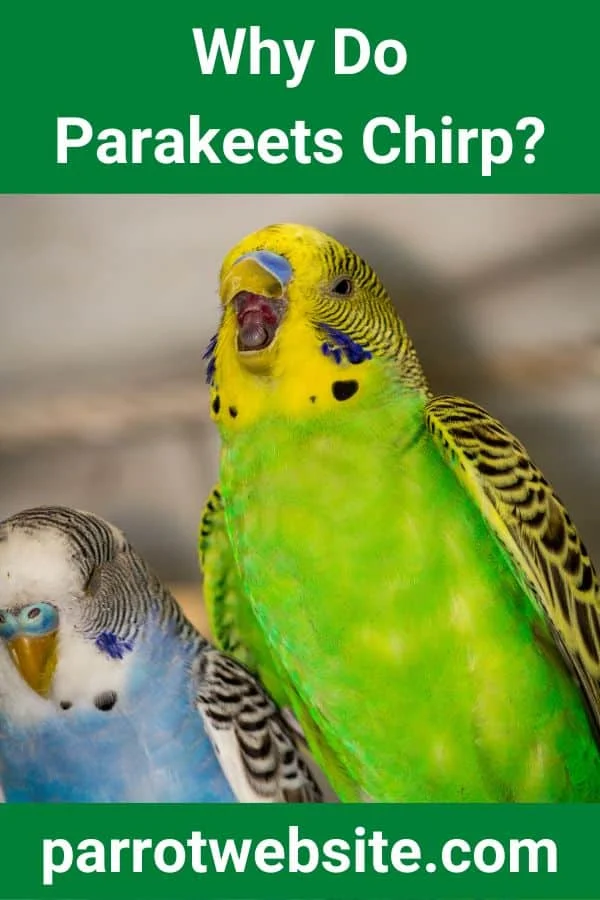
For any parakeet owner, the day is punctuated by a rhythmic, melodic soundtrack. From the first rays of morning light to the quiet of the evening, these vibrant birds engage in a near-constant stream of vocalizations. While to the uninitiated observer this may seem like random noise, avian experts suggest that the chirping of a parakeet is a highly sophisticated, essential, and biologically hardwired system of communication.
Understanding why your feathered companion is vocalizing is not merely a hobby; it is a vital component of responsible pet ownership. By decoding these sounds, owners can gauge the health, happiness, and social status of their birds, effectively bridging the gap between two different species.
The Core Fundamentals: Why Parakeets Never Stop Talking
To understand the parakeet, one must first look at their ancestral roots. In the wild, parakeets are defined by their intense social nature. They do not exist as solitary creatures; they are built for the "flock." A single wild flock can consist of hundreds of individuals, each maintaining a lifelong bond with a partner while navigating a complex web of social relationships.
In this high-density environment, silence is not golden—it is dangerous. The constant, ambient chirping acts as a "safety signal." It is an auditory thread that links every member of the flock, providing a continuous update that everyone is safe, well-fed, and undisturbed by predators. When the chirping stops, the flock knows to be on high alert.
When you bring a parakeet into your home, you are effectively becoming a member of its flock. Your bird does not distinguish between a fellow avian and a human roommate; it views you as its primary social unit. Consequently, the chirping you hear is their way of maintaining the "flock dynamic," providing constant reassurance that all is well.
Chronology of Vocalization: From Morning "Roll Call" to Evening Rest
The vocal patterns of a parakeet follow a distinct daily rhythm, mirroring the cycles of the sun and the bird’s internal biological clock.
The Morning Roll Call
The most intense period of noise often occurs at dawn. After a night of silence—a period of vulnerability where the flock remains quiet to avoid attracting predators—the morning chirping serves as a survival mechanism. It is, essentially, a "roll call." Your parakeet is checking in to ensure you have survived the night and to establish the social hierarchy and emotional state of the household for the day ahead. This is often accompanied by requests for food and morning interaction.
Mid-Day Interaction
Throughout the day, the chirping serves as a tool for bonding. If you work from home or spend significant time in the room with your bird, you will notice a back-and-forth cadence. When you speak, your bird chirps. This is not just noise; it is a collaborative social exercise. By mirroring your speech with their chirps, the parakeet is cementing your relationship. It is a fundamental request for feedback: "I am here, are you there?"
The Evening Transition
As the sun sets, most healthy parakeets will naturally quiet down. This is an instinctual behavior meant to preserve energy and minimize their visibility to nocturnal predators. If a bird remains hyper-vocal at night, it may be a sign of distress, improper lighting, or a disruption in their circadian rhythm.
Supporting Data: The Nuance of Tone and Volume
Communication is not just about the fact of chirping; it is about the quality of it. A change in volume, pitch, or frequency is a significant diagnostic indicator for owners.
The Significance of High-Volume Chirping
Generally, loud, energetic chirping is a positive sign. It indicates a bird that is confident, secure, and eager to engage with its surroundings. It suggests that the bird feels safe enough to "announce" its presence to the world.
The Warning of Low-Volume Vocalization
Conversely, a sudden, sustained decrease in volume is a red flag. In the wild, if a parakeet feels threatened—perhaps by a bird of prey circling overhead—it will instinctively "turn down the volume" to avoid drawing attention to itself.
In a domestic setting, if your bird goes quiet, you must investigate. This can be caused by:
- Environmental Stress: The introduction of a new pet, a loud appliance, or a change in the room’s layout.
- Physical Illness: Parakeets are notorious for masking illness to avoid being ostracized by the flock. A sudden drop in vocal activity is often one of the few outward signs of underlying infection, metabolic disorder, or injury.
Official Perspectives: When to Consult a Professional
Veterinary experts emphasize that while behavioral issues often cause changes in vocalization, physical ailments should always be ruled out first. If a parakeet stops chattering entirely, or if the "low-volume" period lasts longer than a few hours, a visit to an avian veterinarian is required.
Key Indicators for Veterinary Intervention:
- Cessation of Activity: A bird that sits motionless while silent is likely concealing a serious health issue.
- Physical Changes: Look for fluffed feathers, discharge from the nostrils, or changes in droppings.
- Sudden Behavioral Shifts: If a normally boisterous bird becomes reclusive, it is rarely just a "mood."
Implications: The Mutual Responsibility of Bonding
The implications of these behaviors are clear: you are not just a pet owner, you are a flock leader. The health of your parakeet is directly tied to the level of interaction you provide.
The "Departure" Anxiety
Many owners notice their parakeets chirping frantically when they leave a room. This is a classic expression of separation anxiety. The bird is literally asking, "Where are you? Are you safe? Please come back." If you leave your bird alone for extended periods, the lack of a "flock response" can lead to chronic stress, which manifests as feather plucking, lethargy, or, ironically, extreme, repetitive screaming.
Building a Stronger Bond
To foster a happy environment, treat your parakeet’s chirps as a conversation. When they chirp, reply. When you leave the room, announce your departure and return with a friendly greeting. This creates a predictable, safe environment that allows the bird to thrive.
The Compatibility Factor
It is important to note that if you have multiple birds, their primary social focus may shift toward one another. While this is natural, it does not absolve the owner of the responsibility to interact. A multi-bird household still requires the owner to act as a supportive, stable presence to ensure the entire "flock" feels secure.
Conclusion
The parakeet is a masterpiece of evolutionary social engineering. Every chirp, every trill, and every moment of silence is a data point in a complex, ongoing conversation. By learning to interpret these signals, we gain more than just a pet; we gain a companion that is constantly inviting us into its world.
If you are considering a parakeet, be prepared for this constant dialogue. It is a rewarding, high-maintenance, and deeply personal commitment. For those willing to put in the time to listen and respond, the chirping of a parakeet becomes more than just background noise—it becomes the heartbeat of a happy, well-adjusted home. Remember: your bird is checking in on you. Make sure you are checking in on them.