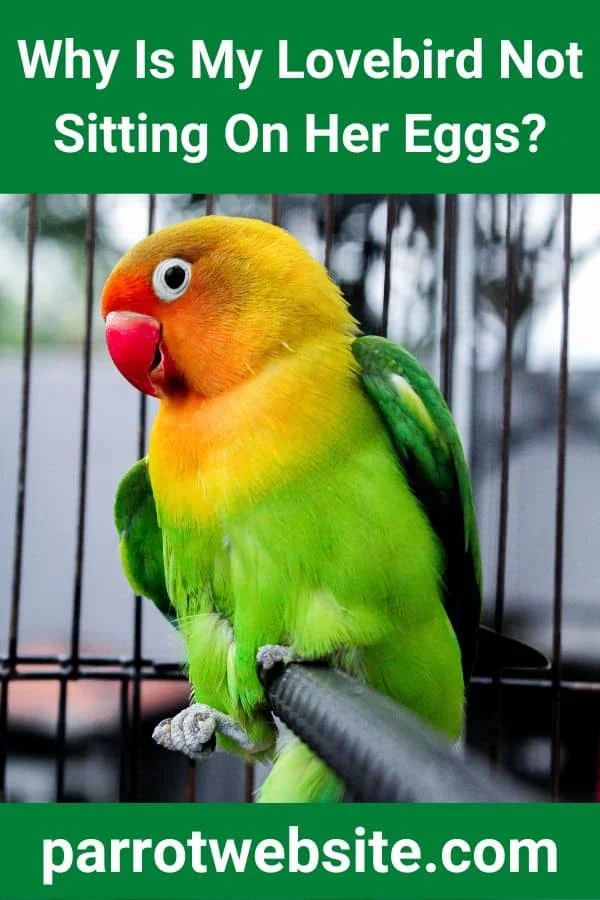
For many avian enthusiasts, the prospect of breeding lovebirds is an exciting milestone. Watching a pair bond, prepare a nest, and eventually produce a clutch of eggs is a rewarding experience that highlights the intelligence and social complexity of these vibrant parrots. However, this process is not always seamless. One of the most distressing situations a breeder can face is the sudden realization that the hen is refusing to incubate her eggs.
When a lovebird leaves her nest empty or ignores her clutch, it triggers a series of questions regarding animal welfare, biological maturity, and environmental stressors. To navigate this, one must look beyond the surface and understand the nuanced, instinctual, and physiological factors that drive avian behavior.
Main Facts: The Biological Reality of Incubation
At its core, incubation is an instinctual behavior, but it is not a guaranteed one. A lovebird hen must possess the physiological drive—triggered by hormones and environmental cues—to sit on her eggs for the required 18 to 24-day period. When this drive is absent, the eggs will fail to develop, as they require a consistent, specific temperature provided by the mother’s brood patch.
The primary, and most frequently cited, reason for a lack of incubation is lack of maturity. Breeding lovebirds too early is a widespread error among novice keepers. While a bird may be physically capable of mating and laying eggs, she may lack the behavioral maturity required to sit, turn, and protect the clutch.
Beyond age, we must consider the following:
- Environmental Stress: Changes in the cage environment, noise, or nearby predators can cause a hen to abandon her post.
- Health and Nutrition: A malnourished or sick hen will prioritize her own survival over the energy-intensive process of incubation.
- Infertility: If an egg is infertile, a highly perceptive hen may instinctively sense that it will not hatch and cease sitting on it to conserve energy.
Chronology of the Breeding Cycle
Understanding the timeline of a successful clutch is essential for identifying when a problem has occurred.
Pre-Breeding: Preparation (6–12 Months Before)
Success begins long before the first egg is laid. Potential breeders should ensure that the hen is at least 18 to 24 months old. During this phase, nutrition must be optimized, providing high-quality pellets, calcium supplements, and fresh vegetables to prepare the hen’s body for the rigors of egg production.
The Laying Phase (Days 1–7)
Lovebirds generally lay an egg every other day. They do not always start full incubation immediately after the first egg is laid; some hens wait until the second or third egg is present. This is a critical observation period. If she hasn’t begun sitting by the time the third egg arrives, intervention may be necessary.
The Incubation Period (Days 1–24)
Once incubation begins, it is a 24-hour commitment. The hen will spend the vast majority of her time in the nesting box, emerging only for brief periods to forage, drink, or stretch. If the hen is seen off the nest for extended periods during this window, the viability of the embryos is at immediate risk.
The Hatching Window (Days 18–24)
This is the climax of the cycle. If the incubation has been successful, the chicks will begin to "pip" the shell. If day 24 passes with no activity, it is time to evaluate the status of the eggs.
Supporting Data: The Impact of Age and Environment
Avian science suggests that the "instinct" to parent is not a singular switch that turns on at puberty. Rather, it is a developmental process.
The Maturity Factor
Data from professional breeding programs consistently show that clutches produced by hens under 18 months of age have a significantly higher rate of abandonment. Young hens are often "confused" by the arrival of eggs. They may lay them as a natural hormonal reaction to a nesting box, but they lack the psychological "drive" to treat them as offspring. They essentially view the eggs as inanimate objects rather than future chicks.
The Nutritional Requirement
Incubation is an energy-draining task. A hen loses body heat and reserves while sitting. If her diet is deficient in proteins or calcium, her body may trigger an instinctual "shutdown" of the reproductive cycle. If the hen senses she cannot maintain her own body temperature or metabolic needs, she will abandon the eggs to survive.
The Role of the Nesting Box
A common misconception is that the environment inside the cage is enough. However, lovebirds are cavity nesters. Without a secure, darkened, and private nesting box, the hen will feel exposed. A sense of vulnerability is the fastest way to discourage incubation. If she does not feel "safe," she will not sit.
Official Perspectives and Veterinary Insight
When confronted with a bird that refuses to sit, the most professional course of action is to consult an avian veterinarian. Veterinarians emphasize that "neglect" is rarely a behavioral choice—it is usually a symptom.
Disease as a Silent Factor
A bird may appear healthy to the naked eye while suffering from an underlying infection. Conditions such as psittacosis or even chronic respiratory issues can sap a bird’s energy. A veterinarian can perform blood work or fecal analysis to ensure the hen is fit for the physically demanding process of motherhood.
Stress-Induced Abandonment
Avian behaviorists note that high-stress environments are the "silent killers" of successful clutches. Loud noises, frequent cage cleaning, or even the presence of other pets in the room can cause a hen to abandon her eggs. The veterinary consensus is that once a nest is established, the surrounding environment should be treated as a "no-go zone" for human interference.
Addressing Myths: The Human Element
A prevalent myth in the bird-keeping community is the idea that touching eggs will cause the mother to abandon them due to human scent.
The Scent Myth
Birds generally have a poor sense of smell compared to mammals. The idea that a hen will "smell" human presence and reject the clutch is scientifically unfounded. However, this does not mean one should handle eggs regularly. Every time a human enters the nesting box, it creates a stress response. The danger is not the scent on the egg, but the stress caused to the parent.
Should You Intervene?
If a hen is not sitting, the urge to manually incubate the eggs is strong. However, hand-rearing from the egg stage is incredibly difficult and has a low success rate for the average owner. If the hen refuses to sit despite being the correct age and having a healthy environment, it is often best to remove the nesting box to prevent further exhaustion of the hen, rather than forcing a clutch to survive.
Implications and Moving Forward
What does this mean for the future of your lovebird? If a hen fails to incubate, it is not a failure of the owner, but a signal to reassess.
- Evaluate Maturity: If the bird is under 18 months, patience is the only solution. Allow her to grow and try again in six months.
- Health Screening: If the bird is of age and still fails, a vet visit is mandatory to rule out illness.
- Acceptance: Some lovebirds, much like humans, are simply not suited for parenting. If a bird has been given every advantage—a proper nest, a nutritious diet, and a stress-free environment—and still fails to incubate, it is the responsible choice to stop breeding that specific bird. Continual attempts to force a cycle can lead to chronic health issues, such as egg binding, which can be fatal.
In conclusion, the refusal of a lovebird to incubate her eggs is a multifaceted issue. It requires the owner to look past their own desire for chicks and focus on the biological and psychological state of the bird. By prioritizing the health of the hen over the production of offspring, owners ensure a longer, happier life for their pets. Breeding should always be a choice made with the bird’s best interest at heart, ensuring that if we do intervene in their lives, we do so with knowledge, compassion, and respect for their natural instincts.