

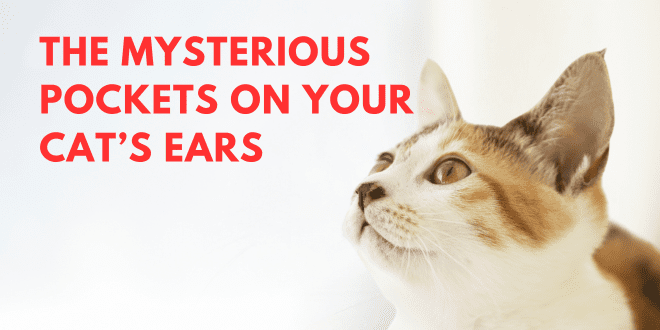
Every dedicated cat owner has, at some point, gently scratched their feline companion behind the ears and noticed a curious, delicate fold of skin at the base of the outer ear flap. It looks almost like a deliberate design choice—a tiny, stitched-in pocket nestled into the cartilage. Known medically as the cutaneous marginal pouch, this feature is more commonly referred to by the enigmatic moniker "Henry’s Pocket." While it may seem like a trivial quirk of evolution, this mysterious anatomical feature offers a fascinating glimpse into the specialized sensory equipment that makes cats the world’s most formidable predators.
Main Facts: What is Henry’s Pocket?
At its most basic level, the cutaneous marginal pouch is a fold of skin located on the lower posterior edge of a cat’s pinna (the external ear). To the human eye, it appears as a small, triangular slit or pouch. Despite its prominence on almost every domestic cat, it is frequently overlooked by casual observers until a moment of tactile grooming draws attention to it.
The structure is not a deformity or a scar; it is a standard biological component of the feline ear. While the name "Henry’s Pocket" has become the accepted vernacular among veterinarians and feline behaviorists, the exact etymology of the name remains a mystery. There is no historical record of a "Henry" associated with the discovery of this feature, leading many to conclude that the name is a piece of veterinary folklore that has been passed down through generations of animal care professionals without a documented origin.
The Chronology of Feline Sensory Evolution
To understand why this pocket exists, we must look at the evolutionary timeline of the cat family (Felidae). Cats evolved as crepuscular hunters—creatures most active during the low-light hours of dawn and dusk. This environment requires a level of auditory processing that far exceeds that of most mammals.
Thousands of years ago, the ancestors of the modern house cat relied on their hearing not just to detect prey, but to survive in a competitive wilderness. The structure of the ear, including the cutaneous marginal pouch, likely underwent selective pressure. Evolutionary biologists posit that the pouch is a remnant of a more complex ear-control mechanism. As felines moved from the wild to the domestic sphere, the physical structure of the ear remained largely unchanged, preserving these specialized features even as their primary role shifted from hunting small desert rodents to hearing the crinkle of a treat bag.
Supporting Data: The Function of the Pouch
While the definitive purpose of Henry’s Pocket remains a subject of academic debate, several scientific theories provide a compelling picture of its utility.
1. Acoustic Funneling and Localization
The primary theory regarding the cutaneous marginal pouch is that it aids in sound modulation. The shape of the pinna acts as a satellite dish, collecting sound waves. The pouch itself may serve as a resonator or a filter, helping the cat funnel high-frequency sounds more efficiently into the ear canal. This is crucial for tracking the ultrasonic squeaks of small prey. By altering the tension of the ear flap, the cat may use the pocket to isolate specific frequencies, effectively "tuning" their ears to pinpoint the exact location of a noise.
2. Enhancing Feline Body Language
Cats are masters of non-verbal communication. Their ears are highly expressive, signaling everything from playful curiosity to defensive aggression. The cutaneous marginal pouch is composed of elastic tissue that allows for significant flexibility. Experts suggest that the pocket acts as a hinge, enabling the cat to flatten its ears against the head with greater ease. When a cat feels threatened or prepares for a confrontation, the ability to fold the ears back tightly is a protective measure; the pocket facilitates this compression, minimizing the surface area of the ear that could be injured in a fight.
3. Cross-Species Occurrence
It is a common misconception that Henry’s Pocket is unique to cats. While it is a defining feature of the domestic house cat, it is also present in several other species. Certain breeds of dogs—particularly those with erect or semi-erect ears—possess similar pouches. Furthermore, the feature is highly developed in bats and weasels. The presence of this structure in such diverse carnivores suggests that it provides a distinct advantage in sound processing for animals that hunt in dense or complex environments.
Official Perspectives: The Veterinary View
Veterinarians are often the first to point out the importance of Henry’s Pocket, but for reasons that are less about hearing and more about health. Because of its deep, folded structure, the pouch is a notorious "safe haven" for pathogens.

"The cutaneous marginal pouch is a classic area where we see clinical issues that owners might miss," says one veterinary specialist. "Because the skin is folded in on itself, it creates a warm, dark, and slightly moist environment—the perfect micro-climate for mites, bacteria, and fungal growth."
The Parasite Problem
The most common concern associated with the pouch is its role as a reservoir for Otodectes cynotis, or ear mites. These microscopic parasites thrive in the deep recesses of the ear, and the protective fold of Henry’s Pocket allows them to bypass superficial cleaning. Similarly, ticks often seek out the soft skin inside the pocket to attach themselves, as it is a less protected area of the animal’s body compared to the dense fur on their back or legs.
Implications: Maintenance and Care
Given that this anatomical feature can harbor health risks, it is imperative for cat owners to incorporate the pouch into their regular health routines.
Routine Inspection
Owners should make ear inspection a part of their weekly grooming ritual. When cleaning the ears, it is not enough to simply wipe the visible interior. One must gently open the fold of the pouch to inspect the skin for redness, swelling, or dark, coffee-ground-like debris, which is a classic indicator of ear mite infestation.
When to Seek Help
If an owner notices the following, a veterinary consultation is required:

- Persistent Head Shaking: A sign that something is irritating the ear canal or the pouch itself.
- Excessive Scratching: If a cat is pawing at its ears, it is likely suffering from inflammation or an infection.
- Foul Odor: A bad smell emanating from the ear area often indicates a bacterial or yeast infection, which may have originated in the deep folds of the cutaneous marginal pouch.
- Visible Parasites: If you spot a tick or signs of mites, do not attempt to "dig" them out with cotton swabs, as this can push debris deeper into the canal. Always seek professional guidance.
The Cultural and Scientific Legacy
The persistence of Henry’s Pocket is a testament to the cat’s evolutionary success. While we may never fully unlock the secrets of why it is named "Henry," or even why it is so prevalent across different species, its function as a sensory aid and a structural element of the feline ear is undeniable.
As we continue to study feline behavior, the importance of these "small" details becomes increasingly clear. Whether it is the twitch of a whisker, the tail’s position, or the subtle fold of an ear, everything a cat does serves a purpose. By acknowledging and maintaining these complex anatomical features, we not only ensure the health of our pets but also deepen our appreciation for the biological engineering that makes cats the sophisticated, mysterious creatures they are.
For those interested in exploring the deeper behavioral traits of their feline companions, understanding the physical structure is only the first step. As noted in the works of experts like Pam Johnson-Bennett, the relationship between a cat’s physical health and their behavioral patterns is inseparable. When a cat feels physically comfortable—free from the irritation of a neglected "Henry’s Pocket"—they are far more likely to display the calm, confident, and affectionate behaviors that every owner treasures.
In conclusion, the next time you find yourself petting your cat, take a moment to notice that tiny, mysterious fold. It is a link to their wild ancestors, a tool for their acute hearing, and a vital point of focus for their ongoing health. Treat it with care, keep it clean, and respect the mystery that is Henry’s Pocket.