
By Paige K Parsons | Edited by Our Think Tank
Published: May 2025
Main Facts
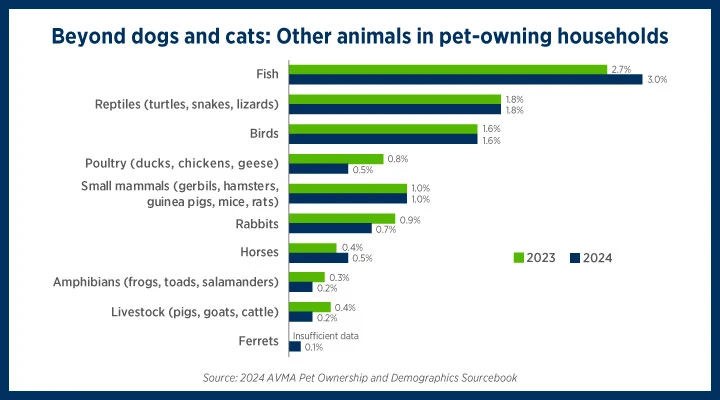
The landscape of American pet ownership is undergoing a quiet yet profound transformation. While dogs and cats have historically dominated the domestic sphere, companion rabbits have steadily hopped their way into the hearts and homes of millions. According to updated figures released in May 2025 by the American Veterinary Medical Association (AVMA), drawing from its comprehensive Pet Ownership & Demographics data, approximately one million U.S. households—representing roughly 0.7% of the nation—currently live with at least one pet rabbit.
While this specific metric points to a recent recalibration in household penetration, broader historical and industrial data highlights a resilient and evolving market. Data from the American Pet Products Association (APPA) underscores that rabbits reign supreme as the most popular "small animal" pet in the United States. Within a broader category encompassing millions of small mammal-owning households, rabbits consistently capture a massive share of the exotic and small pet demographic.
Furthermore, demographic shifts are heavily favoring non-traditional pets. Reports from financial and consumer analysts, including Forbes, indicate that younger demographics—specifically Millennials and Generation Z—are driving a surge in the popularity of rabbits and other exotic companion animals. These younger pet parents often view rabbits as ideal apartment-dwellers: they are quiet, litter-box trainable, deeply affectionate, and possess distinct, captivating personalities that challenge the outdated notion that rabbits belong exclusively in outdoor hutches.
Concurrently, the acquisition channels for companion rabbits have shifted dramatically over the past two decades. Historical data reveals a cultural move away from commercial pet store purchases toward specialized adoption and rescue networks. Between the early 2010s and mid-2010s, the number of rabbits acquired via commercial pet stores plummeted by over 40%, reflecting a growing public awareness of rabbit rescue needs, proper husbandry, and the ethical dimensions of pet acquisition.
Chronology: Tracking the Rabbit Population Over Three Decades
To understand where the American pet rabbit population stands in 2025, it is necessary to examine the historical trajectory tracked by organizations such as the AVMA, the APPA, the United States Department of Agriculture (USDA), and grassroots organizations like RabbitWiki. Over the last thirty years, the data paints a fascinating picture of fluctuating household adoption rates and shifting total population numbers.

The 1990s: Establishing a Baseline
At the dawn of the 1990s, rabbits were transitionary figures in American households, moving rapidly from agricultural or school-project contexts into the modern living room.
- 1991: Industry estimates recorded approximately 1.4 million households owning rabbits, translating to 1.5% of overall households and a total rabbit population of roughly 4.6 million.
- 1996: Household ownership crept up to 1.9 million (1.9% of total households), with an average of 2.63 rabbits per household, pushing the total population closer to 4.9 million.
The Turn of the Millennium: Peak Numbers and Growing Popularity
Entering the 2000s, pet rabbits experienced a golden era of population growth, driven by advocacy groups educating the public on indoor house-rabbit care.
- 2000: The total rabbit population peaked significantly at an estimated 5.3 million animals across roughly 2.2 million households.
- 2002: A landmark USDA report corroborated these numbers, confirming that 5 million rabbits resided as companions in 2.2 million American homes.
- 2006–2007: Gallup polls and AVMA surveys aligned to show that roughly 1% to 1.62% of households kept rabbits, while total population metrics surged. The 2007 APPA Pet Owners Survey famously noted that rabbits had officially surpassed hamsters to become the most popular small pet in America, cementing their status as the third most popular companion mammal overall, trailing only cats and dogs.
The 2010s: Stabilization and Changing Sourcing
As economic landscapes shifted following the 2008 recession, pet ownership metrics adjusted, though the core base of dedicated rabbit enthusiasts remained fiercely loyal.
- 2010: The APPA recorded a massive small-animal population of 15.9 million, with rabbits making up an impressive 42% of that total—equaling roughly 6.6 million individual rabbits.
- 2012: AVMA surveys reported that 1.2% of American households (roughly 1.2 to 1.4 million homes) housed approximately 3 million to 3.2 million rabbits, indicating households were keeping slightly fewer individual animals per home in favor of deeply bonded pairs.
- 2017: Stability defined the mid-to-late 2010s, with AVMA data holding steady at 1.5 million households owning rabbits, maintaining a 1.2% overall household penetration rate and a total population of 2.2 million.
The 2020s: The Modern Era of Companion Rabbits
- 2022: The AVMA U.S. Pet Ownership & Demographics Sourcebook reported that 1.2% of households (1.5 million) owned rabbits, with a total estimated population of 2.2 million pet bunnies.
- 2025: The most recent AVMA public statistics estimate that roughly one million U.S. households (0.7%) currently live with rabbits, reflecting evolving survey methodologies and a post-pandemic normalization of pet ownership numbers across all species.
Supporting Data
A granular review of historical and contemporary metrics reveals clear patterns in how Americans house, acquire, and maintain pet rabbits. The following data compiled from the AVMA, APPA, and USDA highlights these trends:
| Metric / Year | 2022 | 2017 | 2012 | 2007 | 2002 | 2000 | 1996 | 1991 |
|---|---|---|---|---|---|---|---|---|
| Households Owning Rabbits | 1.5M | 1.5M | 1.4M | 1.9M | 2.2M | 2.2M | 1.9M | 1.4M |
| % Overall Households | 1.2% | 1.2% | 1.19% | 1.62% | — | 1.6% | 1.90% | 1.50% |
| Average Rabbits / Household | — | — | 2.28 | 3.3 | — | 2.4 | 2.63 | 3.22 |
| Total Rabbit Population | 2.2M | 2.2M | 3.2M | 6.1M | 5M | 5.3M | 4.9M | 4.6M |
Note: Historical data compiled with assistance from tracking sources including RabbitWiki and official AVMA/APPA census publications.
Beyond sheer population numbers, demographic research emphasizes a cultural shift in how rabbits enter households. Historical APPA data from the early 2010s highlighted that roughly 25% of all pet rabbits were obtained via animal shelters and adoption rescues, while only 14% originated from commercial pet stores. Crucially, the 42% decline in pet-store rabbit purchases observed between 2011 and 2014 signaled the beginning of a long-term ethical shift. Modern consumers increasingly rely on specialized rabbit rescues, humane societies, and ethical breeders rather than impulse buys at retail chains.
Official Responses and Expert Perspectives
The evolving statistical profile of pet rabbits has prompted notable commentary from veterinary organizations, animal welfare advocates, and industry analysts.
The American Veterinary Medical Association emphasizes that tracking exotic and non-dog/cat species is vital for ensuring adequate veterinary infrastructure. As AVMA demographic datasets illustrate, while the raw percentage of rabbit-owning households fluctuates between 0.7% and 1.2%, the specialized medical needs of these animals require continuous education for modern practitioners. Rabbits are classified as "exotic pets," meaning they require specialized veterinary care that differs drastically from standard canine and feline medicine.
Animal welfare organizations, including the House Rabbit Society and various municipal humane societies, have responded to the data by ramping up educational campaigns. Representatives note that while the total population of pet rabbits may appear modest compared to dogs and cats (which number in the tens of millions), rabbits represent a uniquely vulnerable population. Because they are often purchased on impulse—frequently around Easter—shelters frequently experience surges in surrenders months later when owners realize the specialized commitment required.
Furthermore, economic analysts from publications like Forbes point out that the rising tide of millennial and Gen Z pet ownership has fundamentally altered the pet care market. Younger generations are investing heavily in high-end enclosures, specialized organic hays, veterinary insurance, and enrichment toys for their rabbits. This willingness to spend on non-traditional pets has transformed the rabbit supply industry, shifting it from a low-cost, disposable pet mindset to one centered on longevity, health, and holistic well-being.
Implications for the Future of Rabbit Welfare and Ownership
The data captured across the 1990s, 2000s, 2010s, and into 2025 carries profound implications for the future of companion rabbits in the United States.
1. Veterinary Access and Specialization
With roughly one million to 1.5 million households housing rabbits, the demand for "exotic-certified" veterinarians remains exceptionally high. Unlike dogs and cats, finding a practitioner capable of performing complex procedures—such as routine spaying and neutering, which is critical for behavioral health and cancer prevention in rabbits—can still be challenging in rural or semi-urban areas. The stabilization of pet rabbit numbers means veterinary schools and continuing education programs must continue to prioritize lagomorph medicine.

2. The Shift Toward Indoor, Free-Roam Housing
The historical data showing a decrease in the average number of rabbits per household (dropping from over 3 rabbits per home in the 1990s to roughly 1 to 2 today) correlates with a major husbandry shift: rabbits are increasingly kept as singular or bonded-pair indoor "free-roam" pets rather than colony animals in outdoor hutches. Owners are dedicating entire rooms, exercise pens, or living room real estate to their pets, treating them with the same indoor privileges traditionally reserved for cats and dogs.
3. Combating Impulse Buying and Surrender Cycles
Despite positive trends in adoption and education, shelters continue to grapple with post-holiday abandonments. The persistent baseline of roughly one to 2.2 million rabbits nationwide proves that while public awareness has improved, ongoing advocacy is necessary. Legislative efforts—such as bans on the retail sale of rabbits in pet stores enacted in various states and municipalities—have been heavily influenced by the data showing declining pet-store acquisitions and rising shelter intakes.
Conclusion
As the United States moves deeper into the 2020s, the pet rabbit has firmly secured its place as a beloved, mainstream companion animal. While ownership numbers experience natural ebbs and flows according to recent AVMA and APPA metrics, the cultural reverence for these intelligent, sensitive creatures has never been stronger. Supported by an engaged community of younger pet owners, specialized rescues, and dedicated veterinarians, the future for America’s house rabbits looks brighter, safer, and more integrated into the family home than ever before.