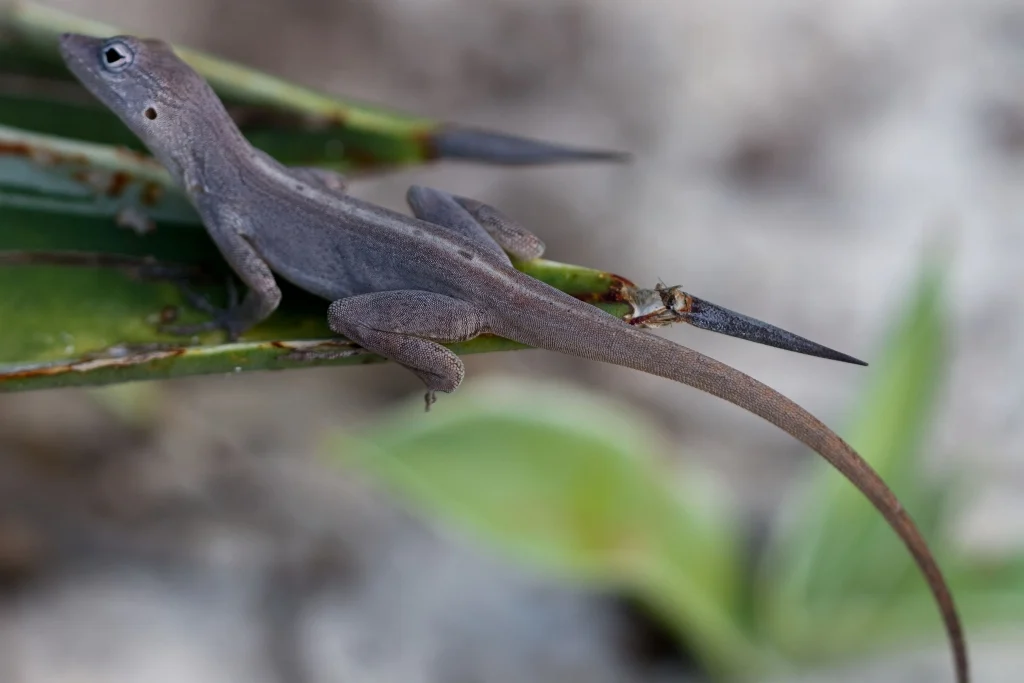
TURKS AND CAICOS — When Category 5 Hurricanes Irma and Maria tore through the Caribbean in September 2017, they left behind a landscape of catastrophic destruction, displaced communities, and shattered ecosystems. But amid the fallen trees and battered coastlines, a quieter, profound drama was unfolding in the underbrush. On two small islands in the Turks and Caicos archipelago, populations of Silver Key anoles (Anolis scriptus) were unwittingly drafted into a massive, natural evolutionary experiment.
According to groundbreaking research published in the journal Current Biology, these ferocious storms acted as agents of intense natural selection. In the aftermath of the tempests, scientists discovered that the surviving lizards looked distinctly different from their pre-hurricane ancestors. Specifically, the survivors bore significantly shorter fourth hind toes—a morphological shift that gave them a life-saving grip against hurricane-force winds.
This study provides rare, empirical documentation of evolution in real-time, bridging the gap between macro-level ecological disasters and micro-level genomic changes. By tracing the survival rates of the anoles, sequencing their DNA, and experimentally manipulating candidate genes in a related species, researchers have unveiled a compelling narrative of how extreme weather events can actively reshape the physical form and genetic blueprint of wild animal populations.
Main Facts
The core findings of the study center on the mechanics of survival during extreme meteorological events and the genetic architecture that facilitates such adaptation.
- The Survivor Phenotype: Silver Key anoles possessing shorter fourth hind toes demonstrated a dramatically higher survival rate during Hurricanes Irma and Maria compared to their long-toed counterparts.
- Directional Selection: The hurricanes exerted strong directional selection favoring superior clinging performance. Lizards with shorter toes were better able to anchor themselves to vegetation as wind speeds reached catastrophic levels.
- Parallel Evolution: Genome analyses across separate island populations revealed five candidate loci exhibiting parallel selection. This indicates that independent populations subjected to the same environmental stressor evolved similar traits via overlapping genetic pathways.
- The Genetic Culprit: The hs6st1 gene emerged as a primary signature of selection on both islands, directly correlating with the length of the longest hind toes.
- Functional Validation: To confirm the gene’s role, scientists used gene-editing techniques in brown anole (Anolis sagrei) embryos, successfully reproducing the shorter-toe phenotype and proving that disrupting b drives physical changes in digit development.
Chronology of the Study
The path from the howling winds of 2017 to the pages of Current Biology required meticulous field ecology, high-throughput genetic sequencing, and precise embryological experimentation.
September 2017: The Cataclysm
Hurricanes Irma and Maria made their historic sweeps through the Caribbean. Irma, one of the most powerful Atlantic hurricanes ever recorded, battered the Turks and Caicos Islands with sustained winds exceeding 160 miles per hour, closely followed by Maria. Before the storms struck, evolutionary biologists had already been cataloging various anole populations across the islands for unrelated studies, unwittingly capturing valuable baseline data on pre-hurricane morphology, body lengths, and toe dimensions.
Post-Storm Recovery and Assessment
In the immediate wake of the storms, the research team returned to the field. Navigating the devastated ecosystems, they captured surviving Silver Key anoles. By comparing the morphological measurements of the post-hurricane survivors against the pre-hurricane baseline data, the researchers noticed a stark and statistically significant pattern: the surviving lizards were not a random sample. They systematically possessed shorter fourth hind toes.
Genomic Screening and Discovery
Tissue samples from both pre- and post-hurricane cohorts were sent to genetics laboratories for DNA extraction and whole-genome sequencing. By scanning the genomes of the lizards, researchers sought to determine whether the physical changes observed in the survivors had a genetic basis or were merely a plastic response. The genomic scan pinpointed five specific candidate loci that showed clear signatures of parallel selection across the two distinct island populations, spotlighting the hs6st1 gene as a key player linked to toe length.
Experimental Validation
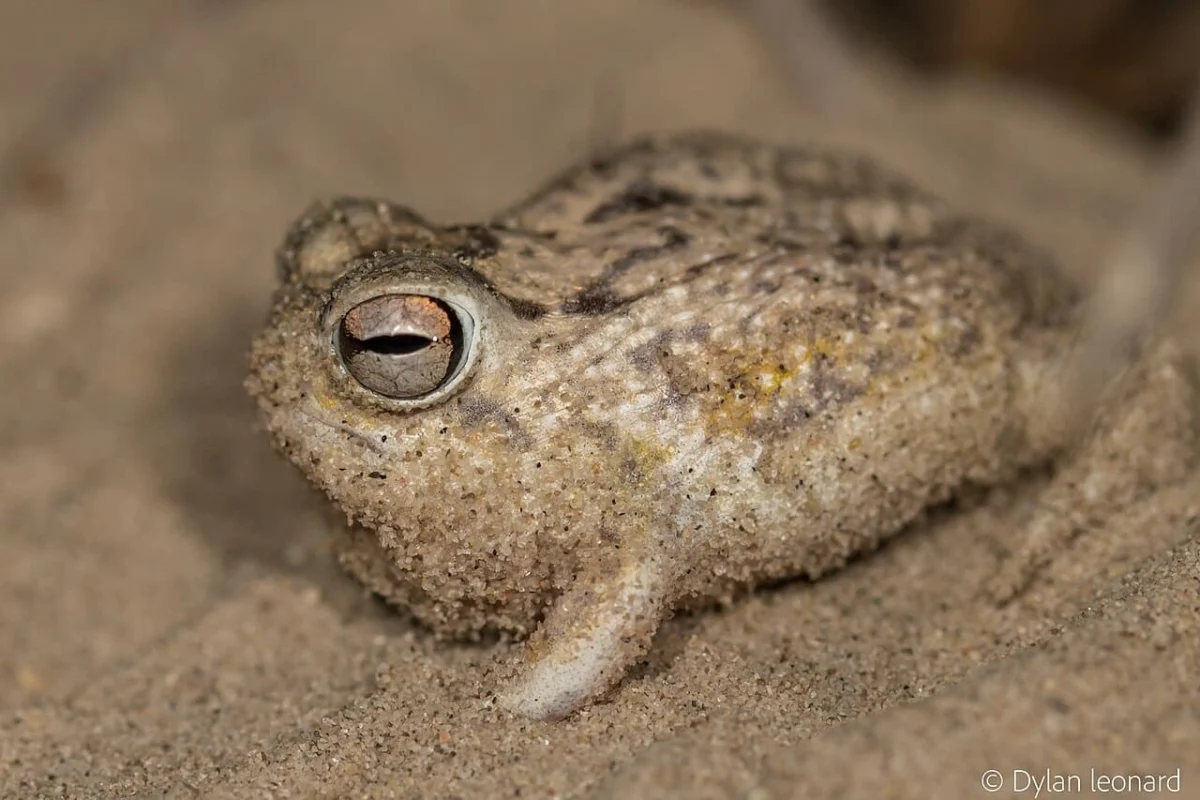
To move from correlation to causation, the research team designed an embryological experiment. Utilizing CRISPR-Cas9 or related gene-editing technologies, they targeted the hs6st1 gene in developing brown anole embryos. Because Silver Key anoles are challenging to breed and manipulate in a laboratory setting, the researchers turned to the closely related brown anole (Anolis sagrei) as a model organism. The gene-edited embryos developed successfully, yielding hatchlings with noticeably shorter hind toes—mirroring the morphology of the hurricane-surviving Silver Key anoles.
Publication: 2026
Following years of data processing, peer review, and synthesis, the complete study—titled "Genomic targets of hurricane-induced selection on clinging performance in an island lizard"—was officially published in Current Biology, cementing its place in the annals of evolutionary biology.
Supporting Data and Methodology
The robustness of the Current Biology study rests on rigorous quantitative analyses, combining field biology, biomechanics, and molecular genetics.
Biomechanical Advantage of Shorter Toes
Why would shorter toes save a lizard from a hurricane? Anoles are arboreal lizards that rely heavily on specialized toe pads covered in microscopic hair-like structures (setae) to generate friction and Van der Waals forces, allowing them to cling to smooth surfaces like leaves and tree bark.
Biomechanical principles suggest that shorter digits experience reduced leverage and bending moments under extreme lateral loads. When subjected to violent wind buffeting, a shorter toe acts as a stiffer, more stable lever, decreasing the likelihood that the lizard’s grip will peel away from the substrate. Lizards with longer toes, while potentially advantageous in other contexts (such as sprinting across broader gaps), experienced catastrophic grip failure when the winds reached gale force.
Genomic Signatures of Parallel Selection
Parallel evolution provides some of the strongest evidence for natural selection. When two isolated populations face the exact same environmental pressure, finding that they have evolved along the same genetic tracks rules out random chance (genetic drift).
In this study, genome-wide association studies (GWAS) of the Silver Key anoles on separate islands identified five candidate loci. The statistical overlap at these specific genomic regions confirmed that natural selection was actively winnowing the gene pool based on clinging performance. Among these regions, the hs6st1 gene stood out prominently.
The Molecular Pathway of hs6st1
The hs6st1 gene encodes an enzyme responsible for modifying heparan sulfate—a complex polysaccharide found on the surface of cells. Heparan sulfate acts as a critical signaling molecule during embryonic development, modulating pathways that dictate how tissues grow and organize.
During limb development in vertebrates, heparan sulfate signaling helps regulate the elongation and segmentation of developing digits. By demonstrating that variations near hs6st1 correlate with natural variations in toe length, and further proving that editing this gene yields shorter toes, the researchers established a direct line of descent from molecular biochemistry to macroscopic survival during a natural disaster.
Official Responses and Scientific Perspectives
The publication of the study has generated significant buzz within the global ecological and evolutionary biology communities, with leading scientists praising its integration of field ecology and functional genomics.
Dr. Losos, a renowned evolutionary biologist unaffiliated with the study, noted that while biologists have long suspected that extreme weather events drive natural selection—a concept famously explored in studies of Galápagos finches during droughts—capturing the genomic underpinnings of such events in vertebrates is exceptionally rare.
"For decades, we have hypothesized that extreme weather is a primary sculptor of biodiversity," remarked one prominent evolutionary ecologist during a symposium discussing the findings. "What makes this study remarkable is that it tracks the ecological fallout of a hurricane all the way down to the nucleotide level. We aren’t just seeing that survivors are different; we are seeing how the genome builds that difference, from cell signaling proteins to the physical grip on a tree branch."
Conservation biologists have also weighed in, emphasizing the broader context of climate change. As global temperatures rise, the frequency and intensity of major tropical storms and hurricanes are projected to increase. Understanding how native fauna respond genetically and physically to these extreme events provides critical baseline data for predicting how island ecosystems might adapt—or fail to adapt—in the coming decades.
Implications for Future Research and Evolution
The implications of the Turks and Caicos anole study extend far beyond the specific behavior of Anolis scriptus during Hurricanes Irma and Maria. They touch upon fundamental questions regarding the speed, predictability, and mechanisms of evolution in the Anthropocene.
1. Rapid Adaptation in the Face of Climate Change
Traditionally, evolution was viewed as a glacially slow process, requiring thousands or millions of years to produce noticeable changes in complex traits. However, contemporary studies on island lizards, urban wildlife, and organisms facing rapid environmental shifts are rewriting this timeline. This research proves that a single catastrophic weekend can drastically alter the allele frequencies of a population, accelerating natural selection at unprecedented speeds.
2. The Predictability of Evolution
The phenomenon of parallel selection observed in the study addresses a long-standing philosophical debate in evolutionary biology: If we were to rewind the tape of life, would it play out the same way? The parallel shifts in the hs6st1 gene across geographically separated island populations suggest that evolution possesses a degree of predictability. When pushed by intense, directional physical forces like hurricane-force winds, genomes may repeatedly pull the same levers to solve similar mechanical problems.
3. Broadening the Scope of Evolutionary Genomics
By successfully moving from field observations to whole-genome sequencing, and finally to functional validation via gene editing in a related model species, the researchers have established a gold-standard methodological framework for future studies. Ecologists can no longer rely solely on phenotypic measurements; modern evolutionary biology demands a multi-tiered approach that connects environmental pressures to organismal performance, developmental biology, and genomic architecture.
As severe weather events become more frequent across the globe, the tiny survivors of Irma and Maria serve as both a testament to the resilience of nature and a stark reminder of the intense selective pressures shaping life on Earth. Through the lens of Anolis scriptus, science has caught a rare glimpse of evolution in action—proving that sometimes, when the winds of change blow hardest, it is the ones with the shortest grip who manage to hold on to the future.